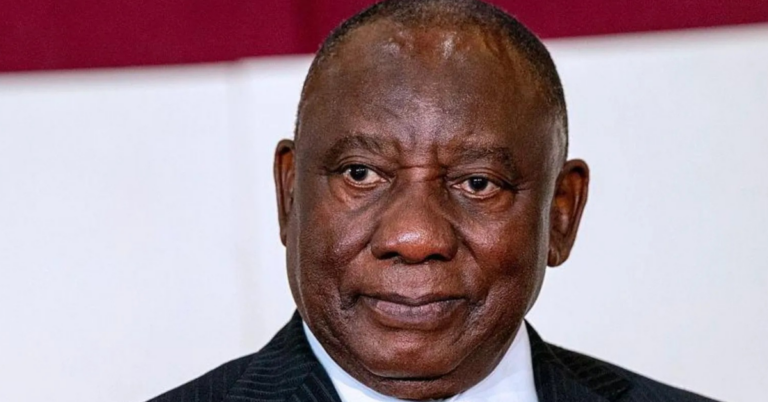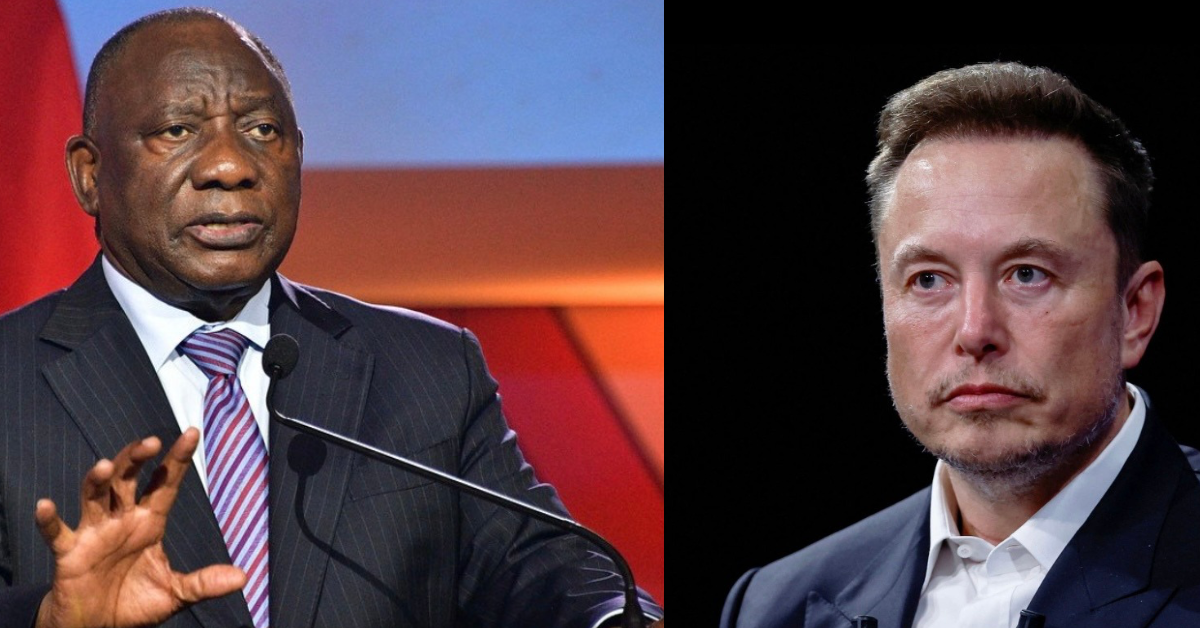
South African President Cyril Ramaphosa has urged billionaire entrepreneur Elon Musk to remember his South African roots and contribute to the country’s development.
However, the appeal comes amid an ongoing regulatory dispute that continues to prevent Musk’s satellite internet company, Starlink, from officially entering the South African market.
The disagreement highlights the complicated relationship between South Africa’s ambition to attract global technology investment and its commitment to policies designed to address historical economic inequalities.
Ramaphosa made the appeal during his November 2026 visit to Silicon Valley, California, where he has been engaging American technology companies and investors to explore opportunities in artificial intelligence, digital infrastructure and other emerging technology sectors.
Speaking to ABC News chief Washington correspondent Jonathan Karl, the president praised Musk’s achievements and encouraged the South African-born billionaire to contribute to the country that shaped his early life.
“I would like to chat to him about him remembering his country because even as one is a citizen of a new country, you should still be loyal to your old country,” Ramaphosa said.
The president argued that Musk’s upbringing and education in South Africa helped shape the entrepreneur’s abilities and subsequent success in the global technology industry.
“And it is this endowment that he now has that was formed in South Africa, and he should be one of those who would say I would like to contribute to the development of South Africa and give back to this country that made me who I am today,” he added.
Starlink’s South African Ambitions Remain Unresolved
Despite Ramaphosa’s public appeal, Musk’s SpaceX has yet to secure the regulatory approval required to operate Starlink in South Africa. The satellite internet service began accepting preorders in the country in 2021, but nearly six years later, its official commercial launch remains unresolved. The situation represents a significant obstacle for SpaceX as it seeks to expand Starlink’s international footprint, particularly across markets where traditional broadband infrastructure remains limited.
South Africa offers an attractive opportunity because of its relatively developed economy, substantial business market and demand for reliable internet connectivity.
However, the country’s telecommunications regulations have become a major point of disagreement between SpaceX and the government.
ICASA Takes Action Against Unauthorised Starlink Operations
The dispute intensified after the Independent Communications Authority of South Africa (ICASA) issued a formal notice of non-compliance to SpaceX on October 14, 2026.
Communications Minister Solly Malatsi confirmed that the regulator demanded that the company stop providing Starlink services without the necessary operating authorisation. “On 14 October 2026, the Authority issued a formal notice of non-compliance to SpaceX, demanding that it cease the unauthorised provision and operation of Starlink services in the Republic,” Malatsi said.
Although Starlink has not officially launched in South Africa, some residents have reportedly accessed the service through roaming subscriptions registered in neighbouring countries.
This arrangement has been particularly relevant in rural communities where reliable broadband connectivity remains difficult to obtain.
SpaceX previously introduced restrictions intended to prevent unauthorised access, but continued reports of Starlink usage prompted further regulatory investigations.
The latest notice reinforces the government’s position that companies cannot provide telecommunications services in the country without complying with local licensing requirements.
Black Economic Empowerment Rules at the Centre of the Dispute
At the heart of the disagreement are South Africa’s Black Economic Empowerment (BEE) policies, which seek to address economic inequalities created by apartheid.
The country’s telecommunications ownership framework includes a 30% ownership requirement for historically disadvantaged groups.
SpaceX has opposed the ownership requirement, arguing that the rules create significant barriers to its entry into the market.
However, the company has expressed support for alternative investment arrangements that could allow it to meet local economic empowerment objectives without necessarily surrendering equity in its business.
For the South African government, the issue extends beyond one technology company.
Ramaphosa has maintained that foreign investors must respect the country’s laws and regulatory framework, regardless of their international reputation or commercial influence.Responding to questions about Starlink’s prospects, the president acknowledged previous discussions with Musk but insisted that South Africa’s operating requirements must apply to foreign businesses.
- Sundar Pichai Congratulates SpaceX After Historic Starship Catch
- Jensen Huang’s $75 Million Gift to Vanderbilt Signals Why Art Matters in the AI Era
- Lauren Sánchez, Jeff Bezos Donate $34 Million to Transform Sustainable Fashion Innovation

- MacKenzie Scott Gives Away $26 Billion

- Warren Buffett Ends Gates Foundation Donations