Physical Address
304 North Cardinal St.
Dorchester Center, MA 02124
Physical Address
304 North Cardinal St.
Dorchester Center, MA 02124

Amplifying African Entrepreneurs voices, one story at a time
Amplifying African Entrepreneurs voices, one story at a time
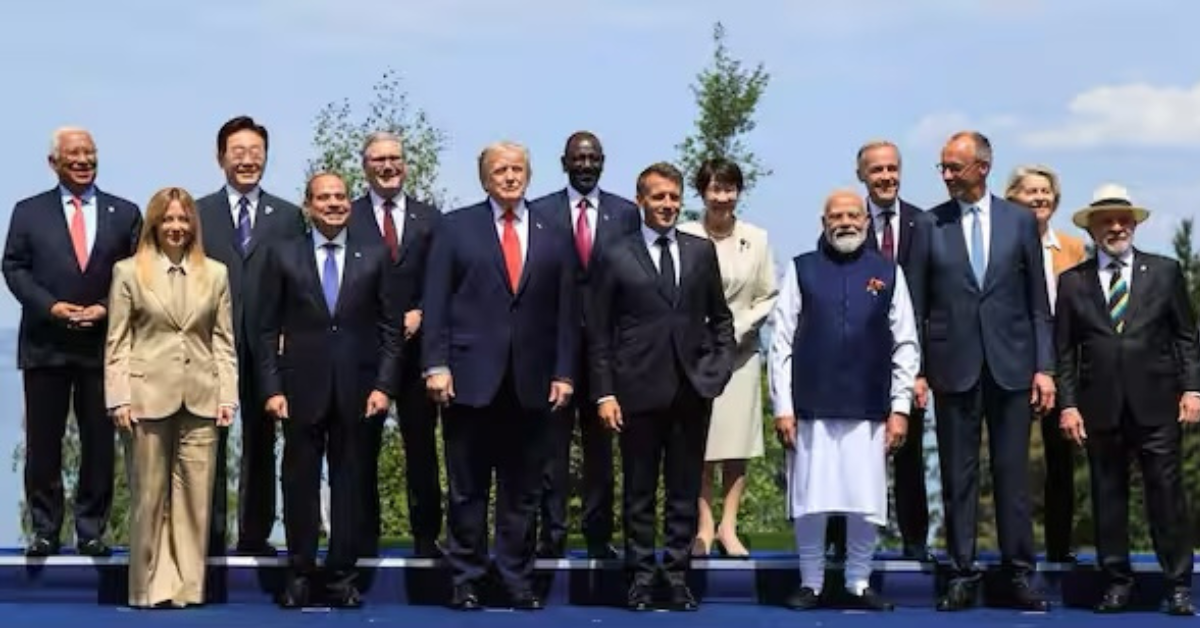
The G7 Summit 2026 entered a decisive stage in Évian-les-Bains, France, as world leaders intensified discussions on global security, economic uncertainty, energy supply risks and public health emergencies.
Prime Minister Narendra Modi and U.S. President Donald Trump emerged as key figures at the gathering, with their expected bilateral meeting attracting significant international attention. Trade cooperation, energy security and geopolitical stability topped the agenda as governments confronted growing pressure from conflicts in Ukraine and West Asia.
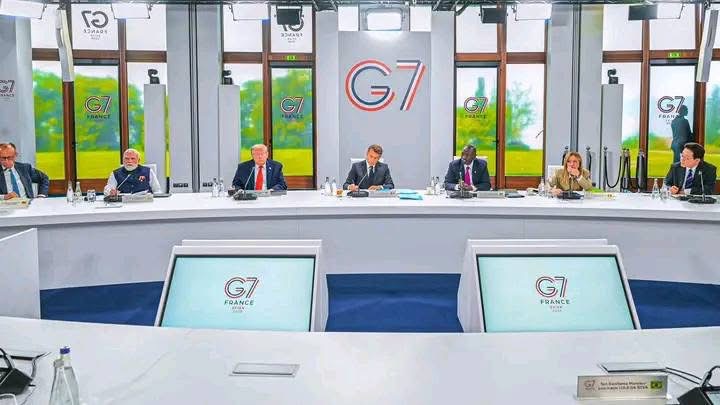
Held from June 15 to June 17 on the shores of Lake Geneva, the summit brought together leaders from the United States, France, Britain, Germany, Italy, Japan and Canada, alongside representatives from the European Union and several invited nations.
The meeting comes at a time when the global economy faces mounting challenges. Rising geopolitical tensions have disrupted shipping routes, increased energy market volatility and created fresh concerns about inflation and economic growth.
Prime Minister Modi highlighted the economic consequences of disruptions in the Strait of Hormuz, one of the world’s most important energy corridors. He warned that instability in the region threatens global trade flows and energy supplies. Modi also expressed concern over the loss of Indian civilian lives linked to the ongoing conflict in West Asia.
Speaking during the outreach session titled Forging New Partnerships and Rebuilding International Solidarity, Modi called for stronger international cooperation. He argued that global challenges now require coordinated responses that go beyond traditional alliances.
Meanwhile, President Trump used the summit to emphasize diplomatic efforts aimed at ending the prolonged conflict between Russia and Ukraine. He urged Moscow to negotiate a settlement while signaling that the United States remains prepared to increase pressure through additional sanctions on Russian oil exports if necessary.
The Ukraine war remained one of the summit’s most urgent topics. G7 leaders agreed to intensify efforts to pressure Russia after more than four years of fighting. At the same time, Canadian Prime Minister Mark Carney met with Ukrainian President Volodymyr Zelenskyy to discuss additional measures designed to support Ukraine’s defense and economic resilience.
Following the meeting, Canada announced new sanctions targeting Russia’s shadow fleet, energy revenues, defense-industrial networks and organizations accused of spreading disinformation. The move reflects a broader G7 strategy aimed at limiting Moscow’s ability to finance the conflict.
Beyond geopolitical tensions, leaders also turned their attention to a growing health emergency in Africa. The G7 issued a call for a strong and coordinated response to the Bundibugyo Ebola outbreak in the Democratic Republic of Congo. Health officials and humanitarian organizations warned that the outbreak has not yet reached its peak, increasing concerns about regional and international health security.
The summit produced several joint declarations that reflected the broad range of issues confronting world leaders. These included commitments to strengthen mutually beneficial international partnerships, coordinate efforts against Ebola, accelerate progress in cancer research, tackle migrant smuggling, combat drug trafficking and address major geopolitical challenges affecting global stability.
France’s President Emmanuel Macron hosted the summit during a critical period for Europe. As he enters the final phase of his presidency, Macron has increasingly advocated for greater European strategic autonomy while seeking to strengthen the continent’s influence on the global stage.
British Prime Minister Keir Starmer arrived facing political uncertainty at home but used the summit to reinforce Britain’s role in international diplomacy. Italian Prime Minister Giorgia Meloni balanced domestic political considerations with international cooperation efforts, while German Chancellor Friedrich Merz focused on maintaining strong transatlantic relations despite recent tensions with Washington.
Canadian Prime Minister Mark Carney continued to build his reputation as a leading voice among middle powers. His calls for greater international cooperation in a changing geopolitical landscape have gained attention among policymakers and global investors alike.
Japanese Prime Minister Sanae Takaichi focused heavily on energy security. Japan’s dependence on imported energy has made the closure and disruption risks surrounding the Strait of Hormuz particularly significant. Consequently, energy resilience emerged as one of Tokyo’s highest priorities during discussions.
The summit also expanded beyond the traditional G7 membership. France invited several influential emerging economies and strategic partners, including Brazil, Egypt, India, Kenya, Qatar, South Korea, Syria, Ukraine and the United Arab Emirates. Their participation highlighted the growing importance of broader international cooperation in addressing challenges that extend beyond the world’s largest advanced economies.
As the summit approaches its conclusion, the anticipated Modi-Trump meeting remains one of the most closely watched developments. Investors, policymakers and businesses across the globe are monitoring the discussions for signals on trade relations, energy markets and future diplomatic coordination.
The outcomes of the G7 Summit 2026 could shape international policy responses for months to come. With wars, economic uncertainty, public health risks and energy security concerns converging at the same moment, leaders face increasing pressure to translate dialogue into meaningful action.
For global markets and governments alike, the decisions made in France may prove critical in determining how the international community responds to an increasingly interconnected and unpredictable world.