Physical Address
304 North Cardinal St.
Dorchester Center, MA 02124
Physical Address
304 North Cardinal St.
Dorchester Center, MA 02124

Amplifying African Entrepreneurs voices, one story at a time
Amplifying African Entrepreneurs voices, one story at a time
Global mining exploration statistics often tell an incomplete story, and South Africa is frequently misjudged as a result. International rankings suggest that the country contributes less than one percent of global exploration expenditure. However, this perception does not reflect reality on the ground. Instead, it reflects how exploration data is captured and reported globally.
In jurisdictions such as Australia and Canada, junior mining companies dominate exploration activity and are largely listed on public exchanges. Those listings require detailed disclosure, which feeds directly into international datasets. As a result, exploration activity in those countries appears more visible and easier to quantify. South Africa, by contrast, operates within a predominantly private junior mining ecosystem, which limits international visibility despite sustained exploration work.
When only listed companies are counted, South Africa’s exploration contribution appears marginal. Yet when privately funded and unlisted explorers are included, a very different picture emerges. Across the country, exploration activity continues at scale. The absence of reported data should therefore not be mistaken for a lack of momentum or geological potential.
Mining remains a cornerstone of South Africa’s economy. In 2023, the sector contributed R444.2 billion to gross domestic product and provided employment to nearly half a million people. Sustaining this contribution requires continuous exploration to replace depleting reserves and unlock new mineral value. That work is taking place across several provinces, even though much of it falls outside public reporting frameworks.
The structural challenge lies in the limited number of listed junior miners. At present, only about 10 junior mining companies are listed on the Johannesburg Stock Exchange. This reality contrasts sharply with global peers. The Australian Securities Exchange lists more than 860 mining and metals companies, while Canadian exchanges host over 1,000 mining issuers. Their disclosure requirements automatically convert exploration activity into global visibility, a benefit South Africa’s private explorers do not enjoy.
This issue was formally recognised in the 2022 Exploration Implementation Plan, which identified the lack of junior miner listings as a key barrier to capital mobilisation. Although the JSE’s Private Placements platform offers support to private companies, early-stage explorers still face compliance thresholds that are difficult to meet. In particular, the cost and complexity of Competent Person’s Reports often exceed the capacity of greenfield projects at inception.
To address these gaps, the Department of Mineral and Petroleum Resources, in partnership with the Industrial Development Corporation and the Council for Geoscience, established the Junior Mining Exploration Fund. The Fund represents a practical intervention aimed at revitalising early-stage exploration while advancing transformation across the mining sector. Through convertible grants, it supports both greenfield and brownfield projects across critical minerals such as copper, lithium, rare earth elements, nickel, tin and uranium.
The Fund also prioritises black-owned junior miners, as well as youth- and women-led enterprises. Eight projects are already underway across five provinces, with additional applications under assessment. None of these projects appear in global exploration statistics because they are privately held. Beyond the Fund, more than 190 exploration projects targeting strategic minerals are currently active nationwide, further illustrating the scale of underreported activity.
South Africa’s challenge is therefore not a lack of exploration, but a lack of measurable visibility. As the global race for critical minerals accelerates, countries that present credible, transparent exploration data are better positioned to attract investment capital. In response, South Africa’s critical minerals implementation plan is considering targeted fiscal incentives, expanded access to public geoscientific data and strengthened public-private funding partnerships. These measures have delivered strong outcomes in other mineral-rich jurisdictions and remain equally relevant locally.
Regulatory performance further reflects the country’s commitment to enabling responsible and timely mining development. Between 2021 and 2025, the Department issued more than 681 mining permits, 327 prospecting rights and 59 mining rights. This throughput signals an active regulatory pipeline that supports exploration and investment while maintaining governance standards.
South Africa possesses a world-class mineral endowment, strong technical capability and resilient institutions. With improved transparency, better data integration and sustained strategic support, the country can reshape global perceptions, attract exploration capital and unlock shared value for investors, workers, communities and the state. The exploration bus is not only moving; it is gathering speed.
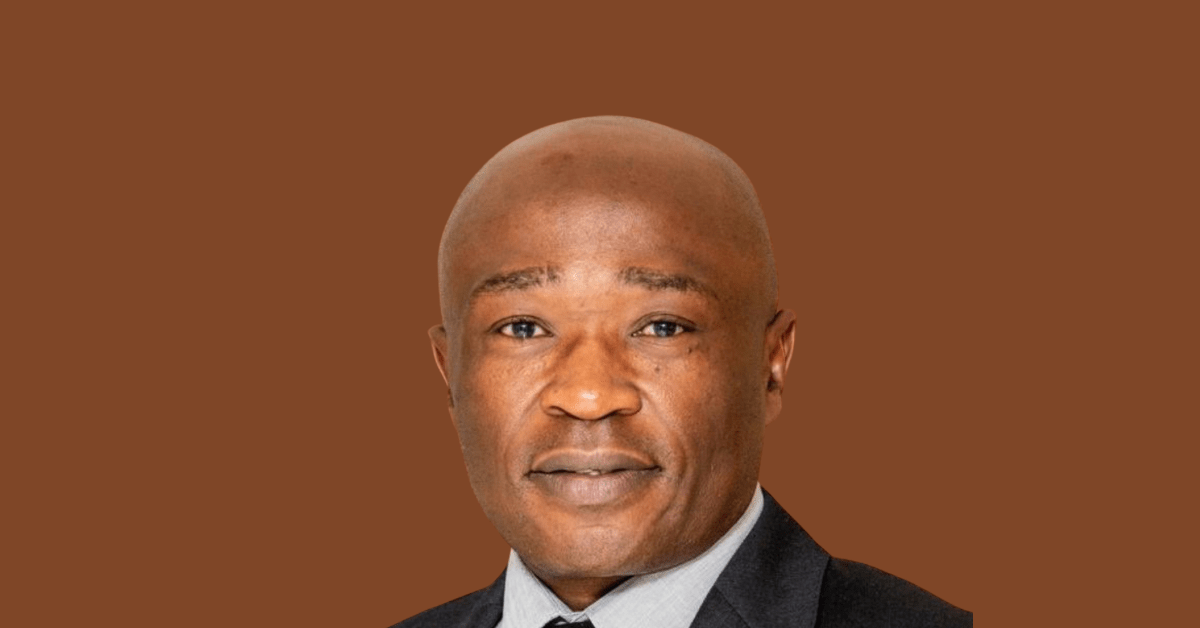
Perspectives By Jacob Mbele, Director-General, Department of Mineral and Petroleum Resources