Physical Address
304 North Cardinal St.
Dorchester Center, MA 02124
Physical Address
304 North Cardinal St.
Dorchester Center, MA 02124

Amplifying African Entrepreneurs voices, one story at a time
Amplifying African Entrepreneurs voices, one story at a time

Across Africa, many young people are turning everyday challenges into opportunities. They are building businesses not for attention, but to solve real problems in the communities they know best.
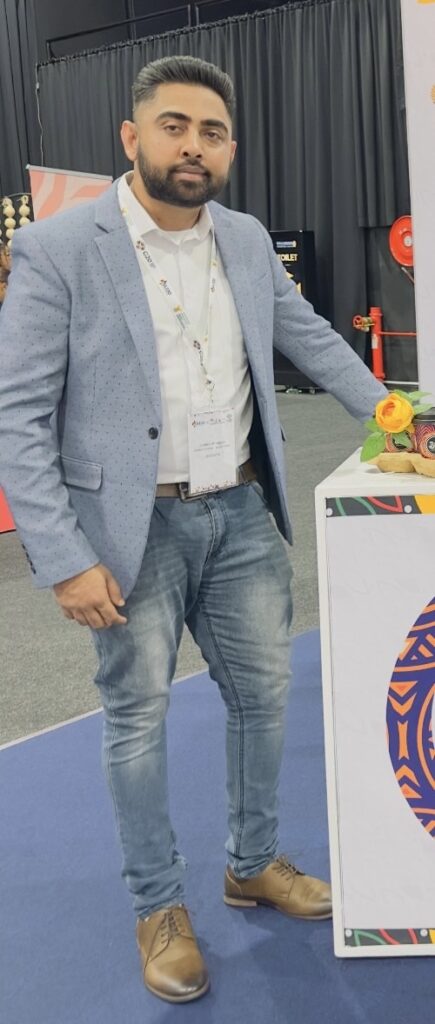
Joshen Indarjee is one of those builders. As the Director of AfriBiz Connect, he uses technology to help local businesses grow, stay visible, and feel supported. His journey, from Verulam to international recognition, is guided by a simple idea: meaningful innovation can come from anywhere, especially from places often ignored.
In this February 2026 Digital Cover conversation, Joshen talks about where he started, what he has learned along the way, and how he hopes digital access can help African communities build stronger, more connected futures.
Let’s meet you. Who is Joshen Indarjee, and which experiences shaped your early life?

I am a 32-year-old entrepreneur and the Director of AfriBiz Connect, driven by a passion for using technology to bridge socio-economic gaps. Growing up in South Africa, I witnessed firsthand the resilience of local communities and the stark disparities in access to resources.
These early observations instilled in me a deep sense of purpose and a desire to create platforms that empower others. My journey was built on a foundation of grit and the belief that innovation should not be a luxury.
These formative years in Verulam taught me that limitations are often the greatest catalysts for creativity. This mindset of turning less into more has stayed with me, shaping how I approach business today. It is not just a way to generate revenue, but a vehicle for sustainable, community-led change across Africa.
When did your interest in technology begin, and why did you see it as a tool for solving real problems?
My fascination with technology began when I realized that a single line of code could potentially impact thousands of lives simultaneously. I did not see tech as just gadgets or software; I saw it as the ultimate force multiplier.
In a continent where traditional infrastructure often lags, digital solutions offer a way to leapfrog developmental hurdles. I saw technology as a tool for social justice by leveling the playing field for township businesses that were previously invisible to the broader economy.
Whether it was streamlining a service or providing safety through an app, the ability to solve a tangible, physical problem through a digital interface was a revelation. This realization shifted my focus from simply building apps to building solutions, ensuring that every technological pursuit we undertake addresses a specific, urgent need within our local context.
AfriBiz Connect started in Verulam. How did that small beginning grow into an international, award-winning agency?
AfriBiz Connect began in 2020, right in the heart of the COVID-19 pandemic, in Verulam, KZN. What started as a one-man show was born out of the necessity to help businesses survive a global crisis.
We focused on delivering high-value marketing and software solutions that prioritized results over jargon. Our growth from a small local operation to a team of 15 permanent staff and an international, award-winning agency is a testament to our consistency and the trust our clients place in us.
Being recognized with the Forty Under 40 award and others was a humbling confirmation that our work resonates beyond our borders.
We scaled by staying rooted in our mission while remaining agile enough to compete on a global stage. We proved that world-class innovation can emerge from a small town if the vision is big enough.
As your company expanded across cities, how did you build strong teams and protect your culture?
Expanding across cities required a transition from doing to leading. Building a strong team meant finding individuals who did not just have the technical skills, but who also shared a community-first heart.
I believe in empowering my team of 15 by fostering an environment of radical ownership. To protect our culture, we prioritize transparency and a flat hierarchy where the best idea wins, regardless of seniority. We treat our staff as partners in our mission, which ensures that as we scale, our core values of integrity and innovation remain intact.
Protecting culture isn’t about office perks; it is about a shared commitment to the impact we make in the townships and cities we serve. By staying connected to our purpose, we ensure that every new hire and every new office branch carries the same AfriBiz DNA that started in Verulam.
Why does building solutions around local African needs matter to you?
For too long, African businesses have tried to force foreign solutions into African problems, and the results are often mismatched. Building solutions specifically for local needs matters because context is everything.
Our challenges, ranging from safety concerns to the digital divide in townships, are unique and they require bespoke innovation. When we build for ourselves, we create products that are culturally relevant, accessible, and truly effective. It matters to me because I want to see an Africa that is not just a consumer of global technology, but a creator of it.
By focusing on local needs, we are not just solving problems; we are building an ecosystem where African entrepreneurs can thrive. This localized approach ensures that our solutions are sustainable and that the wealth and knowledge we generate stay within our communities to fuel future growth.
How are the CASI app partnership and Telkom integration changing everyday life in the communities you serve?
Our future partnership with Telkom and the integration of the CASI panic button app is one of our most impactful ventures. In many of the communities we serve, safety is a primary concern that hinders economic and social activity.
By becoming a dealer and partner with Telkom, we will be able to bring high-level security technology to the palm of the everyday user’s hand. This integration provides a lifeline, offering peace of mind to residents and business owners alike. It is changing everyday life by reducing response times and creating a visible digital safety net.
When people feel safe, they are more likely to engage in their local economy and move freely within their neighborhoods. This project is about restoring a sense of security and dignity to people who have often been overlooked by traditional security services.

The Kasi Digital Connect initiative supports hundreds of township businesses each year. How did the idea come about, and how is it transforming small businesses?
The idea for Kasi Digital Connect came from seeing the immense talent in townships being held back by a lack of digital infrastructure. I realized that if we could provide these businesses with the same digital tools as large corporations, we could unlock massive economic potential.
The initiative supports over 500 township businesses annually by providing them with digital identities, marketing support, and software tools. It is transforming these businesses from informal, invisible entities into professional, searchable, and scalable enterprises.
We are seeing businesses that previously relied solely on foot traffic now reaching customers across the city. By bridging this digital divide, we are not just helping individual owners; we are revitalizing the township economy and proving that Kasi businesses are the future engine of South African growth.
Looking ahead, how do you see Kasi digital infrastructure shaping Africa’s future?
I see Kasi digital infrastructure as the backbone of Africa’s next economic revolution. As we continue to roll out projects like Kasi Digital Connect, we are creating a blueprint for how informal economies can be integrated into the global digital market.
In the future, I envision townships that are smart hubs where high-speed connectivity and localized digital services are the norm. This infrastructure will allow for better healthcare delivery, more efficient education, and seamless commerce.
It will empower the youth to innovate from within their communities rather than feeling the need to migrate to major metros for opportunity. By investing in this infrastructure today, we are ensuring that the future of Africa is decentralized, digital, and driven by the very people who live in its most vibrant and hardworking communities.
From your perspective, where do Africa’s biggest opportunities and toughest challenges in tech and entrepreneurship lie?
From my perspective, the biggest opportunity lies in our demographic dividend. We have a young, tech-savvy population that is hungry for change. Africa is a blank canvas for digital innovation, and the potential to solve massive problems in fintech, agritech, and safety is unparalleled.
However, the challenges are equally significant. Access to capital remains a hurdle for many brilliant founders, and the lack of consistent physical infrastructure, like stable electricity, can stifle digital growth. Furthermore, navigating diverse regulatory landscapes across different African countries can be complex.
Despite these challenges, the resilience of African entrepreneurs is our greatest asset. The toughness of the environment actually breeds a more robust type of entrepreneur who is capable of building world-class solutions under constraints that would stop others in their tracks.

For young Africans building with limited resources, which habits or mindsets have mattered most in your own journey?
The most important mindset is resourcefulness over resources. Do not wait for the perfect office or the big investment to start. I started AfriBiz as a one-man show during a pandemic; use what you have today to get to where you want to be tomorrow.
Secondly, consistency is king. Success is not about one big win; it is about the daily habits of showing up and refining your craft. I also believe in the power of servant leadership. Build something that helps others, and the success will follow. Finally, never stop learning.
The tech landscape changes weekly, and your ability to adapt is your greatest competitive advantage. Stay humble, stay hungry, and remember that being an award winner is just a milestone; the real reward is the impact you create.