Physical Address
304 North Cardinal St.
Dorchester Center, MA 02124
Physical Address
304 North Cardinal St.
Dorchester Center, MA 02124

Amplifying African Entrepreneurs voices, one story at a time
Amplifying African Entrepreneurs voices, one story at a time
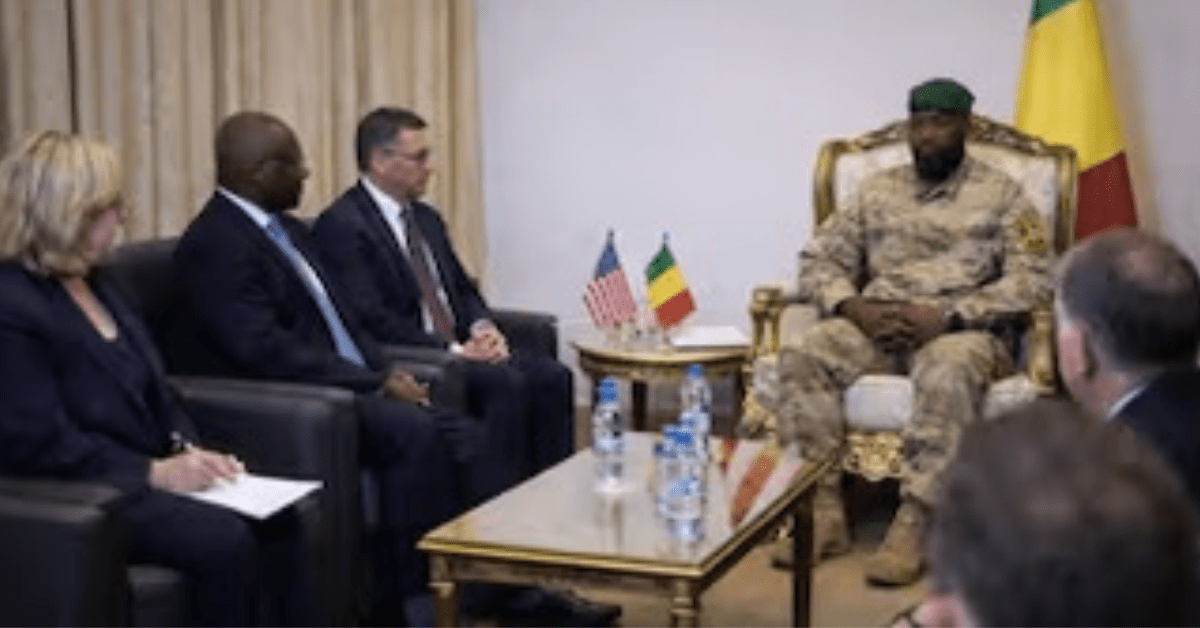
The United States is recalibrating its Africa policy as it re-engages Mali’s military-led government, signaling a pragmatic shift amid intensifying geopolitical competition in the Sahel.
Senior U.S. Bureau Official Nick Checker is set to visit Bamako to convey Washington’s respect for Mali’s sovereignty and outline plans to “chart a new course” in the bilateral relationship after previous policy setbacks. According to a statement on X from the U.S. Bureau of African Affairs, the visit aims to discuss next steps in diplomatic, economic, and security cooperation.
Mali has become a pivotal player in the region. Alongside Burkina Faso and Niger, it forms the Alliance of Sahel States (AES), a bloc that has formally distanced itself from ECOWAS and strengthened security partnerships with Russia. This shift has heightened Washington’s urgency to re-engage strategically, particularly as Mali sits at the heart of West Africa’s security and mineral supply networks.
Historically, the U.S. has maintained a strict stance against military coups, often responding with sanctions, aid suspensions, and diplomatic isolation. Mali’s repeated coups since 2020 would normally place it outside Washington’s comfort zone. Yet the current engagement is driven by strategic interests rather than a softening on military rule.
Strategic Interests Driving U.S. Engagement
Mali holds vast reserves of gold, lithium, and uranium, making it a critical player in global supply chains for essential minerals. As the United States seeks to reduce dependence on Chinese-controlled resources and counter Russia’s growing footprint in Mali’s extractive sector, renewed diplomacy has become a strategic necessity.
Security considerations are equally vital. Mali lies along a Sahelian corridor that directly impacts U.S. counterterrorism operations across West Africa. Although U.S. troops withdrew in 2022, intelligence networks continue to monitor militant movements, supporting operations in neighboring Burkina Faso, Niger, and northern Nigeria. Engagement with Bamako strengthens regional security architecture without signaling approval of military governance.
This diplomatic reset also reflects Washington’s broader effort to regain influence in Africa after previous aid reductions created openings for rival powers offering fewer political conditions. By engaging Mali, the United States aims to safeguard both strategic minerals and regional security while countering the rising influence of Russia and China.
Looking Ahead
Analysts note that the Mali visit could mark the beginning of a more flexible U.S. approach in the Sahel, balancing principles with strategic imperatives. While Washington remains wary of military regimes, it appears willing to work pragmatically with Mali to address both economic and security priorities.