Physical Address
304 North Cardinal St.
Dorchester Center, MA 02124
Physical Address
304 North Cardinal St.
Dorchester Center, MA 02124

Amplifying African Entrepreneurs voices, one story at a time
Amplifying African Entrepreneurs voices, one story at a time
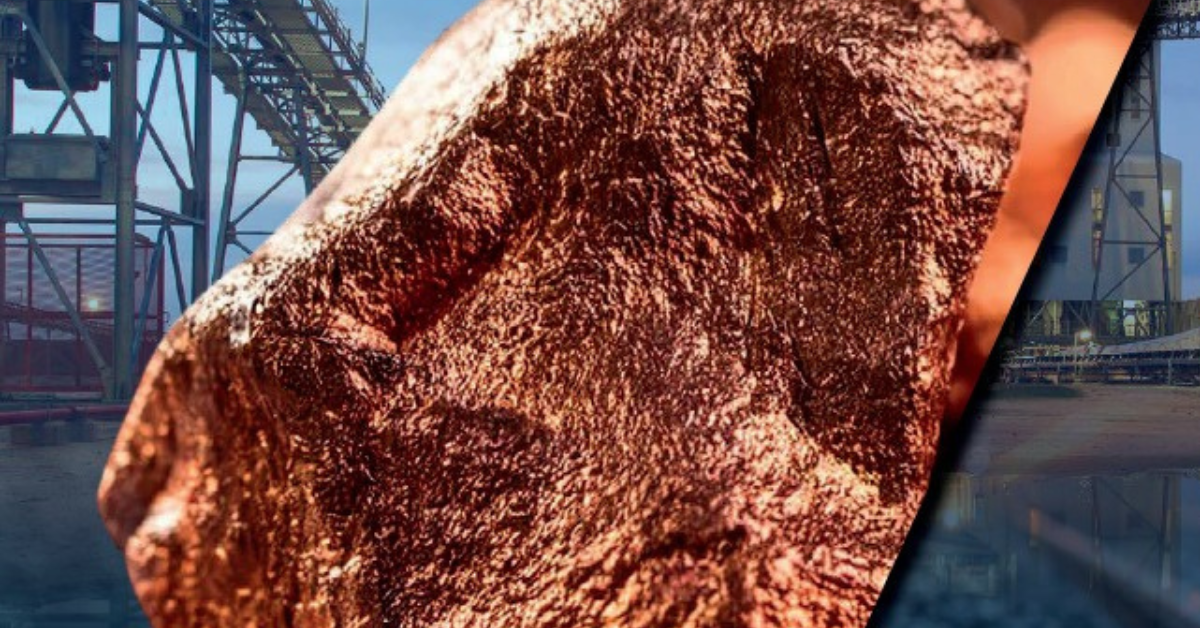
Africa controls an estimated US$29.5 trillion in mine-site mineral value, representing nearly 20 percent of global mineral wealth. Yet the continent captures only a small share of the economic value tied to this endowment, according to a new study released by the Africa Finance Corporation (AFC).
The report reveals that US$8.6 trillion worth of Africa’s minerals remains undeveloped, largely due to fragmented geological data, uneven coverage, and limited transparency. These gaps continue to inflate risk perception and restrict the flow of exploration capital. As a result, Africa’s mineral potential remains underutilised despite rising global demand.
To reverse this trend, the study identifies high-quality geological data as the critical first step. Better data, it argues, can reduce project risk, lower capital costs, and unlock long-term investment across the mining value chain.
However, the report stresses that mine-site values alone fail to reflect Africa’s real opportunity. When minerals move beyond extraction and into steel, aluminium, fertilisers, batteries, and advanced alloys, their value multiplies dramatically. At the point of industrial use, Africa’s mineral endowment expands by an order of magnitude, exposing vast but unrealised economic potential.
AFC unveiled the findings at Mining Indaba in Cape Town through the launch of the Compendium of Africa’s Strategic Minerals. The publication reframes Africa’s mineral sector through a development-driven lens, placing industrialisation, infrastructure, and regional demand at the centre of strategy.
Speaking at the launch, Samaila Zubairu, President and CEO of AFC, said the Compendium aims to convert natural wealth into execution pathways for shared prosperity. He explained that the initiative maps full mineral value chains while linking reserves and production to processing capacity, power supply, transport infrastructure, and regional industrial corridors. This approach, he noted, improves transparency, reduces exploration risk, and guides smarter investment into beneficiation and integrated value chains.
The report also highlights a major structural weakness: mineral production, infrastructure, and demand rarely align at scale across Africa. As a result, African supply chains often depend on external markets rather than domestic development needs.
The steel sector illustrates this disconnect. Africa hosts world-class deposits of manganese, chromium, nickel, and iron ore, and supply is entering a new growth phase. Yet production remains tied to Asian steel cycles instead of Africa’s own infrastructure and industrial expansion.
This dependency carries real economic costs. Slower steel demand in Asia driven by China’s property downturn and weaker construction has triggered shocks across African mineral markets. In the Democratic Republic of the Congo, authorities imposed cobalt production quotas to curb oversupply and falling prices. In South Africa, weak domestic demand, rising costs, and fragmented offtake have forced primary steel plants to shut down. Meanwhile, Gabon has seen periodic production suspensions at major manganese operations due to softer Asian alloy demand.
These disruptions persist even as Africa continues to expand transport networks, power systems, housing, and industrial capacity. The problem, the report argues, is not weak demand but weak demand anchoring. Africa has yet to align mineral extraction, processing capacity, and infrastructure investment around its long-term material needs.
To address this, the Compendium positions infrastructure as the backbone of mineral strategy. Power reliability, transport connectivity, and access to industrial land determine whether beneficiation can compete globally. Without these foundations, local processing remains commercially unviable.
The report maps mineral assets alongside railways, ports, power hubs, and transmission networks to identify where regional value chains can realistically scale. It calls for targeted investment in shared rail corridors and cross-border power systems, particularly in mineral-rich regions. Coordinated infrastructure, it argues, can lower delivered costs and support regional industrial platforms.
Infrastructure also shapes Africa’s competitiveness in the era of green industrialisation. Clean power, efficient logistics, and integrated corridors such as the Lobito Corridor can reduce carbon intensity while improving access to markets that now demand low-carbon, traceable supply chains.
Within a fragmenting global economy marked by trade tensions and export controls, the Compendium urges Africa to move beyond raw material exports. Instead, it advocates selective integration into strategically exposed segments of global supply chains, especially where diversification would strengthen resilience.
The report identifies manganese, rare earths, graphite, uranium, and critical alloying inputs as priority areas. Encouragingly, momentum is already building. Angola is developing one of the world’s largest high-grade rare earth magnet metal deposits. Mozambique has emerged as a key graphite and anode material hub. Southern Africa is advancing battery-grade manganese sulphate projects, while Namibia and Malawi resumed uranium production between 2024 and 2025.
According to AFC, these developments show that Africa can shift from being a marginal supplier to becoming a strategic, value-adding player in global mineral markets. if industrial alignment, infrastructure, and demand anchoring finally move in sync.