Physical Address
304 North Cardinal St.
Dorchester Center, MA 02124
Physical Address
304 North Cardinal St.
Dorchester Center, MA 02124

Amplifying African Entrepreneurs voices, one story at a time
Amplifying African Entrepreneurs voices, one story at a time
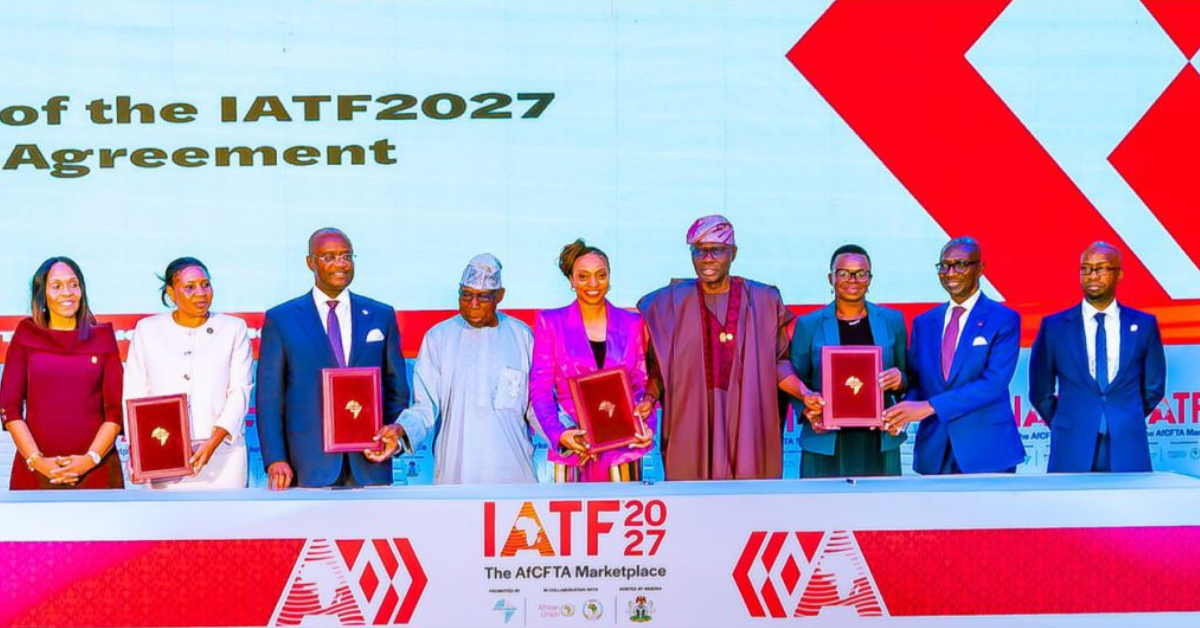
The Federal Government signed the host agreement in Lagos, the designated host city, in partnership with African Export-Import Bank, the African Union Commission, and the African Continental Free Trade Area Secretariat. The move places Nigeria at the centre of efforts to deepen intra-African trade and unlock new investment opportunities across the continent.
Nigeria takes over from Algeria, which hosted the fourth edition of the trade fair and facilitated nearly $49.94 billion in trade and investment deals. The upcoming event will run from November 5 to 11, 2027, and organisers aim to exceed that record.
Officials expect the 2027 edition to attract more than 100,000 visitors, 2,500 exhibitors and participants from over 100 countries. The fair also targets over $50 billion in trade and investment agreements, reinforcing its reputation as Africa’s largest business marketplace.
The event will operate under the theme “Global Africa, Smart Trade – From Market Access to Market Power.” Organisers have designed a diverse programme to accelerate trade collaboration and strengthen African value chains.
Activities will include large-scale trade exhibitions and an investment forum focused on the AfCFTA framework. The programme will also feature Global Africa Day to strengthen economic ties with the African diaspora. In addition, a robust B2B and B2G networking platform will allow businesses and governments to negotiate new partnerships and deals.
Several specialised platforms will highlight emerging sectors of the African economy. These include the Creative Africa Nexus initiative that showcases the continent’s creative industries and the Africa Automotive Show designed to promote regional automotive manufacturing.
The event will also introduce the AU Youth Start-up Pavilion, which provides visibility for innovative African startups, and the Africa Research and Innovation Hub aimed at connecting academia, innovators and industry leaders.
Since its launch in 2018, the Intra-African Trade Fair has recorded significant milestones. Across four editions, the event has generated more than $167 billion in trade and investment deals and attracted over 180,000 participants from 132 countries.
Speaking at the signing ceremony, Olusegun Obasanjo, Chairperson of the IATF2027 Advisory Council and former President of Nigeria, described the agreement as a defining moment for both Nigeria and the African continent.
He noted that hosting the fair in Lagos carries historical importance because the city also hosted the Lagos Plan of Action adopted in 1980, a landmark policy that promoted Africa’s industrialisation and economic independence.
Obasanjo expressed confidence that the upcoming edition will surpass previous fairs in scope and impact as African countries work toward a unified marketplace under the African Continental Free Trade Area.
Nigeria’s Minister of Industry, Trade and Investment, Jumoke Oduwole, also highlighted the country’s growing influence in regional commerce. She said the global trading system currently faces significant challenges, making it essential for African economies to deepen collaboration through rules-based trade.
According to her, hosting the continent’s largest trade fair in Lagos offers Africa an opportunity to rethink its economic future and accelerate regional integration. She added that the AfCFTA framework remains critical to driving industrial growth, market expansion and long-term prosperity across the continent.
President and Chairman of the Board of Directors of Afreximbank, George Elombi, praised Nigeria’s commitment to advancing intra-African trade. He noted that the country’s large market, strong entrepreneurial culture and expanding industrial base make it an ideal host for the 2027 event.
Elombi emphasised that the trade fair plays a vital role in building a strong pan-African single market. He said the platform encourages African businesses to collaborate, develop regional value chains and create jobs while boosting economic prosperity across the continent.
Nigeria remains a key driver of the AfCFTA initiative due to its market size, natural resources and industrial capacity. The country produces oil and gas and holds large deposits of minerals such as limestone, iron ore, gold and lithium. Combined with a vibrant SME ecosystem and strong agricultural sector, these resources position Nigeria to play a leading role in strengthening regional supply chains.
For the African Union, the fair also represents a strategic tool to accelerate economic transformation. Francisca Tatchoup Belobe, AU Commissioner for Economic Development, Trade, Tourism, Industry and Minerals, described Nigeria as a major contributor to Africa’s economic growth and regional integration.
She explained that the trade fair was launched in 2018 to address Africa’s historically low levels of intra-continental trade. According to her, the upcoming edition in Nigeria offers an opportunity to reposition Africa in the global trade landscape while accelerating industrialisation and investment.
Representing AfCFTA Secretary-General Wamkele Mene, the Secretariat’s Director of Private Sector Engagement and Communications, Cynthia E. Gnassingbé-Essonam, said the signing ceremony marks a major milestone in advancing the objectives of the continental free trade area.
She noted that the Intra-African Trade Fair has become the continent’s premier marketplace for trade and investment. The platform connects businesses, investors and policymakers from across Africa and the global diaspora.
Nigeria’s hosting of IATF 2027, she added, will help deepen regional value chains and strengthen the operationalisation of the AfCFTA while expanding opportunities for African enterprises.