Physical Address
304 North Cardinal St.
Dorchester Center, MA 02124
Physical Address
304 North Cardinal St.
Dorchester Center, MA 02124

Amplifying African Entrepreneurs voices, one story at a time
Amplifying African Entrepreneurs voices, one story at a time
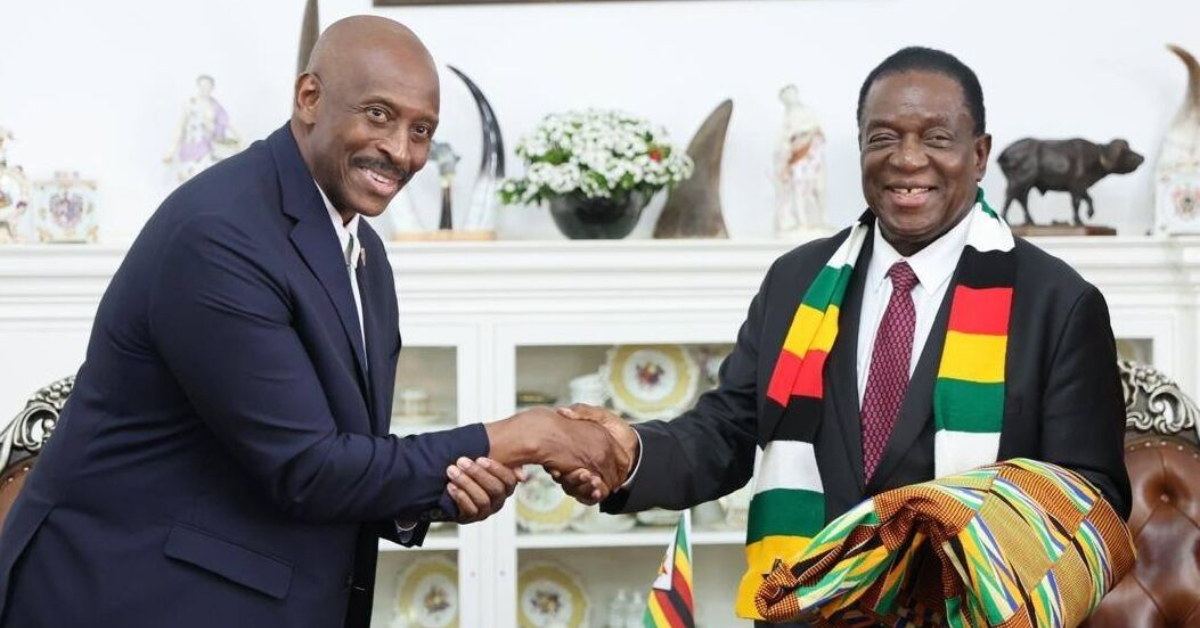
Zimbabwe has intensified preparations for the upcoming global rugby showdown after Herbert Mensah met with Emmerson Mnangagwa at State House to discuss the nation’s strategy for the Rugby World Cup 2027.
The meeting focused on strengthening cooperation between government institutions and continental rugby leadership. Both leaders discussed how Zimbabwe can build strong structures that will help the national team compete confidently on the world stage.
Zimbabwe recently secured one of the biggest sporting milestones in its modern history. The national team, the Zimbabwe Sables, qualified for the global tournament after winning the 2025 Rugby Africa Cup in Kampala. That victory ended a 34-year absence from the Rugby World Cup and restored Zimbabwe’s presence in elite international rugby.
The achievement also carries continental significance. Zimbabwe became the only African nation to qualify through the regional competition. Meanwhile, the defending champions, South Africa Springboks, secured automatic qualification as reigning world champions.
Officials from Rugby Africa and the Zimbabwe Rugby Union organised the meeting to deepen collaboration between government, sports authorities and rugby administrators. Leaders believe that coordinated support will help Zimbabwe improve training systems, infrastructure and high-performance programmes ahead of the tournament.
Mensah praised the strong interest shown by Zimbabwe’s leadership in the development of rugby. According to him, visible government support can inspire players, energise supporters and strengthen long-term sports development.
“I had the honour of meeting His Excellency President Emmerson Mnangagwa today, and what impressed me most is the genuine commitment the government has shown toward the Zimbabwe Sables and the future of rugby in the country,” Mensah said. “The players have earned their return to the world stage after 34 years. Every Zimbabwean should celebrate that achievement.”
He added that unity between government institutions, rugby administrators and players can unlock greater opportunities for the sport in Africa.
“When leadership, the union and Rugby Africa share a clear vision, the possibilities become enormous. Our responsibility now is to build strong preparation systems around these players so that they represent their country with pride at the Rugby World Cup,” Mensah explained.
Beyond the national team’s preparation, discussions also addressed youth development and the need for competitive pathways across Zimbabwe. Leaders highlighted the importance of investing in grassroots rugby programmes that can nurture the next generation of athletes.
The meeting included several key rugby figures who contribute to the sport’s development in Africa. Among them were Steph Nel and David Gilbert. Their presence reinforced the collaborative effort required to strengthen rugby systems across the continent.
Zimbabwe’s qualification story reflects determination from both players and supporters. The victory in Kampala united the nation behind the Sables and revived hope within the local rugby community.
Looking ahead, the global tournament organised by World Rugby will take place in Australia in 2027. The competition will bring together the world’s strongest rugby nations and millions of fans.
For Zimbabwe, the return marks more than a sporting appearance. It symbolises national pride, renewed ambition and the resurgence of rugby within the country. As preparations intensify, the Zimbabwe Sables now carry the expectations of a nation eager to see its team compete again among rugby’s elite.