Physical Address
304 North Cardinal St.
Dorchester Center, MA 02124
Physical Address
304 North Cardinal St.
Dorchester Center, MA 02124

Amplifying African Entrepreneurs voices, one story at a time
Amplifying African Entrepreneurs voices, one story at a time
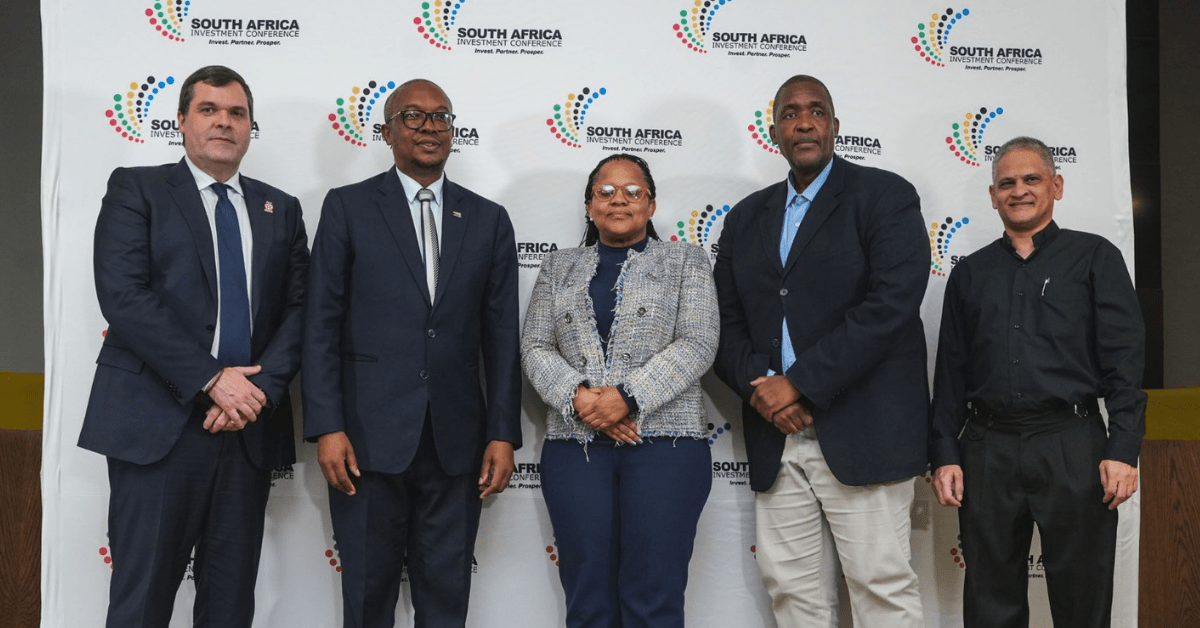
The Coca-Cola system has delivered a powerful economic boost to South Africa, contributing R51.2 billion across its value chain while supporting more than 87,000 jobs, according to a new independent study released ahead of the 2026 South Africa Investment Conference.
Speaking during a high-level media briefing hosted by Trade, Industry, and Competition Minister Parks Tau, President of Africa Operating Unit at The Coca-Cola Company, Luis Felipe Avellar, highlighted the company’s growing footprint. He stressed that the findings clearly show how Coca-Cola continues to shape economic growth, job creation, and community development across South Africa.
The report reveals that Coca-Cola, alongside its authorized bottlers and an extensive network of suppliers, distributors, and retailers, generated R51.2 billion in value-added economic activity in 2024. This performance strengthens its position as a major contributor to South Africa’s industrial ecosystem. Moreover, it underscores the company’s long-standing commitment to inclusive growth.
The system’s employment impact remains significant. It supported over 87,000 jobs across the country through direct and indirect channels. Notably, every direct role created by Coca-Cola helps sustain up to ten additional jobs across the broader economy. As a result, the company continues to play a vital role in tackling unemployment while strengthening livelihoods.
Avellar emphasized that Coca-Cola’s operations remain deeply rooted in local communities. The company hires locally, produces locally, and distributes through local networks. In addition, it prioritizes sourcing materials within South Africa whenever possible. This approach helps build a more resilient and interconnected economy.
Charl Goncalves, Managing Director of Coca-Cola Peninsula Beverages, reinforced the importance of partnerships. He noted that the company remains focused on creating opportunities for employees, business partners, and communities. Therefore, collaboration continues to sit at the heart of Coca-Cola’s long-term strategy.
Local sourcing has also emerged as a major driver of impact. In 2024 alone, the Coca-Cola system spent R25.6 billion on goods and services from South African suppliers. These investments support key sectors such as sugar production, packaging, logistics, and marketing. Consequently, Coca-Cola strengthens multiple layers of the economy while promoting industrial growth.
Sunil Gupta, CEO of Coca-Cola Beverages Africa, described South Africa as one of the company’s most strategic markets on the continent. He pointed out that Coca-Cola’s legacy in Africa dates back to 1928, with South Africa playing a central role. Furthermore, he explained that the latest findings reaffirm Coca-Cola’s ability to deliver shared value and sustainable development.
The company has also expanded its industrial footprint through continuous investment and innovation. For instance, it recently launched a new bottling line at its Midrand manufacturing facility. This move boosts production capacity while enhancing efficiency. At the same time, it reflects Coca-Cola’s commitment to local manufacturing and long-term economic participation.
Beyond financial contributions, Coca-Cola continues to invest in social impact initiatives. South Africa benefits from the Africa Water Stewardship Initiative, a nearly $25 million program running through 2030. The initiative aims to address critical water challenges across 20 African countries. As a result, communities gain improved access to sustainable water resources.
The study, conducted by Steward Redqueen, measured Coca-Cola’s direct, indirect, and induced economic impact. It combined company data with trusted third-party sources to provide a comprehensive analysis. Ultimately, the findings reveal how Coca-Cola’s operations create ripple effects across the economy—from farmers growing sugarcane to retailers selling finished products.
As the 2026 South Africa Investment Conference approaches, Coca-Cola’s latest economic impact figures position the company as a key player in driving investment, job creation, and sustainable growth across Africa’s most industrialized economy.