Physical Address
304 North Cardinal St.
Dorchester Center, MA 02124
Physical Address
304 North Cardinal St.
Dorchester Center, MA 02124

Amplifying African Entrepreneurs voices, one story at a time
Amplifying African Entrepreneurs voices, one story at a time
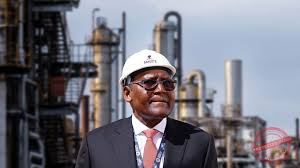
Aliko Dangote has revealed that he rejected attempts by NNPC Limited to increase its ownership stake in the massive Dangote Petroleum Refinery, saying the company now wants ordinary Nigerians and global investors to participate when shares are offered publicly.
The billionaire businessman made the disclosure during an interview with Nicolai Tangen, where he explained that expanding public ownership now takes priority over giving one institution more control. His comments come at a time when the refinery is reshaping Nigeria’s fuel economy and cutting the country’s dependence on imported petrol.

Dangote said policy inconsistency remains one of the biggest risks to business growth in Africa. However, he stressed that the refinery has already changed the landscape by proving that world-class industrial projects can succeed in Nigeria.
The development comes as fresh market figures show domestic petrol supply from the refinery and other local sources rose to 3.18 billion litres in the first quarter of 2026. Imports dropped sharply to 965.52 million litres, a major reversal from previous years when Nigeria depended heavily on foreign fuel cargoes.
With an average ex-depot price near ₦1,000 per litre during the quarter, analysts estimate the refinery supplied more than ₦3.2 trillion worth of petrol into the Nigerian market. That marks one of the strongest signals yet that local refining is beginning to dominate supply chains.
Dangote also disclosed that the refinery recently processed crude at 661,000 barrels per day, above its 650,000 barrels per day nameplate capacity. He said that performance has boosted confidence among lenders and international financiers eager to support future projects.
According to him, the group now plans a bold expansion that could push refining capacity to 1.4 million barrels per day within the next 30 months. If achieved, it would place Nigeria among the largest refining hubs globally.
He further revealed that global tensions, especially the conflict involving the United States and Iran, unexpectedly created windfalls for parts of the business. Fertiliser prices reportedly surged from $400 to $850 per tonne, while polypropylene prices climbed dramatically, creating fresh export opportunities.
Dangote argued that local manufacturing has protected Nigerian industries from shortages. He said several plastic companies could have shut down without domestic polypropylene supply, while aviation fuel demand has already sold out production slots into mid-July.
The industrialist also took aim at what he described as entrenched interests that once profited from fuel imports and subsidy systems. He said those networks resisted the refinery because it threatened old profit channels built around imports and allocations.
Looking ahead, Dangote said the group plans to raise fresh investment by selling stakes in some businesses while targeting $100 billion in annual revenue by 2030. He added that the broader vision includes a market valuation above $250 billion.
For Nigeria, the immediate impact is already visible. Petrol imports are falling, domestic production is rising, and the country is moving closer to energy independence. For investors, the next major story may be when everyday Nigerians finally get the chance to buy into one of Africa’s most ambitious industrial assets.