Physical Address
304 North Cardinal St.
Dorchester Center, MA 02124
Physical Address
304 North Cardinal St.
Dorchester Center, MA 02124

Amplifying African Entrepreneurs voices, one story at a time
Amplifying African Entrepreneurs voices, one story at a time
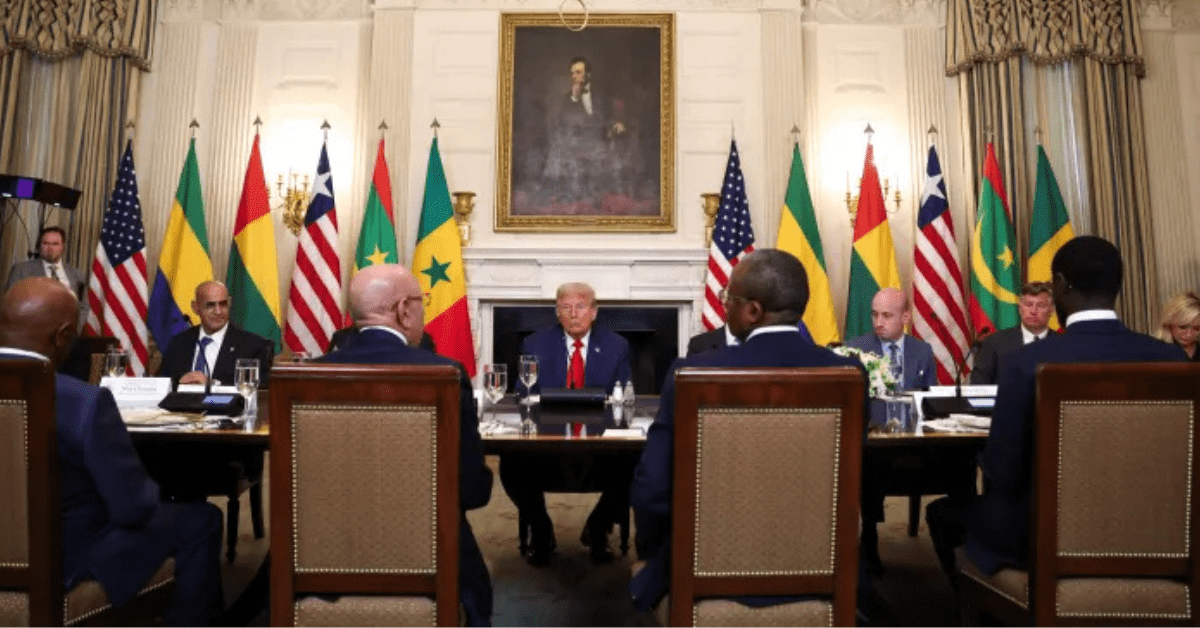
U.S. President Donald Trump has welcomed leaders from five African nations to the White House in an effort to boost economic ties and reassure partners, even as his administration pursues trade policies that could challenge developing economies.

On Wednesday, Trump met behind closed doors and over a working lunch with the presidents of Gabon, Guinea-Bissau, Liberia, Mauritania, and Senegal. According to the White House, discussions focused on investment opportunities, infrastructure, security, and economic collaboration.
“These countries come from very vibrant places, rich in land, minerals, and oil,” Trump told reporters during the luncheon. He added that recent diplomatic breakthroughs citing the peace agreement signed by the Democratic Republic of the Congo and Rwanda reflect progress towards stability on the continent.
Although the five nations currently account for a small share of total U.S.-Africa trade, they hold substantial untapped natural resources. During the meeting, the African leaders pitched sectors ready for investment, from energy and mining to tourism, stressing the need for local processing to create jobs and drive sustainable development.
Gabon’s President Brice Oligui Nguema emphasized the importance of refining and processing raw materials within Africa. “We’re not poor nations. We’re rich in raw materials but need reliable partners to help us develop them under win-win partnerships,” he said.
Senegal’s President Bassirou Diomaye Faye highlighted his country’s potential in tourism, even suggesting new golf resorts along Senegal’s coastline to attract international visitors. Meanwhile, Liberia’s President Joseph Boakai expressed admiration for Trump’s “Make America Great Again” message and encouraged U.S. businesses to explore new opportunities in Liberia.
Trump, in turn, praised Boakai’s English proficiency, asking where he learned the language prompting lighthearted remarks about Liberia’s history as a nation founded by freed American slaves, where English is the official language.
The gathering marks Washington’s renewed effort to strengthen its presence in Africa amid growing Chinese economic influence across the continent. According to U.S. officials, plans are underway for a larger U.S.-Africa summit that could coincide with the UN General Assembly in September.
Despite these diplomatic gestures, Trump’s trade policies and recent shifts in foreign aid strategy have raised concerns. Earlier this month, U.S. authorities announced the dissolution of the U.S. Agency for International Development (USAID), signaling an end to what they described as a “charity-based foreign aid model.” The new approach seeks partnerships only with countries demonstrating the “ability and willingness to help themselves,” according to administration statements.
The U.S. International Development Finance Corporation (DFC) also announced funding to support the Banio Potash Mine project in Mayumba, Gabon—a move positioned as a step towards reducing Gabon’s dependence on imports and strengthening trade ties.
However, some African Union officials have voiced skepticism over deepening ties under new tariff proposals and stricter visa policies that could disproportionately affect African travelers and businesses.
Despite these challenges, Trump’s administration maintains that its evolving approach will open markets and foster sustainable partnerships, with further diplomatic engagement expected later this year.