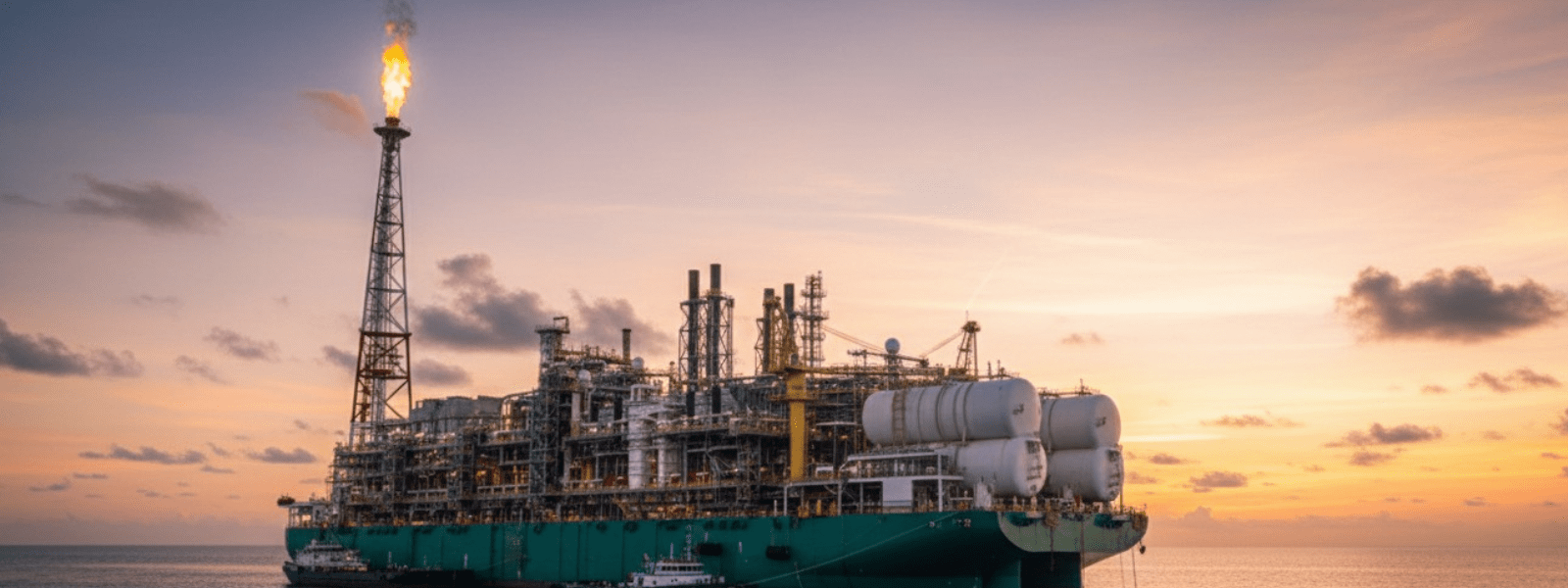
Africa is positioning itself as the global hotspot for floating liquefied natural gas (FLNG) in 2026, as gas-rich nations look to fast-track monetisation of offshore reserves. With billions of cubic feet of natural gas trapped in deepwater fields, countries like Mozambique, Nigeria, and Angola are embracing FLNG as the fastest route to export revenue, strengthen domestic energy supply, and secure a strategic position in the global LNG market.
Unlike traditional onshore liquefaction plants, which often take a decade to complete amid land disputes, financing hurdles, and logistical delays, FLNG facilities are built entirely offshore, reducing costs and shortening deployment timelines to just three to five years. “Natural gas is poised to reshape Africa’s economic future,” said NJ Ayuk, Executive Chairman of the African Energy Chamber. “Even as the global LNG market heads toward a period of oversupply, African demand is forecast to rise 60% by 2050.”
Africa already accounts for approximately 40% of operational FLNG capacity worldwide. Twelve countries currently have projects either operating or under development, with Mozambique leading the way at 7.1 million tonnes per annum (MTPA) of capacity. African FLNG projects collectively represent more than 10 MTPA of liquefaction capacity, with further expansions expected by 2026.
The continent’s offshore gas reserves are vast, with over 500 trillion cubic feet concentrated in the Gulf of Guinea, Niger Delta, and East Africa’s Rovuma Basin. Much of this gas has remained stranded due to the cost and complexity of pipelines or onshore plants. FLNG allows countries to bypass these challenges, floating a liquefaction facility directly above gas fields to produce, store, and export LNG via tanker. Angola’s Soyo non-associated gas project, launched in November 2025, illustrates this approach, supplying 400 million cubic feet of gas per day alongside 20,000 barrels of condensates from offshore fields to Angola LNG.
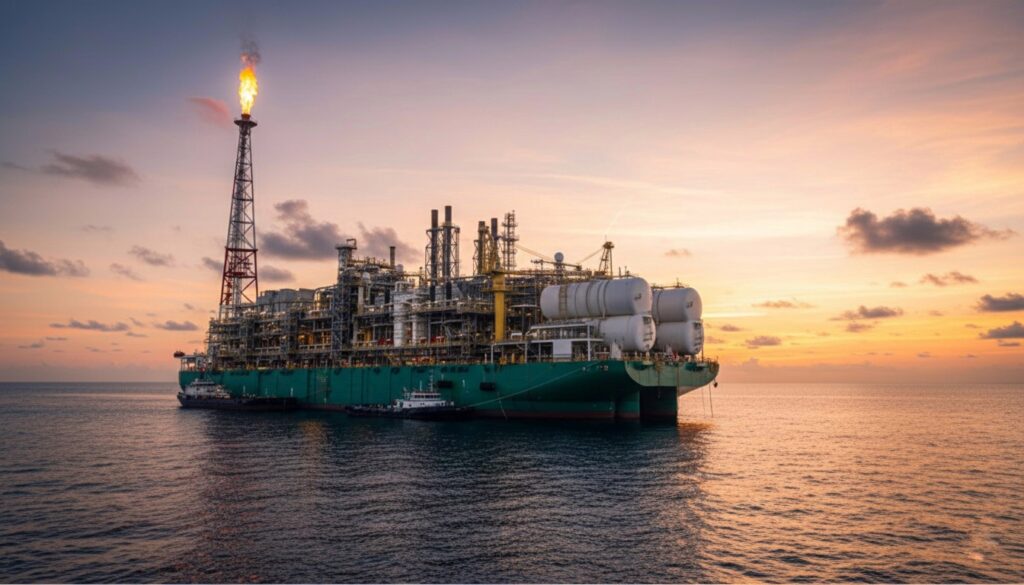
Global LNG trade reached 411.2 million tonnes in 2024, with FLNG projects making up a growing share of new capacity. Africa’s forward-looking nations are racing to secure contracts before a projected 15 million tonne oversupply hits in 2027. Nigeria’s SEC chief economist, Okey Umeano, noted that Africa is “in the driving seat to potentially become the world’s dominant gas supplier,” citing its 115 trillion cubic metres of proven reserves, strategic proximity to Europe, and relative neutrality in global geopolitical disputes. By 2030, global LNG demand is projected to reach nearly 600 MTPA, while sub-Saharan Africa’s exports are expected to climb 174.5%, from 35.7 billion cubic metres in 2024 to 98 bcm by 2034, driven primarily by Nigeria and Mozambique.
FLNG is not just about exports. African governments and energy companies are increasingly using floating LNG to bridge domestic energy gaps, stabilise power generation, and reduce costly fuel imports. Rapid urbanisation and industrialisation are driving demand for gas in power, fertilisers, and petrochemicals. Nations like Egypt and Nigeria spend billions importing treated gas and refined fuels, straining foreign reserves. FLNG enables a portion of offshore gas to be directed to local industries and grids, while still supplying international markets. Projects such as Mozambique’s Coral Sul and Gabon’s Cap Lopez LNG, a $2 billion project due online in 2026, demonstrate this dual-purpose approach.
Africa has emerged as a frontline region for FLNG, with more than half of all ongoing projects located on the continent. Westwood Global Energy estimates that around 60% of the additional $13 billion expected to be invested in FLNG over the next few years will go to African projects. Key operational and upcoming ventures include Mozambique Coral Sul FLNG (3.5 MTPA), Senegal/Mauritania Greater Tortue Ahmeyim (2.5 MTPA), Cameroon Kribi FLNG (2.4 MTPA), Gabon LNG (0.7 MTPA), and Nigeria UTM Offshore FLNG (2.8 MTPA, with final investment decisions expected in 2026). By 2026, Africa could add 10–11 MTPA of FLNG capacity, cementing its role as a flexible supplier to both Europe and Asia.
However, Africa’s embrace of FLNG is a calculated gamble. Global LNG oversupply is expected from 2027, potentially putting pressure on margins. Security, financing, and environmental compliance—especially methane emissions and flaring reduction—remain key challenges. “A surplus global LNG market presents an unexpected opportunity,” said Ayuk. “Buyers seek diverse, reliable suppliers, and Africa, if coordinated, can step into that role. But seizing it demands scaling upstream projects, building LNG capacity, ensuring transparent pricing, and aligning national priorities with investors.”
Despite these risks, FLNG offers Africa a fast, flexible, and economically viable way to monetise offshore gas while supporting domestic energy needs. With rapid urbanisation, industrialisation, and growing electricity demand across the continent, floating LNG is not just an export tool, it is a key component in shaping Africa’s energy future. “FLNG offers Africa a golden opportunity to build production and export capacity quickly and take advantage not just of current European demand but of global gas markets in the years ahead,” said Umeano.