
Artificial intelligence is rapidly reshaping the future of work, with life sciences, customer service, and computer engineering emerging as some of the next sectors on the brink of large-scale automation, according to Olivier Godement, Head of Product for Business Products at OpenAI.
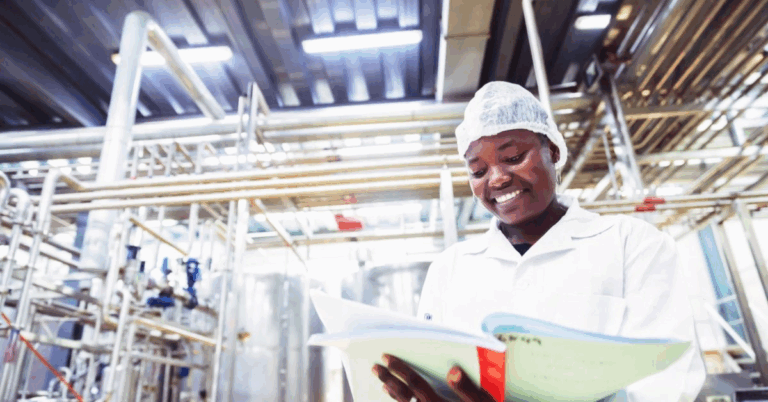
Speaking on an episode of the Unsupervised Learning podcast, Godement said his strongest bet for near-term AI transformation lies within life sciences and pharmaceutical companies, where AI is already proving effective in streamlining complex and time-intensive processes.
Godement explained that drug development typically involves two major components: scientific research and experimentation, alongside extensive administrative and documentation work. While experimentation remains highly specialised, he noted that administrative processes—often responsible for delaying drug approvals by months or even years—are increasingly well suited for automation.
“The time it takes from once you lock the recipe of a drug to having that drug on the market is months, sometimes years,” Godement said. “Models are becoming very good at aggregating and consolidating large volumes of structured and unstructured data, and identifying changes across documentation.”
Godement, who joined OpenAI in 2023 after spending eight years working on product development at Stripe, said pharmaceutical firms such as Amgen are already leveraging AI tools to accelerate internal workflows and reduce inefficiencies across drug development pipelines.
Beyond healthcare, Godement highlighted software engineering as another field experiencing significant AI-driven disruption. While he acknowledged that AI has not yet reached the stage where it can fully replace software engineers, he suggested the trajectory is becoming increasingly clear.
“The automation is probably not yet at the level of completely replacing a software engineer,” he said, “but we do have a line of sight to getting there.”
The future of software engineering has become one of the most debated topics in global tech circles this year, as AI-assisted coding tools are now embedded into the daily workflows of many companies. Supporting this trend, an October study by Indeed revealed that software engineers, quality assurance engineers, product managers, and project managers were among the tech roles most affected by recent layoffs and organisational restructuring.
Customer-facing roles are also expected to undergo major changes. Godement pointed to customer service, sales, and customer experience as areas where AI automation is advancing quickly. He cited ongoing collaborations with US telecom giant T-Mobile, where AI systems are already delivering improved customer experiences at scale.
“My sense is we’ll probably be surprised in the next year or two by how many tasks can be automated reliably,” he said.
Godement’s comments echo broader concerns raised by global AI leaders. In a June podcast appearance, Geoffrey Hinton—widely regarded as the “Godfather of AI”—warned that large language models could eventually outperform humans in most forms of intellectual labour.
“For mundane intellectual work, AI is just going to replace everybody,” Hinton said, adding that roles such as paralegals and call centre workers are particularly vulnerable. However, he noted that jobs requiring physical manipulation, such as plumbing, may remain safer in the near term.
As AI adoption accelerates across industries, experts say the challenge for businesses and workers alike will be adapting skills, redefining roles, and ensuring that automation drives productivity and innovation, rather than deepening job insecurity.