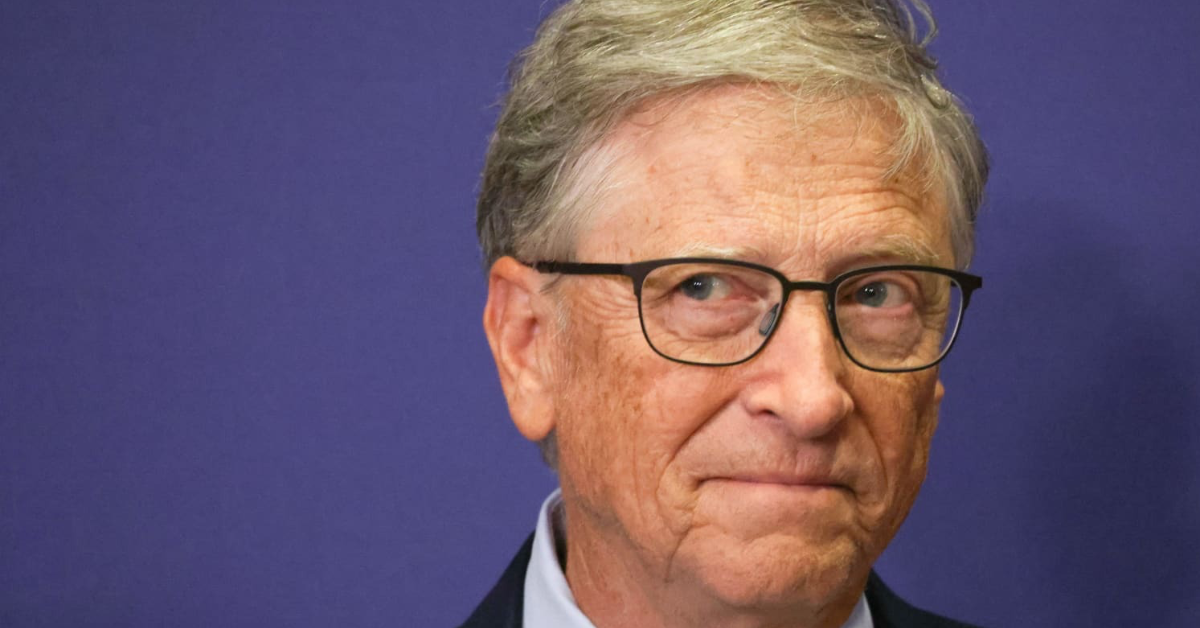
Billionaire technology entrepreneur Bill Gates has once again reduced his exposure to Microsoft, as the Bill & Melinda Gates Foundation Trust cut its stake in the software giant by 16%.
According to the latest SEC 13F filing for the quarter ended 31 December 2025, the trust lowered its Microsoft holdings as part of a broader portfolio adjustment. The $35.4 billion investment vehicle funds the global programs of the Bill & Melinda Gates Foundation, which focuses on health, poverty reduction and disease eradication.
Although Microsoft once dominated the trust’s portfolio, its position has steadily declined over recent quarters. In Q3 2022, the stock accounted for 27% of total holdings after a significant addition of shares. Since then, the trust has trimmed its exposure in phases. As a result, Microsoft now represents about 11% of the portfolio, valued at approximately $3.72 billion, and ranks fourth among the trust’s largest investments.
Meanwhile, Berkshire Hathaway remains the biggest holding at $9.75 billion, despite a recent 10.84% reduction. The portfolio also maintains strong positions in Waste Management and Canadian National Railway Company, both of which now outweigh Microsoft in total allocation. Additionally, the trust holds sizeable investments in Caterpillar, Deere, Ecolab, Walmart, FedEx and Coca-Cola FEMSA, reinforcing a diversified long-term strategy.
Importantly, the Gates Foundation operates under a two-part structure. The foundation awards grants and oversees charitable initiatives, while the trust manages the endowment and investment assets. The foundation’s leadership does not direct the trust’s investment decisions. Instead, the trust independently manages funds donated by Bill Gates, Melinda French Gates and annual contributions from veteran investor Warren Buffett. Investment proceeds are then transferred to finance global health and development programs.
Bill Gates co-founded Microsoft in 1975 with Paul Allen and led the company as CEO until 2000 before serving as chairman until 2014. Under his leadership, Microsoft transformed personal computing through its Windows operating system, Office software suite, and later expansion into cloud computing and gaming. The company’s rise made Gates the world’s youngest self-made billionaire in 1987 and the richest person globally for nearly two decades.
Today, his estimated net worth stands at about $105 billion. However, his global wealth ranking has gradually declined because he continues to transfer significant portions of his fortune to philanthropy. The foundation has committed to spending its entire $200 billion endowment and closing by 2045, a move that underscores its mission-driven approach to wealth.
Beyond philanthropy, Gates invests heavily in climate innovation. He founded Breakthrough Energy to accelerate clean technology funding. Furthermore, his nuclear energy company TerraPower develops next-generation reactor systems aimed at reducing carbon emissions.
Therefore, the continued reduction of Microsoft shares signals portfolio rebalancing rather than a dramatic exit. Large endowments frequently adjust asset allocations to preserve capital and ensure consistent returns. In this case, the trust appears focused on long-term growth and funding stability as it advances its global development goals.