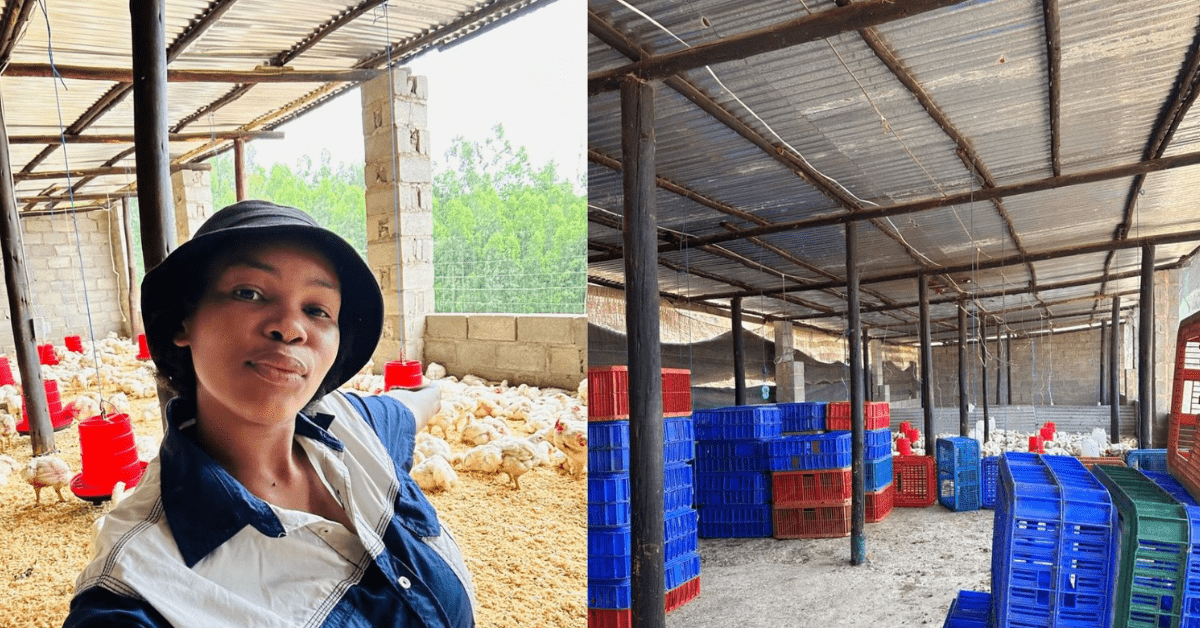
Entrepreneurship runs deep in Bongeka Vilakazi’s story. The founder of Asandanathi Poultry Farm Pty Ltd has transformed a small backyard poultry project into a growing broiler production enterprise in Ndwedwe, KwaZulu-Natal. What began with about 100 chickens now produces more than 3,000 broilers in a single production cycle.
Vilakazi credits her early environment for shaping her business mindset. She grew up between Umlazi and Ndwedwe alongside her parents and grandparents. Their influence created a disciplined and supportive upbringing. As a result, she learned the importance of consistency, structure, and responsibility from a young age.
Her late grandfather, Gonolothi Mbatha, played a particularly strong role in shaping her entrepreneurial thinking. He was widely known in the community for selling live chickens and operating a tavern. At the same time, he explored many small trading opportunities to generate income.
Vilakazi often watched him interact with customers and manage daily business tasks. Consequently, she developed an early curiosity about how money flows through a business. Those observations slowly shaped her understanding of trade and financial discipline.
The rural environment in Ndwedwe also exposed her to a strong culture of community-driven commerce. Local entrepreneurs often supported one another while serving the needs of nearby households. This experience helped her appreciate the value of business beyond profit alone.
During childhood, she also learned practical financial skills. For instance, she assisted with counting money and tracking daily sales. These simple activities strengthened her confidence with numbers and business planning.
As she grew older, agriculture became an obvious career path. After completing matric, Vilakazi decided to pursue formal training in farming. She enrolled at Coastal College of Agriculture, where she studied primary agriculture from 2015 to 2017. The programme covered both crop and livestock production, which gave her a solid foundation for future agribusiness ventures.
Meanwhile, her home life remained stable and encouraging. She grew up with her parents, two brothers, a sister, and a niece in a household that valued responsibility and ambition.
According to Vilakazi, her grandfather’s work ethic remains her greatest inspiration. “I learned the importance of entrepreneurship from my grandfather,” she says. “He was hardworking, intentional, and thoughtful in how he did business.”
However, she explains that his lessons extended beyond profit. He also demonstrated how business could strengthen community ties. “Business was never only about money,” she adds. “It was also about learning, creating opportunities, and supporting people around you.”
Today, Vilakazi channels those values into the daily operations of Asandanathi Poultry Farm. Running a broiler enterprise requires strict schedules, detailed planning, and constant monitoring of bird health and feed consumption. Therefore, the discipline she learned during childhood continues to guide her decisions.
The growth of her poultry business reflects both persistence and strategic learning. Starting with a modest flock allowed her to understand production cycles, market demand, and cost management. Over time, she reinvested profits and expanded capacity.
Now producing over 3,000 broilers per cycle, Vilakazi is steadily establishing herself within KwaZulu-Natal’s emerging network of young agripreneurs. Her journey highlights how small-scale farming can evolve into a viable rural enterprise when combined with education, discipline, and community support.
For Vilakazi, the goal remains bigger than personal success. She hopes her story will inspire other young people, especially women in rural areas, to explore agriculture as a business opportunity. By turning early lessons into a growing poultry enterprise, she continues to build on a legacy that started in her grandfather’s yard.