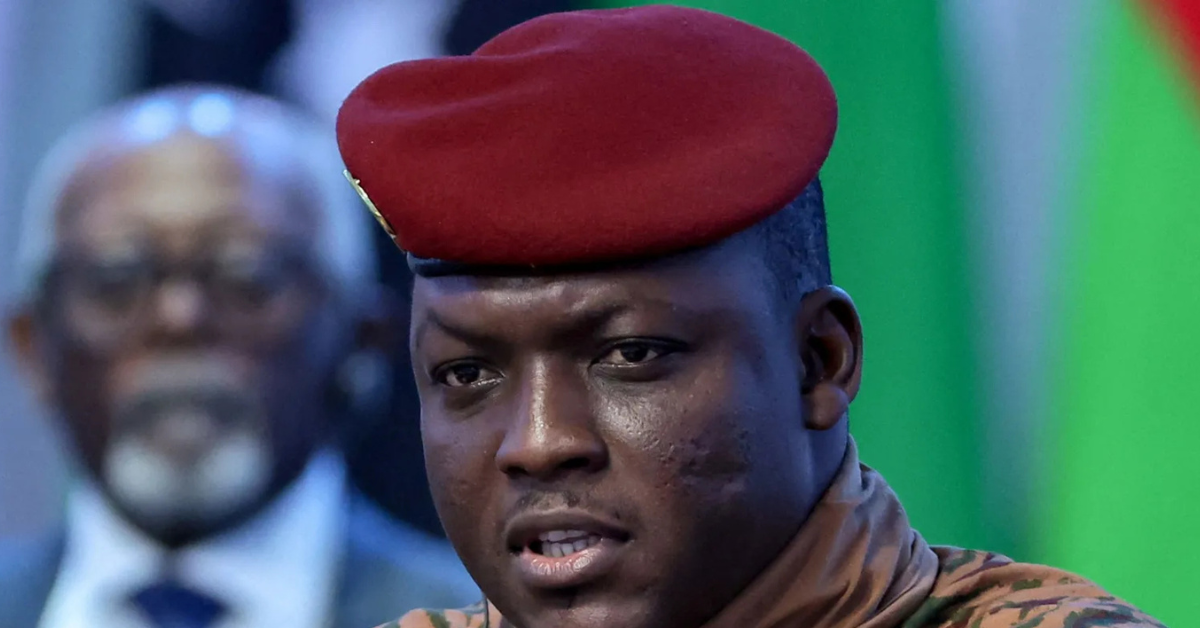
Burkina Faso’s military leader, Ibrahim Traoré, has sparked fresh controversy after openly rejecting democracy and urging citizens to abandon the system entirely. His remarks, delivered during a televised interview, are already fueling intense debate across Africa and beyond.
Traoré argued that democracy has failed the continent. He warned that Africans should be cautious when the concept is promoted. According to him, democracy often brings instability rather than progress.
He questioned the global narrative surrounding democratic governance. He pointed to conflict zones as evidence. “If someone comes talking about democracy, you should run,” he said. “Democracy kills.”
The 38-year-old leader, who seized power in a 2022 coup, insisted that Burkina Faso must chart its own political direction. He stressed that the country would not copy Western systems. Instead, he called for a revolutionary model rooted in African values.
Traoré also cited the collapse of Libya as a warning. He argued that foreign-backed democratic interventions often trigger chaos. Since the fall of Muammar Gaddafi, Libya has struggled with division and insecurity.
Although democracy remains the dominant system across much of Africa, Traoré claimed many citizens are disillusioned. He suggested that elections alone do not guarantee stability or development.
Earlier promises to restore civilian rule by July 2024 have already been abandoned. Instead, Burkina Faso’s military government extended its rule by five years. In January, authorities went further by banning all political parties, describing them as divisive.
Traoré defended that move. He described political actors as self-serving and disconnected from national interests. He argued that traditional leadership structures and grassroots mobilization would play a bigger role in governance going forward.
At the same time, he emphasized economic independence and military strength. He urged citizens to work harder, insisting that shorter working hours would not help the country compete globally.
However, critics continue to raise concerns about human rights. Reports suggest dissent has been suppressed under the junta. Opposition voices, media outlets, and civil society groups have faced increasing pressure.
Despite these concerns, Traoré has built a strong following among young Africans. Many supporters admire his anti-Western stance and pan-African rhetoric. His message resonates particularly in the Sahel region, where frustration with foreign influence has grown.
Burkina Faso, alongside Mali and Niger, has shifted away from traditional Western allies such as France. Instead, these nations have deepened ties with Russia for military support.
Yet, insecurity remains a major challenge. Islamist insurgencies continue to destabilize the region. According to Human Rights Watch, more than 1,800 civilians have been killed in Burkina Faso since Traoré took power. The report attributes a significant portion of those deaths to government forces and allied militias.
As the debate intensifies, Traoré’s comments highlight a broader ideological shift in parts of Africa. Questions about democracy, sovereignty, and development are now at the center of political discourse. For many observers, Burkina Faso has become a key test case for the continent’s future direction.