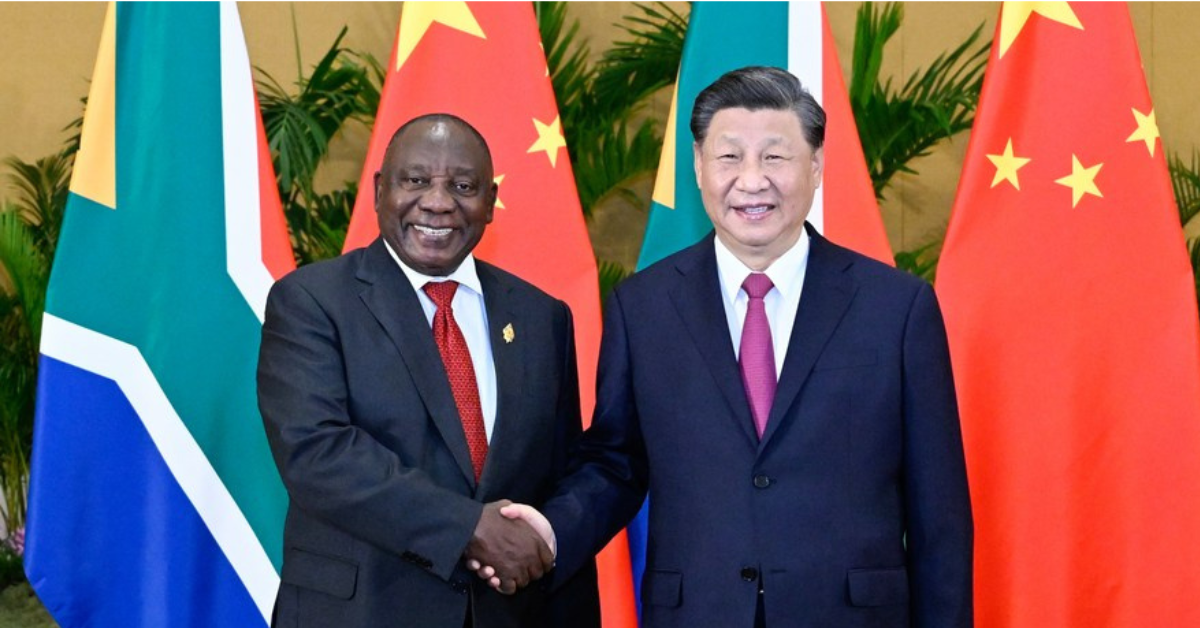
China has agreed to grant duty-free market access to selected South African products under a trade agreement nearing completion, marking a decisive shift in Pretoria’s global trade strategy as pressure mounts from the United States.
The South African government confirmed that Trade, Industry and Competition Minister Parks Tau is travelling to China to sign the deal. Officials expect the agreement to unlock new export opportunities and accelerate Chinese investment into South Africa’s economy.
According to the trade ministry, the visit aligns with Pretoria’s push for market diversification and export growth. However, authorities have not yet revealed which sectors will benefit first.
China Strengthens Its Lead as South Africa’s Top Trading Partner
China already stands as South Africa’s largest single-country trading partner, overtaking the European Union in 2023. Exports to China mainly include minerals and agricultural goods, industries that could gain quickly from reduced tariffs.
As a result, analysts expect the agreement to boost export volumes while improving price competitiveness in the world’s second-largest economy. Moreover, duty-free access could encourage value-added manufacturing rather than raw material exports.
Trade Shift Accelerates as US Relations Deteriorate
Meanwhile, relations between South Africa and the United States have continued to deteriorate. Washington imposed 30% tariffs on selected South African products in August last year, sparking fears of job losses and weakened industrial output.
Tensions have since intensified across diplomatic, trade, and geopolitical fronts, disrupting a once-stable economic relationship. Although Pretoria has attempted to renegotiate trade terms, progress has remained slow and uncertain.
Consequently, concerns are growing over South Africa’s future access to US-backed trade frameworks, including preferential market arrangements.
BRICS and Global South Drive New Trade Strategy
Against this backdrop, Pretoria has turned toward China, BRICS partners, and the wider Global South to reduce reliance on Western markets. This recalibration reflects a broader effort to shield the economy from unilateral trade shocks.
In the long term, stronger trade ties with China could stabilise export revenues, attract foreign investment, and support industrial expansion. Additionally, duty-free access may help South Africa compete more effectively in global supply chains.
Although uncertainty remains over whether Washington will fully restore trade privileges, South Africa appears increasingly determined to control its economic destiny by expanding its global options.