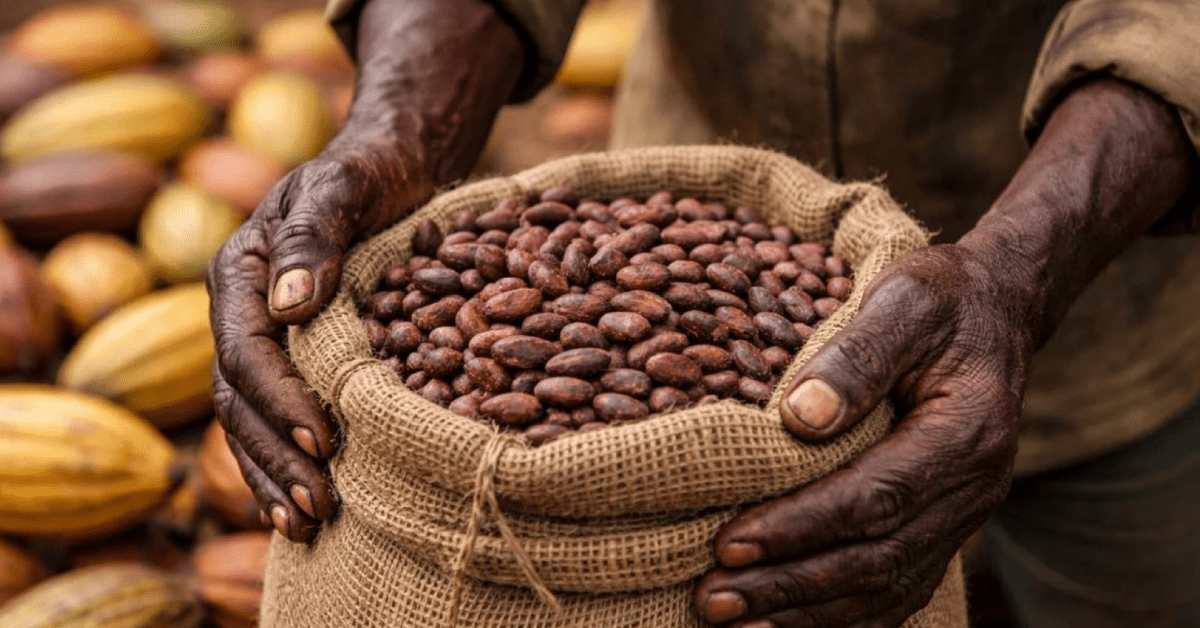
Ghana and Cote d’Ivoire, the world’s two largest cocoa producers, now face one of the most severe cocoa sales crises in decades as global prices collapse and unsold beans pile up across warehouses. Together, both nations supply more than half of the world’s cocoa. However, falling demand and abundant global harvests have triggered a sharp downturn that is shaking West Africa’s agricultural backbone.
In a bold and unprecedented move, Cote d’Ivoire has decided to bring forward the start of its mid-crop season for the first time. Authorities will now classify cocoa harvested in March as mid-crop instead of main crop. As a result, officials plan to reduce the farmgate price to between 800 and 1,000 CFA francs per kilogram. That adjustment marks a steep drop from the higher main crop rates announced last October.
Meanwhile, Ghana has also taken painful steps. The country’s cocoa regulator cut the fixed farmer price by nearly a third in February after estimating that about 50,000 tons of cocoa remain unsold. Previously, Ghana had set its main crop price at nearly $5,300 per metric ton. Today, global cocoa futures hover near $3,100 per ton after losing roughly half their value within a year.
According to Akinyinka Akintunde, CEO of Afex Commodities Exchange, the situation threatens farmers’ livelihoods across the region. He warns that producers may struggle to receive fair value for their labour if governments continue adjusting prices downward. Furthermore, he notes that most smallholder farmers already operate near or below the poverty line, which makes any income shock devastating.
Unlike many other commodity markets, cocoa trading in both countries follows a regulated system. Government-appointed regulators sell roughly 80% of expected annual output to global traders in advance. They then set a fixed farmgate price at the start of the season in October based on those forward contracts. Farmers sell beans to licensed buyers at that rate, and the beans eventually reach global markets.
However, when world prices fall sharply after contracts are agreed, global traders face heavy losses if they purchase cocoa at higher fixed prices and resell at lower futures rates. Consequently, many traders have slowed or halted purchases. This hesitation has left thousands of tons of cocoa unsold in storage facilities across Ivory Coast and Ghana.
Global cocoa prices surged to record highs in 2024 after nearly tripling. Yet they have since dropped by almost three quarters. On one hand, chocolate manufacturers reduced cocoa usage by shrinking bar sizes and increasing alternative ingredients. On the other hand, favorable weather improved harvests, creating a projected global surplus of between 300,000 and 400,000 tons this season. Together, weaker demand and stronger supply accelerated the price crash.
In response, Cote d’Ivoire launched a $500 million programme to purchase 100,000 tons of unsold main crop cocoa directly from farmers. The government hopes this intervention will inject liquidity into rural communities and stabilize the market. Ghana, however, faces deeper financial strain. After defaulting on much of its $30 billion external debt, the country now struggles to secure affordable financing for cocoa purchases.
Cocoa remains central to both economies. The crop accounts for nearly 40% of export revenue in Cote d’Ivoire and about 15% in Ghana. Therefore, prolonged price weakness could weaken foreign exchange reserves and strain public finances. Nearly two million farmers and their families depend on cocoa income, which means the social consequences could be far-reaching.
Looking ahead, experts argue that both governments must rethink their pricing and marketing strategies. Some analysts propose greater storage capacity to manage surpluses during downturns. Others recommend diversifying value chains by investing in local processing to capture more revenue from chocolate production. In addition, stronger regional coordination could help both nations respond faster to global price swings.
Ultimately, the cocoa sales crisis presents a defining moment for West Africa’s top producers. While short-term price cuts may unlock stalled trade, long-term reforms will determine whether Ghana and Cote d’Ivoire can shield farmers from future market shocks and secure sustainable growth in the global cocoa industry.