
East Africa is emerging as a key driver of Iran’s export growth, with Tanzania ranking among the country’s top five export destinations over the first eight months of the current Iranian calendar year. This development underscores the strengthening trade ties between Iran and African nations and highlights East Africa’s role in helping Tehran diversify its export markets.
According to the Trade Promotion Organization (TPO) of Iran, exports to African countries reached 849 million US dollars between March 21 and November 21, marking a remarkable 77% increase compared to the same period last year. Mohammadreza Safari, Director-General of the TPO’s Africa Office, noted that this eight-month figure already matches Iran’s total exports to the African continent for the entirety of the previous year, with expectations to surpass 1 billion US dollars by year-end.
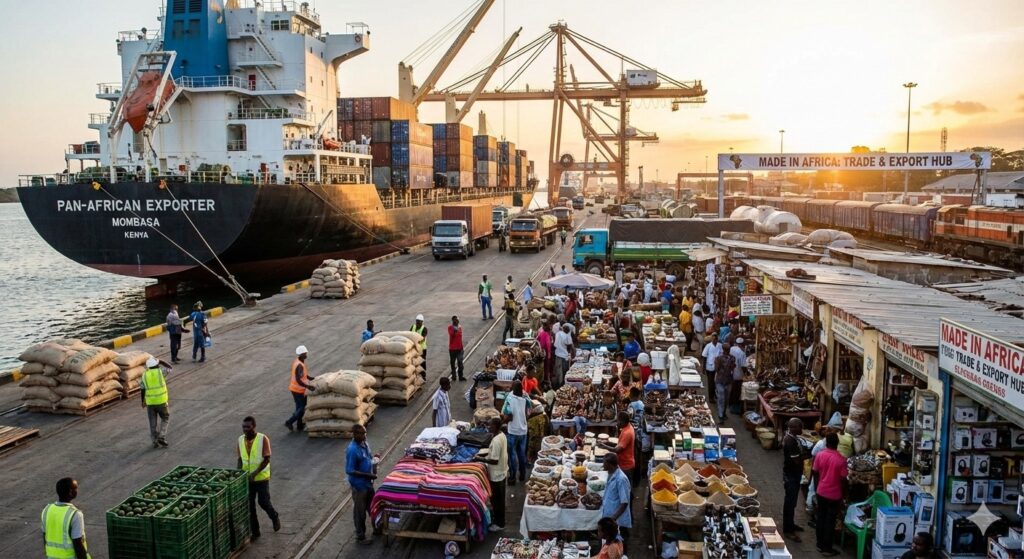
Key Iranian export destinations in Africa include Tanzania, Kenya, Ghana, South Africa, and Somalia, reflecting Tehran’s strategic focus on both East and West Africa. The main exported products comprise iron ingots, steel, urea, bitumen, food products, motor oil, and cement, while Iran’s imports from African countries totaled 45 million US dollars during the same period.
Masoud Berahman, head of the Iran–Africa Joint Chamber of Commerce, emphasized the country’s commitment to supporting Iranian investments across Africa. He revealed that the Export Guarantee Fund of Iran (EGFI) would back up to 3 billion US dollars in African investments, complemented by around 2 billion euros from the National Development Fund (NDF) to support startups and entrepreneurial projects linked to trade development.
Berahman highlighted Africa’s potential as a high-growth market, citing the continent’s 1.45 billion population and broad consumer base as prime opportunities for Iranian goods, technical services, and engineering projects. However, he warned that realizing this potential requires stronger infrastructure, clearer policies, and sustained government support, noting that Iran currently lacks a comprehensive trade roadmap to systematically monitor markets and assess country-specific opportunities.
He called for closer collaboration between the TPO, the economic diplomacy department, and the Iran Chamber of Commerce with the private sector to strengthen digitalization and create a unified export strategy. Berahman also underscored the importance of expanding economic diplomacy, pointing out that Turkey maintains 44 trade counselors across Africa compared to just three Iranian counterparts, a gap that limits Tehran’s trade reach.
“Iran must expand its trade with neighboring countries, Africa, and other emerging markets,” Berahman said. “Coordinated policies, long-term planning, and professionalized export capacity building are essential to transforming Africa into a sustainable growth market for Iranian products and services.”
With Africa emerging as a strategic destination for exports, Iran’s strengthened focus on the continent signals not only growing trade ties but also an ambition to diversify its economy beyond traditional markets.