
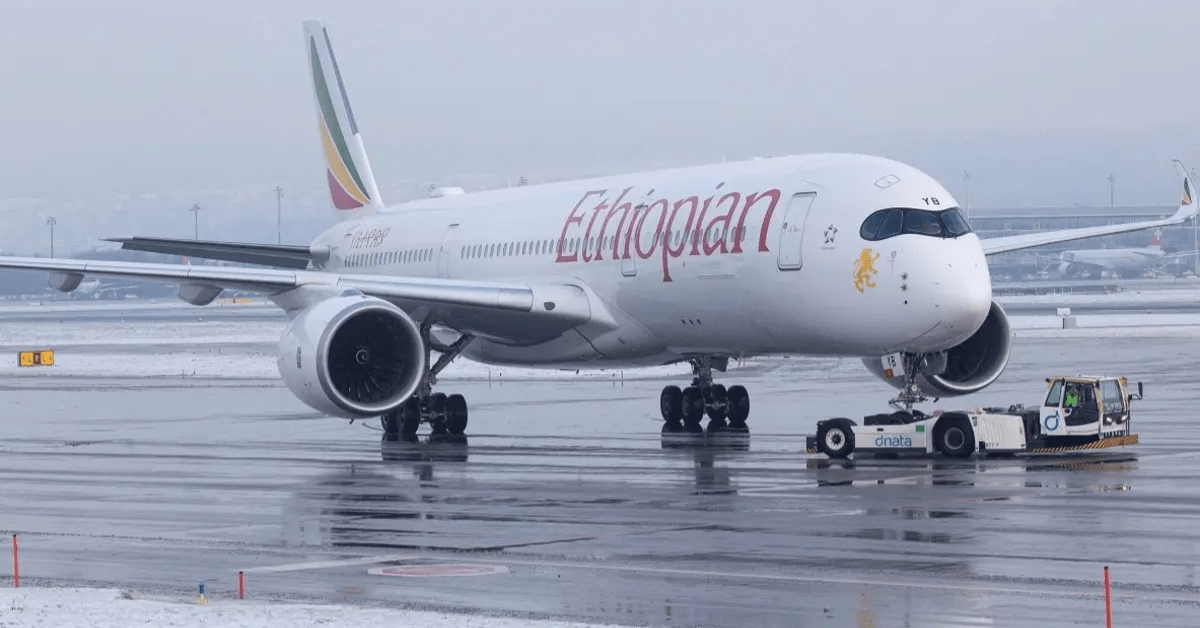
Ethiopian Airlines has officially launched a $12.5 billion project to construct Bishoftu International Airport, which is set to become Africa’s largest aviation hub when completed in 2030. The groundbreaking ceremony took place on Saturday in Bishoftu, a town located roughly 45 kilometres southeast of Addis Ababa.
The state-owned carrier secured the design and construction contract, planning a facility with four runways, parking for 270 aircraft, and an annual passenger capacity of 110 million. “Bishoftu International Airport will be the largest aviation infrastructure project in Africa’s history,” Prime Minister Abiy Ahmed Ali announced on X. He noted that the airport will handle more than four times the traffic of Ethiopia’s current main airport, which is expected to reach capacity within the next two to three years.
Ethiopian Airlines’ Infrastructure Development & Planning Director, Abraham Tesfaye, revealed that the airline would fund 30% of the project while lenders finance the remaining 70%. The company has already allocated $610 million for initial earthworks, which are slated for completion within a year. Main construction is scheduled to begin in August 2026.
The project’s estimated cost has risen from $10 billion to $12.5 billion, reflecting the scope and scale of the development. The African Development Bank will contribute $500 million and coordinate efforts to raise $8.7 billion from international lenders. Tesfaye added that investors from the Middle East, Europe, China, and the United States have also expressed strong interest in financing the project.
Ethiopian Airlines, Africa’s largest carrier, continues to expand its operations. In 2024/25, the airline added six new routes, alongside a steady rise in revenues, positioning itself as a key driver of African aviation growth.
With Bishoftu International Airport, Ethiopia aims to cement its status as the continent’s aviation hub, attracting global airlines and transforming regional connectivity. Analysts say the airport could generate thousands of jobs and significantly boost tourism, trade, and economic development across East Africa.