Ghana and Burkina Faso have signed seven bilateral agreements to strengthen security cooperation and protect one of West Africa’s most strategic trade corridors.
The agreements mark a decisive diplomatic reset after six years without structured engagement under the Permanent Joint Commission for Cooperation. This renewed partnership directly addresses rising insecurity in the Sahel and mounting pressure on the Tema–Ouagadougou corridor, a lifeline for regional commerce.
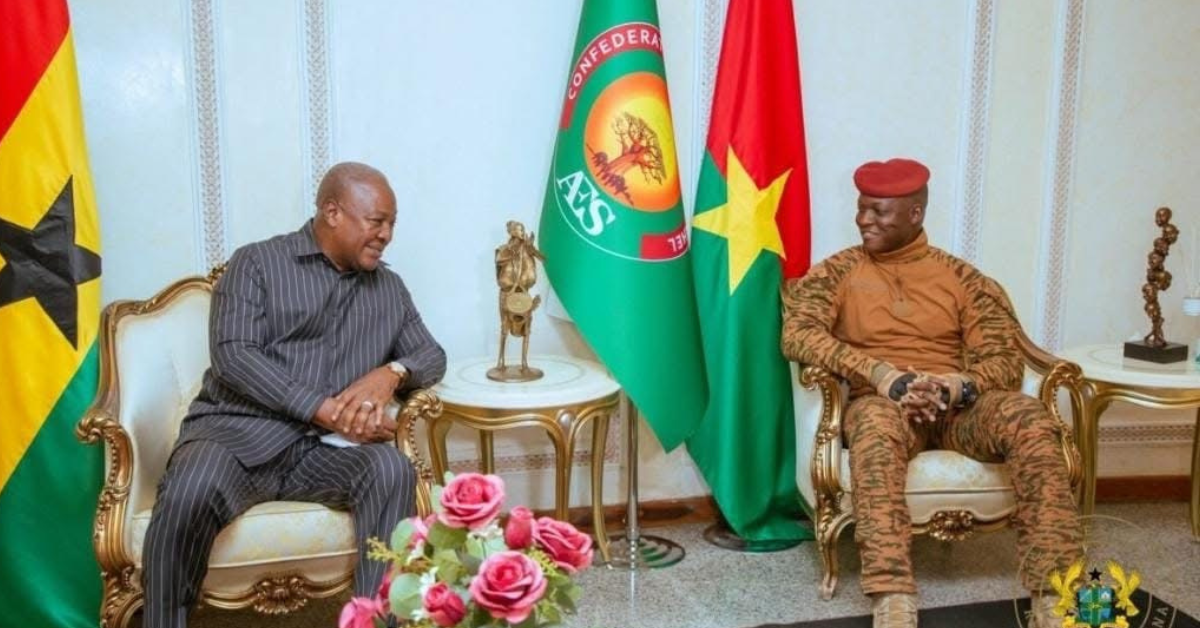
Officials concluded the agreements following renewed high-level engagement between President John Mahama and Captain Ibrahim Traoré in 2023. Their earlier discussions reopened channels between Accra and Ouagadougou. Now, both governments have moved from dialogue to concrete action.
Security concerns dominated the talks. Terrorist attacks across the Sahel continue to threaten border communities and commercial routes. Ahead of the session, Ghana’s Foreign Minister Samuel Okudzeto Ablakwa visited victims of the 14 February terrorist attack in Titao who were receiving treatment in Accra. The assault reportedly killed several civilians, including Ghanaian traders.
During the joint session, both governments condemned recent terrorist attacks in the sub-region and expressed sympathy to affected families. They also agreed to establish a coordinated security framework to combat terrorism and violent extremism along their shared border. This framework will strengthen intelligence sharing, improve patrol coordination, and tighten frontier monitoring.
Beyond security, trade facilitation formed a central pillar of the agreements. The Tema–Ouagadougou corridor serves as a crucial export route for Ghana and a vital supply line for landlocked Burkina Faso. However, regulatory bottlenecks and inconsistent border procedures have slowed movement for years.
To resolve this, both countries agreed to mutually recognise national driver’s licences. This measure will reduce delays and simplify cross-border transport operations. In addition, they signed a transport and road transit agreement to harmonise regulations and accelerate cargo movement along the corridor.
The two sides also adopted a cross-border cooperation framework and introduced periodic consultations between local border authorities. These measures aim to improve governance, prevent disputes, and enhance coordination in frontier communities.
Humanitarian concerns also shaped the discussions. Seasonal spillage from the Bagré Dam has historically caused flooding in northern Ghana. Consequently, both governments signed a disaster prevention and humanitarian crisis management agreement. The new framework prioritises early warning systems, data sharing, and rapid emergency response to reduce displacement and economic losses.
To reinforce sovereignty and avoid boundary disputes, Ghana and Burkina Faso agreed to establish a joint commission to reaffirm their shared border. At the same time, they signed an agreement targeting illicit cultivation, trafficking, and manufacture of narcotic drugs and psychotropic substances. This pact strengthens regional efforts to disrupt criminal networks that often intersect with extremist financing.
Despite the broad scope of the agreements, Minister Ablakwa stressed that implementation will determine success. He made it clear that the accords will not become symbolic documents. Instead, both governments intend to operationalise them swiftly.
Regional analysts describe the renewed cooperation as timely and strategic. Persistent militant activity, cross-border crime, and climate-related flooding continue to threaten economic stability across the Sahel. Therefore, coordinated action has become urgent.
If fully implemented, the seven agreements could improve trade efficiency, strengthen border security, and enhance humanitarian coordination along one of West Africa’s most critical commercial corridors. For Ghana and Burkina Faso, the reset signals a pragmatic commitment to deeper economic integration and shared security responsibility in an increasingly volatile region.