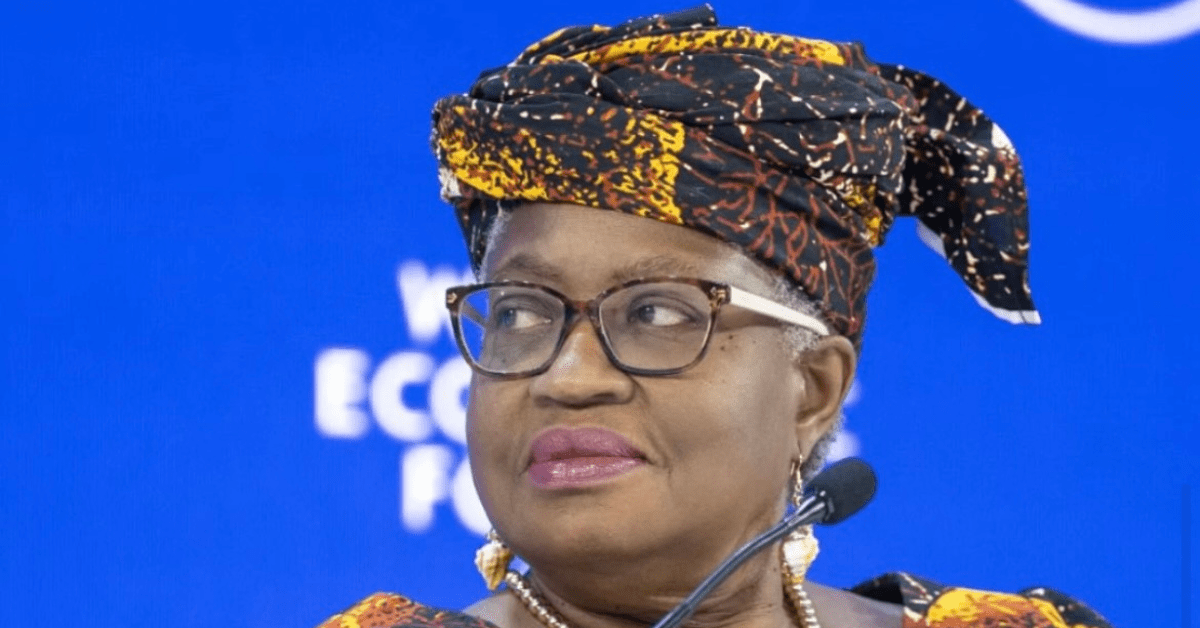
Ngozi Okonjo-Iweala, Director-General of the World Trade Organisation, has warned that global trade will not return to its pre-disruption era, urging countries and businesses to prepare for a future shaped by uncertainty and resilience.
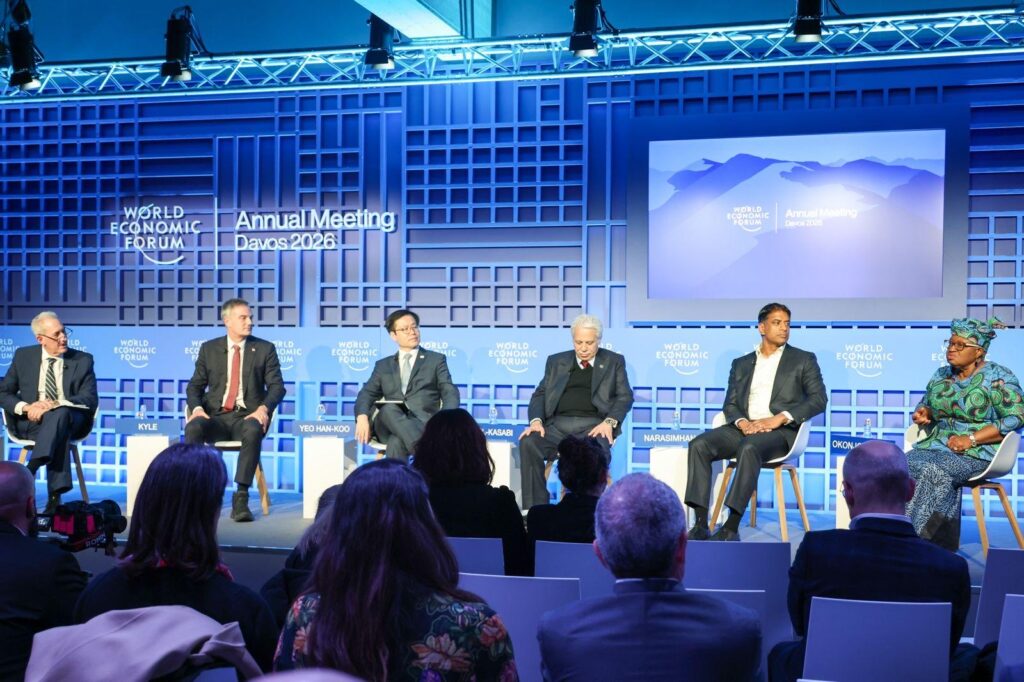
She made the remarks on Friday while speaking during a panel session on the global economic outlook at the 2026 World Economic Forum in Davos, Switzerland.
“I don’t think we will go back to where we were,” Okonjo-Iweala said. “If I were a business leader or a policymaker, I would plan for a world that is not going back to its old model.”
She added that uncertainty has become a permanent feature of the global economy, making resilience a strategic necessity rather than a choice. As a result, she called on governments to design policies that strengthen domestic production and expand regional trade capacity.
The WTO chief participated in a panel titled “The Many Shapes of Trade,” moderated by former United States Trade Representative and President of the Council on Foreign Relations, Mike Froman. The discussion also featured Saudi Arabia’s Minister of Commerce, Majid Al-Kassabi, South Korea’s Trade Minister, Yeo Han-koo, UK Secretary of State for Business and Trade, Peter Kyle, and Novartis CEO, Vas Narasimhan.
During the session, the panelists examined how supply chains are reconfiguring and how global trade routes are adjusting to geopolitical tensions and economic fragmentation. Okonjo-Iweala stressed that modern trade systems must become more flexible, responsive, and agile to capture emerging opportunities.
She acknowledged that the global trading system has suffered its most severe disruption in 80 years, driven by geopolitical rivalries, unilateral trade measures, and weakened multilateral cooperation. However, she maintained that the system remains operational and resilient.
“Seventy-two percent of world trade is still taking place under WTO rules,” she said. “That shows the system is resilient and not close to collapse.”
Enter For a Chance to Get a $1000 Costco!

Nevertheless, she admitted that the organisation faces structural challenges that require urgent reform. While she disagreed with several unilateral trade actions taken by major economies, she said the underlying concerns about the system deserve serious attention.
According to her, WTO reform is essential to restore confidence, modernise trade rules, and protect developing economies from unfair disadvantages in global markets.
She also cautioned policymakers against reacting impulsively to short-term shocks, advising governments to adopt long-term strategies anchored in stability and cooperation. In her words, the global economy now demands “steady nerves” and disciplined leadership.
Beyond institutional reform, Okonjo-Iweala warned against excessive dependence on major economies such as the United States and China. Instead, she urged countries to diversify their trade partnerships and supply chains to reduce vulnerability to political or economic disruptions.
She said broader trade networks would strengthen economic security, support sustainable growth, and unlock new opportunities for emerging markets, including African economies seeking to scale exports and industrial capacity.
Her remarks underline a growing consensus among global leaders that the era of predictable trade flows has ended. In its place stands a more complex system that rewards adaptability, regional integration, and strategic resilience.
For developing regions, especially Africa, the message carries significant weight as countries pursue industrialisation, deeper intra-African trade, and stronger participation in the global economy under frameworks such as the African Continental Free Trade Area.
As global trade continues to evolve, Okonjo-Iweala’s message from Davos is clear: nations that invest in resilience today will shape the future of international commerce tomorrow.