For those meeting you for the first time through this feature, how would you introduce yourself, and what first drew you into filmmaking?
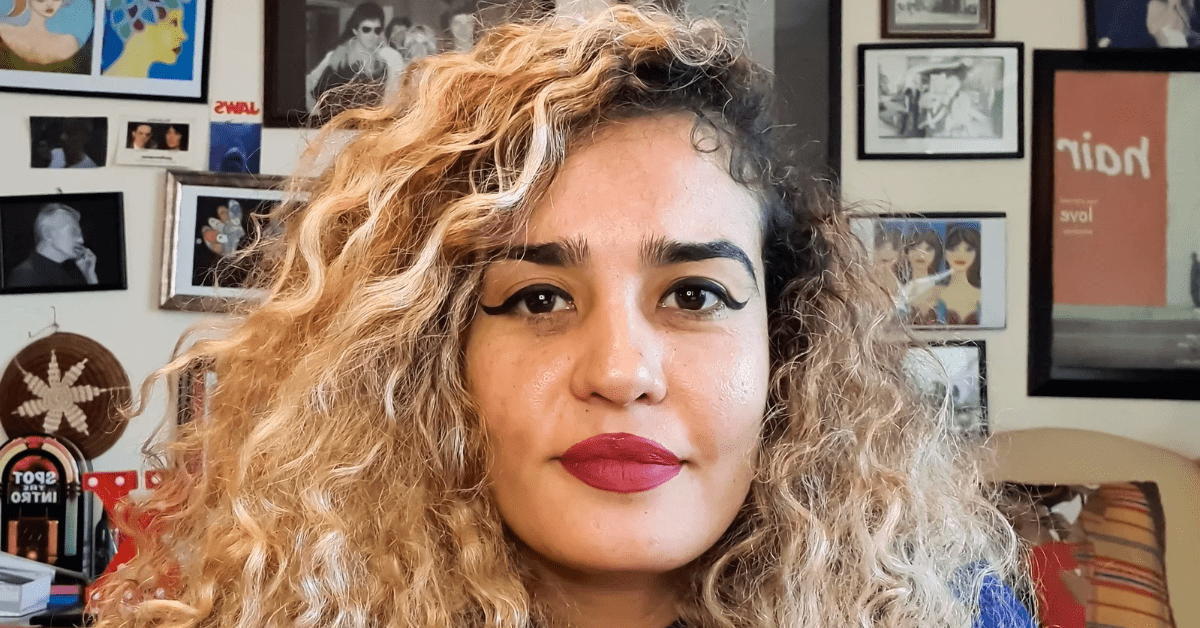
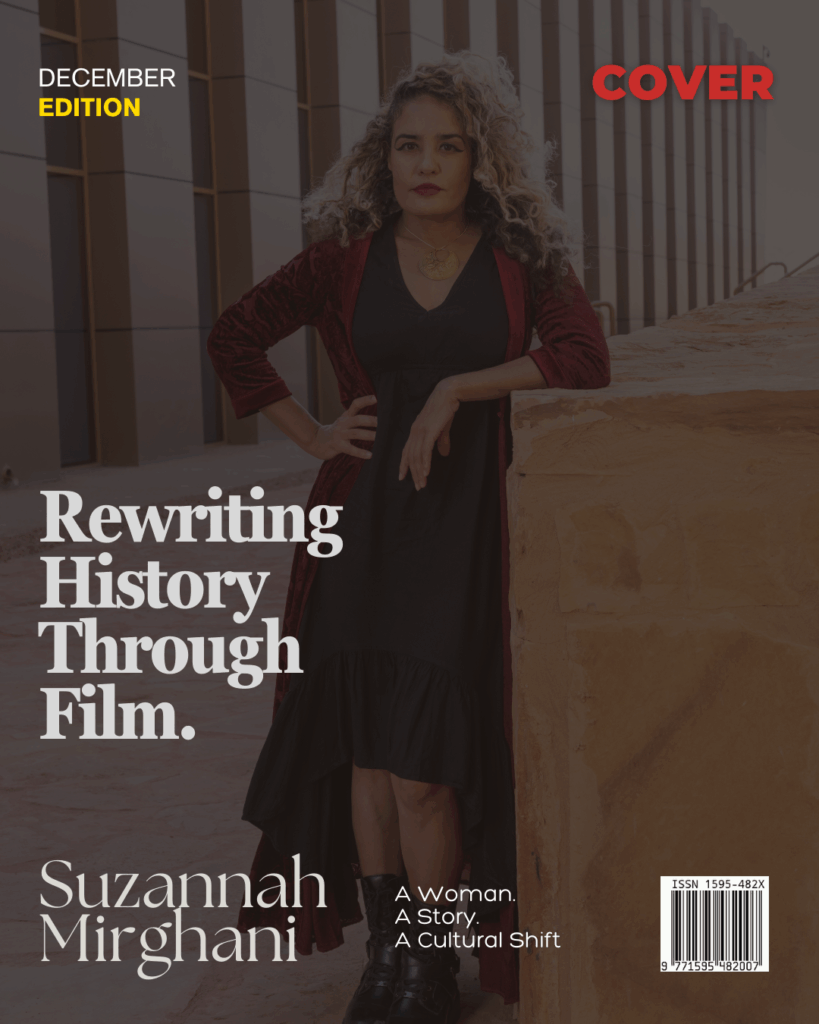
I am a Sudanese-Russian writer, researcher, and filmmaker. I grew up in a multicultural, multigenerational household, influenced by my grandparents’ folktales, my mother’s classical music, film, and literature, and my eldest sister’s love of modern art and pop culture. I was born in Sudan, lived part of my childhood in the UK, before returning with my family to my father’s hometown of Omdurman. Making the transition from London to Omdurman was difficult in terms of film culture, so my sisters and I clung on to whatever we could find: very rarely, there was an outing to an open-air cinema; once a week, there was a televised cinema show; but, on a daily basis, the “video shop” down the street was a lifeline. My sisters and I watched endless hours of poor-quality VHS tapes, binging on classic Hollywood and Bollywood, and contemporary movies, ranging from blockbusters and Westerns to b-movies and flops. This was the start of my film education, Casablanca (1942) followed by Disco Dancer (1982), every tape a new world. It was only after my family moved to Qatar and the Doha Film Institute was established that I took professional workshops, starting off with small-budget short films to having now completed my first feature.
Your work beautifully blends Sudanese heritage with global storytelling. Looking back, what key experiences, personal, academic, or cultural shaped the filmmaker you are today?
By day, I work at an American higher education institution, and, in my free time, I work on my scripts and film-related projects. While these might seem like separate worlds, they are deeply intertwined in my filmmaking. The academic initiatives we conduct at my research center lend themselves to creative reimagination.
There is so much rich content in academic literature, but it is often presented in limited formats, such as books and journals, to niche audiences, and so I try to expand the reach of interesting research by embedding it into my scripts and informing my filmmaking. From a personal perspective, the stories of my recent films have been sourced from my childhood memories of growing up in Sudan, a country rich in unique folktales and diverse stories. There is so much more to explore, and I am happy there has been a recent increase in films bringing Sudanese stories to light.
How has the ongoing war in Sudan influenced your artistic voice, your sense of responsibility as a storyteller, and the themes you choose to amplify through film?
Unfortunately, for all Sudanese people, the war has become a central worry and the broken heart of every conversation. While COTTON QUEEN was written before the war and did not address the current atrocities within the script, the actual production of the film was very much affected by the displacement of the Sudanese cast and crew, their psychological distress, and the practical challenges as well as the emotional disappointment of having to relocate the sets from Sudan to Egypt. The humanitarian and political catastrophes currently ravaging Sudan have been woefully neglected by international media and governments, and so it is through artistic productions, in all their forms, that we can keep highlighting Sudan, ensuring that the war is not ignored, and that solutions are sought to end it.
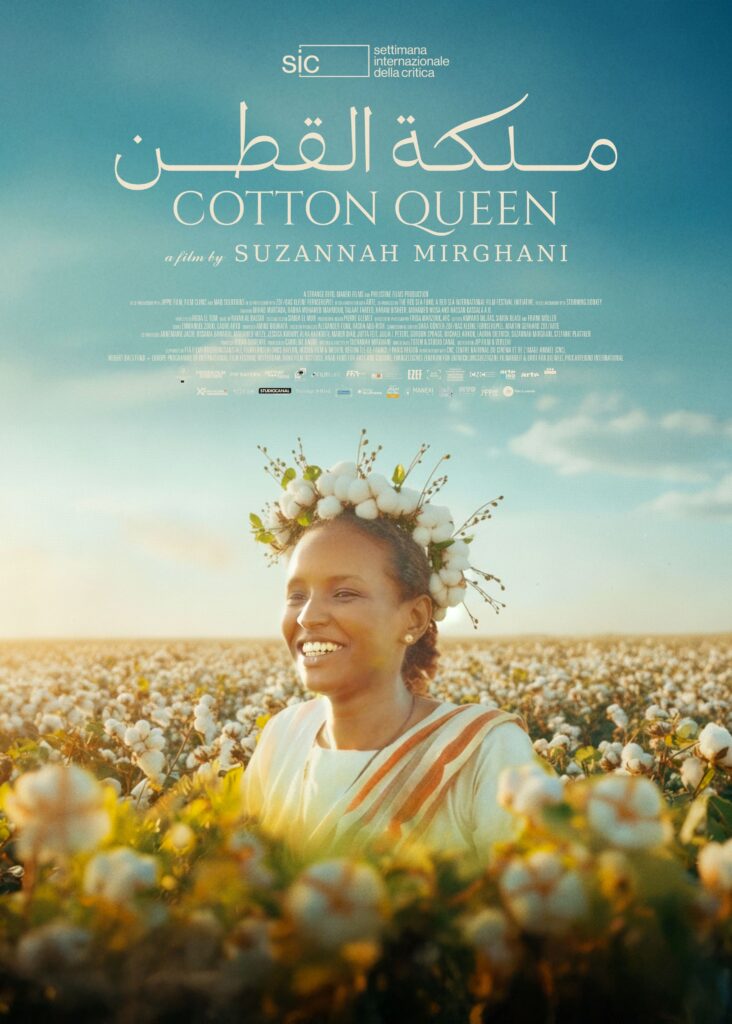
COTTON QUEEN follows a young girl defining her own path. What inspired this story,and why was it important to tell it now?
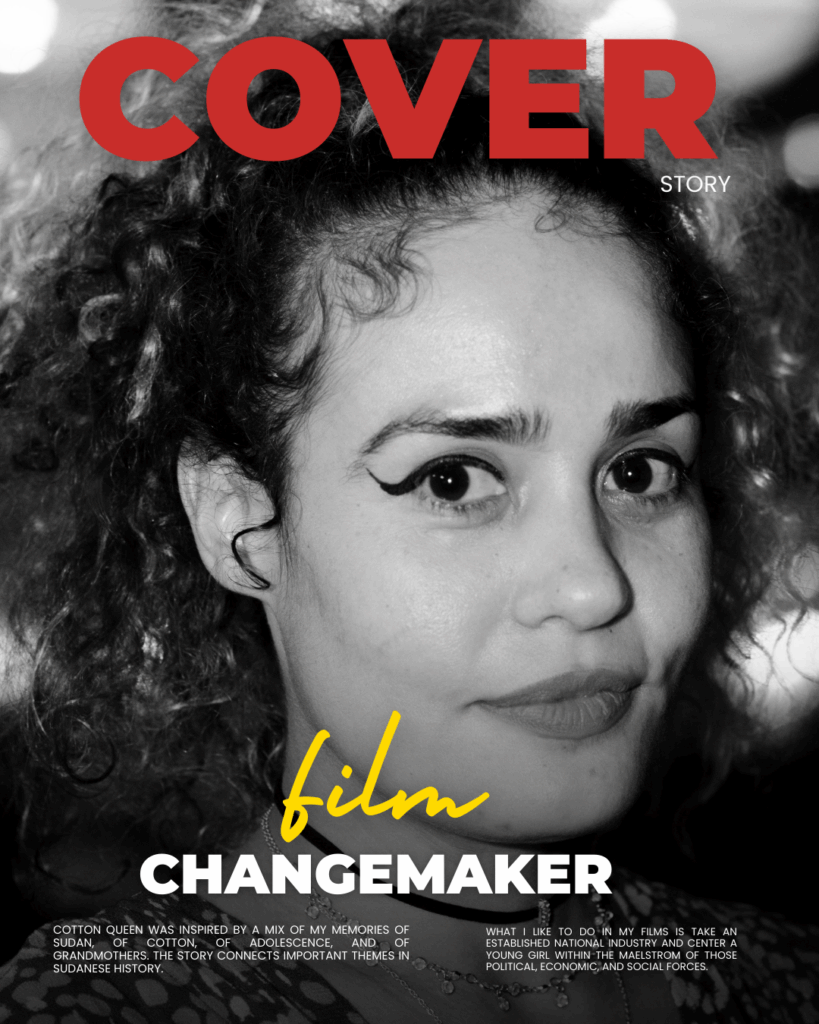
COTTON QUEEN was inspired by a mix of my memories of Sudan, of cotton, of adolescence, and of grandmothers. The story connects important themes in Sudanese history. The title “Cotton Queen” was a beauty pageant prize given to a girl working in the cotton industry during Sudan’s British colonial period, and is the nexus of patriarchy, colonialism, and industrial exploitation of women. I felt the need to reappropriate this title. In this film, I transform the concept of the Cotton Queen into one that is more reflective of a Sudanese girl awakening to her sense of self, beyond beauty and marriage, to have a real impact on her community. The protagonist Nafisa is part of a new generation of Sudanese girls who exceed their predicted roles as apolitical wives and mothers.
Your film subtly confronts colonial history, modern identity, and generational memory. How do you hope COTTON QUEEN contributes to reframing Sudanese and broader African narratives on the global stage?
On the surface, COTTON QUEEN is a seemingly simple story about a young girl growing up in a cotton-farming village in Sudan, focusing on her social relationships with her family, friends, family, and a love interest. The changing agricultural world in which she lives is anything but simple. Beneath the banality of the everyday is a multitude of interconnected tensions, including intergenerational conflicts, emotional turmoil, childhood traumas, the dark colonial underbelly of the cotton industry, and the uncertainty of a neoliberal future. There are so few fiction films made by Sudanese filmmakers, and so neither Sudanese nor international audiences have had the opportunity to really get a sense of Sudanese creative imagination on film. We need to see more Sudanese films to understand the many Sudans that exist, and the many different iterations of what it means to be Sudanese. I am very encouraged to see the growth of Sudanese filmmaking over the past few years, with more artists rising to the challenge of becoming filmmakers—a difficult, long, expensive, and laborious task—which seemed like an almost impossible artistic avenue when I was growing up.
As a woman navigating filmmaking across cultural and geographic boundaries, what challenges have you faced in funding, representation, and recognition. How have these obstacles shaped your mission and voice?
Because there is no film industry in Sudan in the formal sense, and because there are no national film funds or institutions, Sudanese filmmakers have to necessarily collaborate with foreign producers, funds, and entities to get their projects off the ground. For COTTON QUEEN, the terms of the grants we received meant that we were obliged to complete picture editing in Germany and sound editing in France. The nature of contemporary filmmaking is a multinational effort, involving multicultural and multilingual casts and crews, and different stages of a film are completed in different countries, depending on international funding. While this multiplicity, of course, has its challenges, especially in terms of cross-cultural misunderstandings that often occur, there are also the very real benefits and opportunities of making strong transnational and professional networks. I was fortunate to work with a team of mostly women, from producers to heads of department. I wrote the script for COTTON QUEEN in a Doha Film Institute workshop, and was fortunate to have the mentorship and guidance of the Palestinian filmmaker, Annemarie Jacir, who supported the project all the way to completion. In my experience, as long as a filmmaker has the complete backing of producers and funders, then the story remains intact.
How has the global reception of COTTON QUEEN been so far, and when can audiences expect its public release or streaming availability?
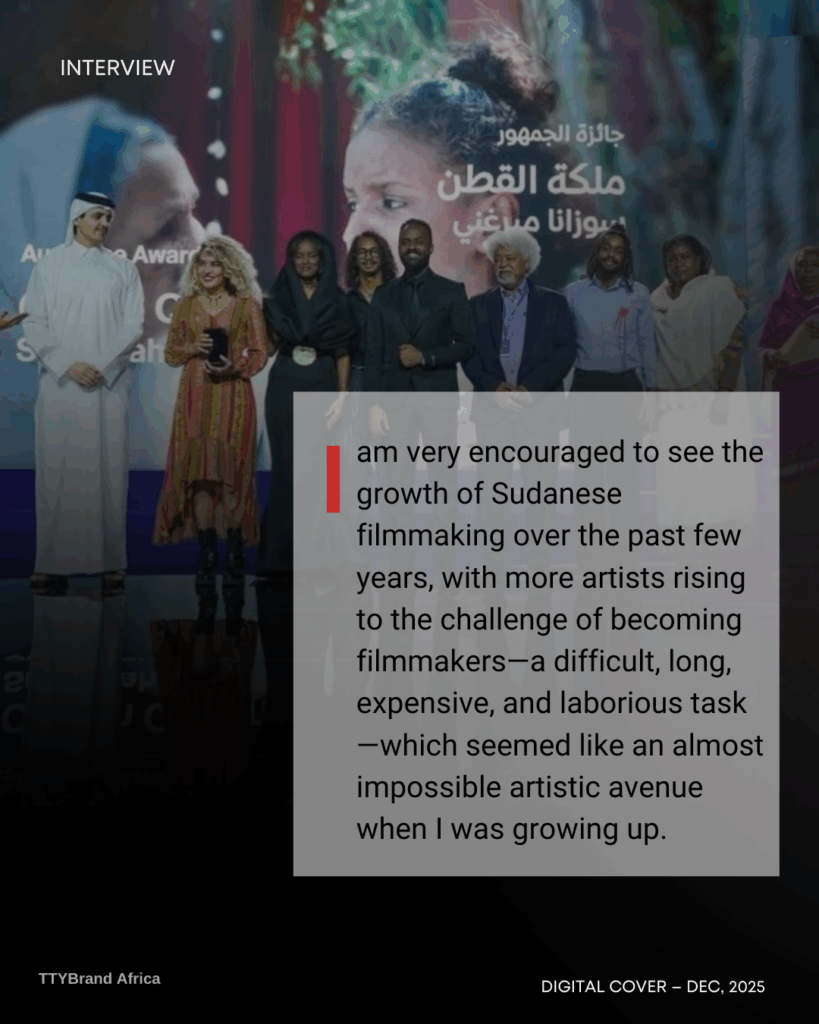
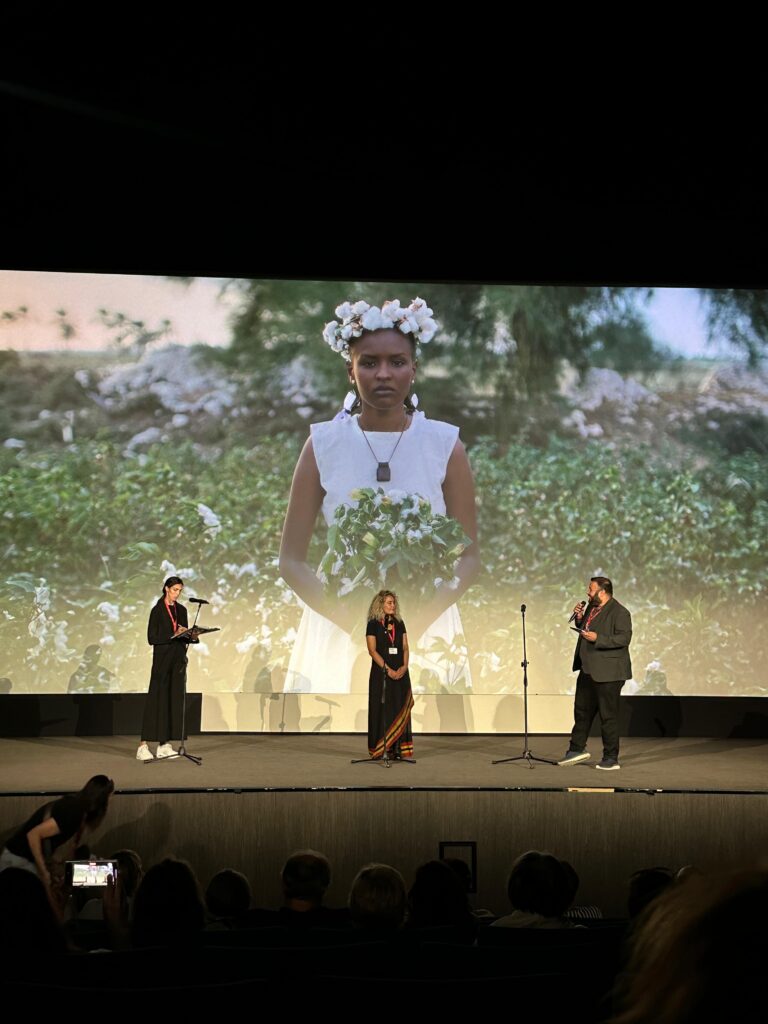
COTTON QUEEN had its World Premiere at the Venice Film Festival Critics’ Week in September 2025, and has had a good festival run since then, screening all over the world. The reception has been fantastic, and we have already won several awards, including Best International Feature Film and Best Score at the Thessaloniki Film Festival, and the Audience Award at the Doha Film Festival, which is the prize closest to my heart because it means the film made an impression on the people for which it was created. It is still early in the life cycle of the film, so conversations about streaming are ongoing.
Do you think marketing and distribution for African films have improved, and what gaps still need to be addressed?
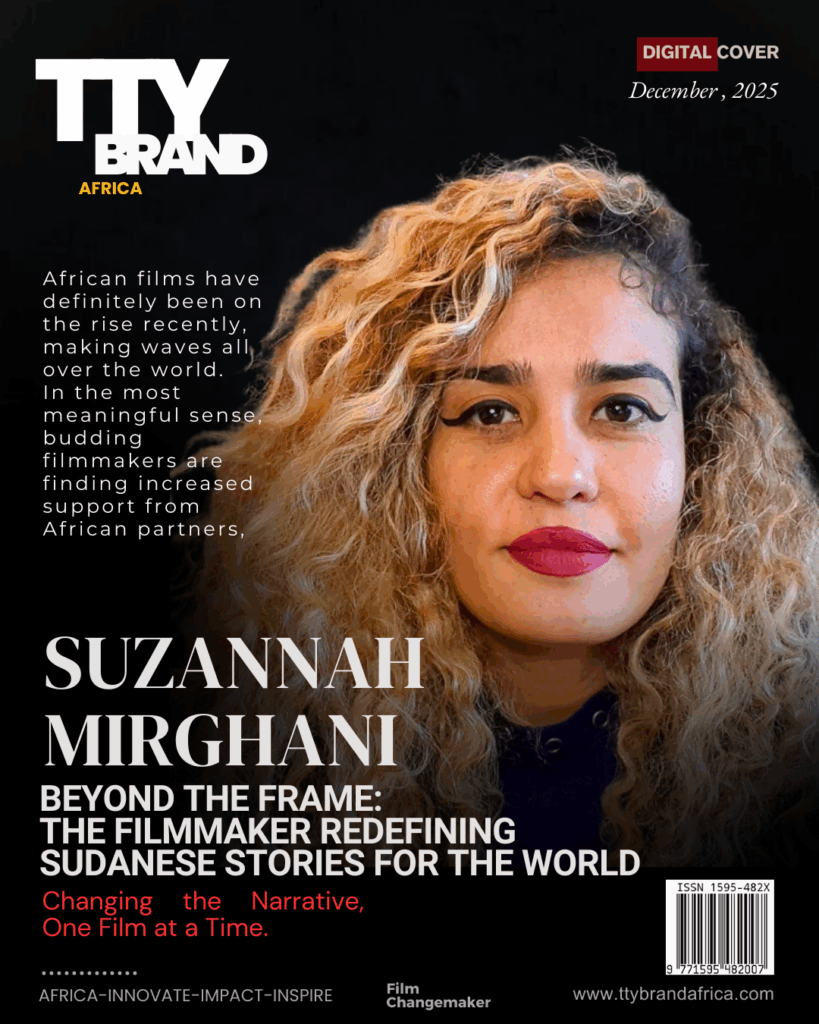
African films have definitely been on the rise recently, making waves all over the world. In the most meaningful sense, budding filmmakers are finding increased support from African partners, whether producers, grants, institutes, film festivals, and distributors. These remain limited in number and scope, however, and there needs to be more opportunities available for African filmmakers, especially in terms of African producers and distribution, to ensure that these stories are seen and find a permanent place in the international film canon. With various ongoing wars across the continent, filmmakers from these countries need more support than ever to realize their projects.
Many viewers are already calling COTTON QUEEN a “must-watch.” As people begin curating their holiday viewing lists, what makes this film a meaningful addition and what reflections do you hope it sparks during this season.
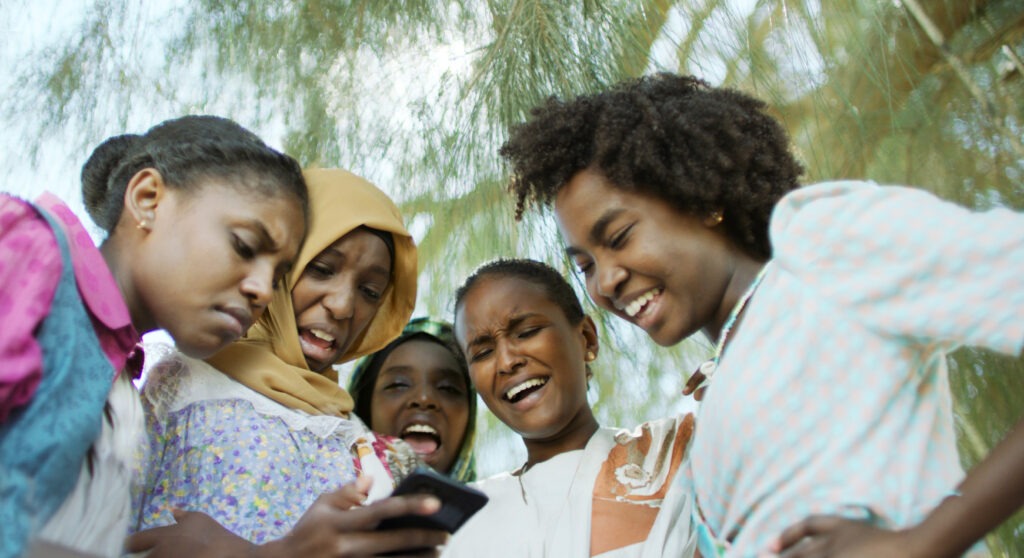
This film represents a previously untold story from Sudan. Many international, and even Sudanese, audiences are unaware of the historical Cotton Queen beauty competition, and how this was used as a mask for British colonial violence, introducing vulnerable young girls as the pretty face of a horrible industry. In the contemporary setting, neocolonial exploitation continues with the introduction of genetically modified seeds that have completely transformed the cotton industry in Sudan, and elsewhere across Africa, making smallholder farmers wholly dependent on foreign corporations. These nationwide concerns are told through the eyes of the protagonist, a young girl, who must deal with the atrocities of the colonial past while facing a similarly exploitative and uncertain future. In particular, the film focuses on a multigenerational cast of women within the cotton community. I encourage viewers to watch COTTON QUEEN, not because it is a film I made, but because it is a film I made about Sudan and Sudanese women, which is rare on screen.
What future stories are you excited to tell, and what legacy do you hope to leave for Sudanese cinema?
What I like to do in my films is take an established national industry and center a young girl within the maelstrom of those political, economic, and social forces. Most of the large industries in Sudan have colonial-patriarchal roots, and so it becomes an important setting in which to explore girlhood, and an individual’s relationships to the economic engines of the nation. Coming-of-age within the confines of industry can lead to new breakthroughs. With COTTON QUEEN, I explored Sudan’s cotton industry, from both historical-colonial and contemporary perspectives. I am currently working on my next feature-length script, which takes another industry central to Sudan’s colonial and historical formation and places a young girl at its heart. An industry is seemingly unwieldy and impersonal, but when we see how it affects a person at the individual level, we can somehow grasp it and understand how people live with it on a day-to-day basis—and how they negotiate or challenge it; basically, how nationwide change often starts at home.