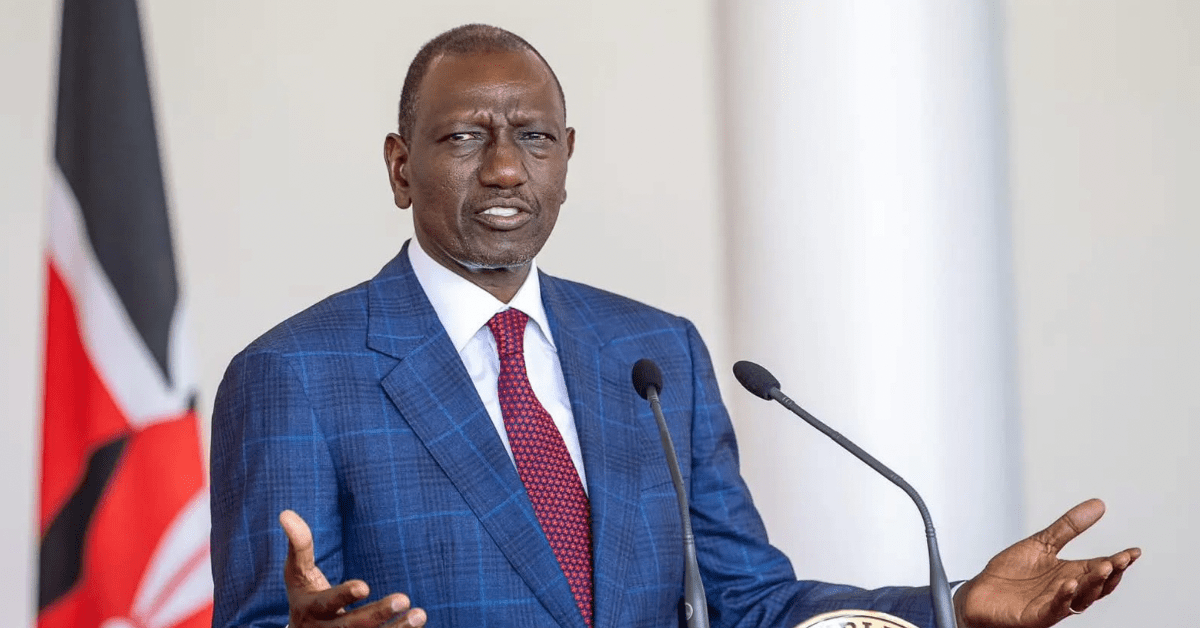
Kenya’s President William Ruto has delayed signing a proposed trade agreement with China following significant pressure from the United States. The move highlights Kenya’s delicate balancing act between strategic partnerships with China and maintaining critical access to U.S. markets.
Sources familiar with the negotiations told Business Insider Africa that internal consultations are ongoing before the pact can be finalized. “The finalised text of the ‘Early Harvest’ deal is gathering dust on the Ministry of Trade shelves in Nairobi,” they noted.
The delay comes as Kenya seeks to protect its position in U.S.-backed trade initiatives, including the African Growth and Opportunity Act (AGOA). AGOA, which expired on September 30, 2025, had allowed Kenyan goods, particularly textiles and agricultural products, to enter the U.S. duty-free for 25 years.
AGOA’s Role in Kenya’s Economy
Since its inception, AGOA has been a key driver of Kenya’s export sector. It provided Kenyan manufacturers and farmers with competitive access to the U.S. market, boosting foreign exchange earnings, creating jobs, and stimulating industrial growth.
The program’s expiration has created immediate economic pressures. Many textile and apparel exporters face increased tariffs, threatening their competitiveness and disrupting established supply chains. Smallholder farmers supplying horticultural products also risk losing vital contracts due to higher costs and reduced market access.
In response, Kenya’s government has actively engaged U.S. authorities to negotiate a renewal or extension of AGOA benefits, emphasizing the economic stakes of losing preferential trade access.
China Trade Deal on Hold
Kenya and China had negotiated a trade deal, dubbed the “Early Harvest” agreement, aimed at eliminating Chinese tariffs on key Kenyan exports such as tea, coffee, avocados, and fish. The deal, advanced during President Ruto’s April 2025 Beijing visit, sought to offset Kenya’s 2025 trade deficit with China, estimated at Ksh475.6 billion, and mitigate AGOA’s lapse, which imposes tariffs of up to 28% on $600 million worth of apparel annually.
In October 2025, both nations signed over 20 related agreements worth billions, covering manufacturing ($320M), agriculture ($430M), and tourism ($230M). However, as of January 2026, formalization remains stalled. Cabinet, parliamentary, and presidential approvals are pending due to U.S. concerns that prioritizing AGOA renewal is critical to prevent potential job losses of 66,000.
Balancing Strategic Trade Interests
The decision to pause the China trade agreement underscores Kenya’s need to navigate complex international trade pressures carefully. By delaying the pact, Kenya aims to protect its longstanding relationship with the U.S., safeguard critical export sectors, and maintain economic stability while keeping future trade options with China open.
Analysts suggest that the coming months will be crucial. Kenya must balance the promise of tariff-free access to China with the potential risks of jeopardizing AGOA benefits, which remain vital to its textile, apparel, and agricultural industries.