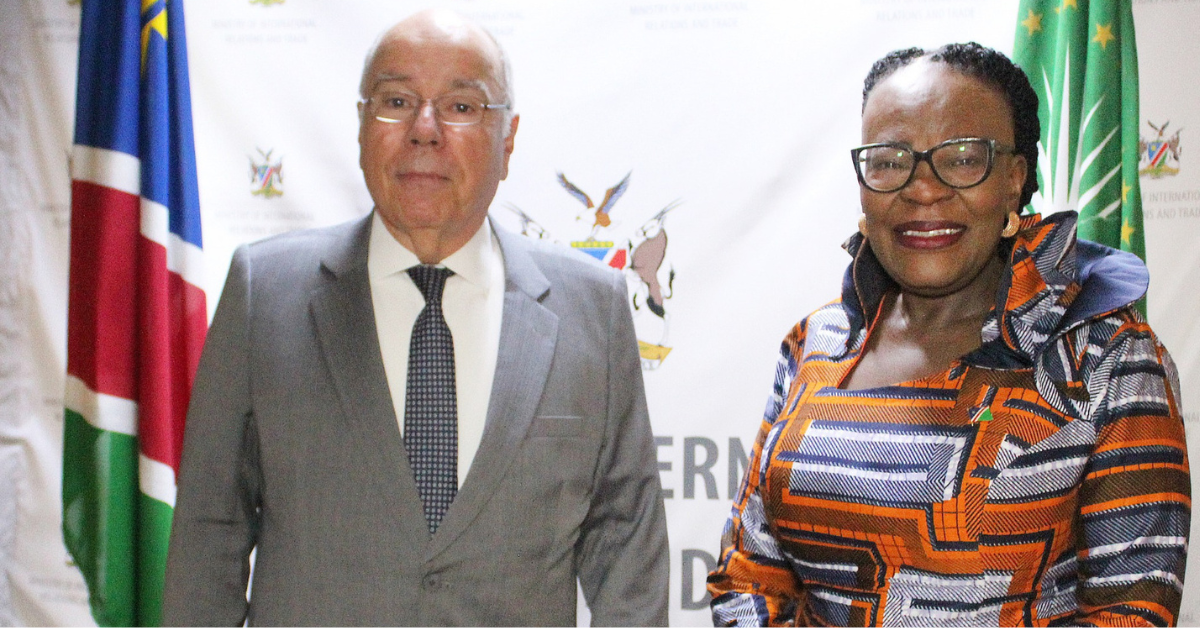
Namibia has stepped up its push for industrial growth, urging Brazilian companies to establish factories and processing plants within its borders. The move signals a clear shift toward value addition as the country looks beyond raw resource exports.
During high-level talks in Windhoek on Tuesday, Namibia’s Minister of International Relations and Trade, Selma Ashipala-Musavyi, directly appealed to Brazil’s Foreign Minister Mauro Vieira to support local manufacturing. She emphasized that Namibia’s expanding natural resource base presents strong opportunities for industrial investment.
Moreover, she highlighted recent oil and gas discoveries alongside planned green hydrogen projects as key sectors that can drive long-term economic transformation. According to her, local processing will ensure that Namibia captures more value from its resources instead of exporting raw materials.
Brazil has already shown interest in Namibia’s energy sector. In particular, Petrobras is currently involved in offshore exploration activities in the Lüderitz Basin. Vieira noted that such investments could unlock economic growth, create jobs, and promote social inclusion across Namibia.
At the same time, both countries are exploring broader cooperation in agriculture and trade. Brazil has indicated interest in exporting pork and poultry products to Namibia. Additionally, it aims to support food security through technical partnerships and knowledge transfer.
Trade logistics also featured prominently in the discussions. Namibia pointed to the strategic shipping route linking the Port of Santos in Brazil to the Port of Walvis Bay. This corridor is expected to strengthen commercial ties while connecting the Southern African Development Community (SADC) to the Mercosur trade bloc.
However, trade volumes between Namibia and Mercosur countries remain relatively low. Despite years of preferential trade agreements, trade has hovered around just 2%, highlighting the need for stronger economic engagement and policy execution.
Economic analysts believe Namibia’s renewed focus on value addition reflects a more strategic approach to foreign investment. Economist Lupalezwi Simon explained that investors will closely assess factors such as energy costs, infrastructure quality, and the availability of skilled labor before committing to industrial projects.
He added that building local value chains will take time and requires consistent investment in energy, logistics, and workforce development. Without these foundations, large-scale industrialization may face delays.
Meanwhile, Namibia is backing its strategy with increased funding. The government recently proposed a N$1.37 billion budget for the Ministry of International Relations and Trade for the 2026/27 financial year. Most of the allocation will support diplomatic missions aimed at attracting trade and investment.
As Namibia intensifies its economic diplomacy, expectations are rising. Still, experts caution that success will depend on how effectively the country creates an environment that supports long-term industrial growth and investor confidence.