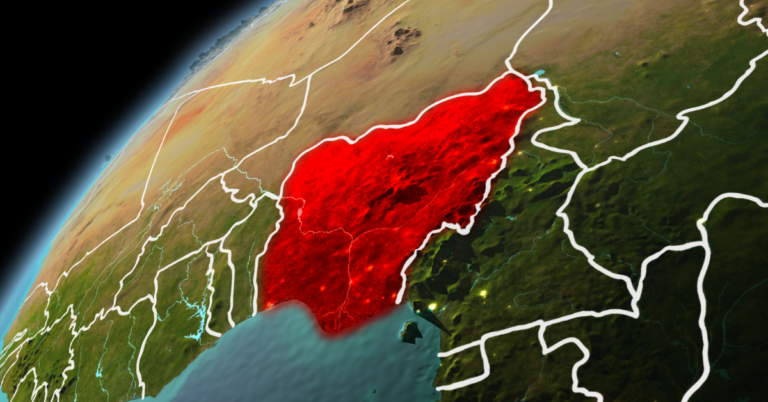
A hidden cost continues to shape how global investors approach Africa. Yet, it does not appear in financial reports or balance sheets. Analysts now describe it as the “Perception Tax” — a costly penalty companies pay when they rely on assumptions instead of real market intelligence.
This invisible burden is not inevitable. On the contrary, businesses can avoid it entirely. However, many still fall into the same trap: they treat Africa as a single risky market rather than a diverse continent of 54 unique economies.
As a result, billions of dollars are mispriced, delayed, or lost.
The Perception Tax emerges when decision-makers lack reliable, ground-level data. Instead of detailed insights, they rely on broad narratives. Unfortunately, those narratives often oversimplify Africa’s realities.
For example, investors would never treat France and Finland as identical markets. Likewise, the United States and Mexico demand completely different strategies. Yet, African countries like Benin and Botswana are frequently grouped together despite vast differences in policy, stability, and growth potential.
This flawed approach carries serious consequences. Companies inflate risk premiums unnecessarily. They delay investment decisions while waiting for clarity. Worse still, they surrender first-mover advantage to competitors with better information.
Consequently, the cost of capital across Africa remains significantly higher than it should be.
Recent data highlights the scale of this disconnect. A 2025 assessment by the African Development Bank, conducted with Moody’s Analytics, reviewed 14 years of infrastructure investments. The findings were striking. Africa recorded a loss rate of just 1.7%, the lowest globally.
By comparison, Latin America posted around 13%, while Eastern Europe reached 10%.
Despite this strong performance, investors continue to demand premiums that are three to four times higher than in similar regions. Clearly, perception — not performance — is driving pricing decisions.
This gap creates opportunity. Investors who rely on accurate data rather than outdated narratives gain a significant edge. They enter markets earlier, secure better terms, and achieve stronger returns.
In practice, the difference becomes obvious. One developer may view an East African project as too risky due to currency fluctuations or regulatory complexity. As a result, they either demand excessive returns or walk away entirely.
Meanwhile, a better-informed competitor examines the same project differently. They assess institutional stability, evaluate local partnerships, and identify co-investment opportunities. Then, they proceed confidently — often ahead of the market.
The outcome is predictable. The first company pays the Perception Tax. The second captures the upside.
This pattern has already played out across the continent. Private equity firms like Helios Investment Partners built multi-billion-dollar portfolios by entering markets others ignored. Similarly, Kenya’s regulatory reforms transformed investor sentiment. Within five years, the country climbed 52 places on the Ease of Doing Business Index, attracting consistent foreign capital.
Importantly, the underlying risk did not vanish. Instead, it became better understood.
Over time, the Perception Tax compounds. Delayed investment slows economic development. That delay reinforces negative perceptions. Then, those perceptions discourage further investment.
However, this cycle does not last forever. Once informed capital enters a market at scale, perceptions shift quickly. At that point, early opportunities begin to disappear.
Africa’s long-term fundamentals remain compelling. The African Continental Free Trade Area represents a $3.4 trillion market. Its population is approaching 1.5 billion people. In addition, the continent holds critical minerals essential for the global energy transition.
Therefore, the key question is not whether investment will flow into Africa. It will.
Instead, the real question is timing.
Investors who act early, guided by intelligence rather than assumption, will capture the greatest returns. Those who hesitate will eventually enter — but at a higher cost.