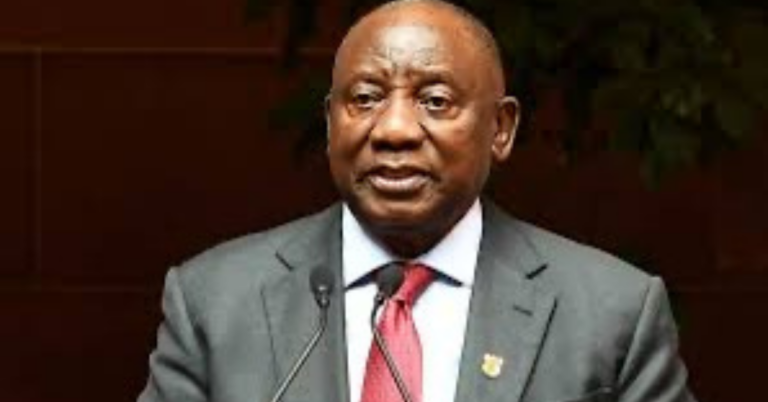

South African President Cyril Ramaphosa described the recent debate on the Presidency Budget Vote 2025 as spirited, robust, and ultimately a sign of the country’s healthy democratic order. Addressing Parliament, Ramaphosa acknowledged disagreements within the Government of National Unity (GNU) but reaffirmed a shared commitment to improving citizens’ lives and advancing inclusive economic growth.
In his address, the president emphasized the progress achieved since South Africa’s democratic transition 31 years ago, despite criticism from some quarters. He highlighted millions of homes electrified, clean water projects in underserved communities, expanded public housing for low-income citizens, and the provision of free basic services to society’s most vulnerable. The President also pointed to major milestones in land reform in South Africa, with over 3.5 million hectares restored and compensation paid to more than 2.1 million beneficiaries.
He defended the role of the Presidency of South Africa as a coordinating body rather than an implementing department. He clarified that the Presidency ensures policy alignment across government, monitors delivery on Cabinet priorities, and mobilizes support among social partners. Regular publications such as Annual Performance Plans, Citizen-Based Monitoring Reports, and Frontline Service Delivery Monitoring Reports are part of the government’s accountability framework, all subject to Parliamentary oversight.
Responding to critics, president Cyril Ramaphosa underscored that South Africa’s transformation includes policies like employment equity laws, which have enabled African, Indian, and coloured South Africans to take up leadership positions in businesses historically dominated by a minority. He acknowledged that overcoming the legacy of apartheid requires sustained effort, as discriminatory laws once stripped black South Africans of land ownership and restricted economic participation.
Focusing on economic policy, he stressed the critical role of the private sector, which accounts for over 73% of all employment in South Africa according to Statistics South Africa. He argued that job creation and inclusive growth depend on strong collaboration between government and business, alongside removing regulatory and structural barriers to investment.
The President also reaffirmed the GNU’s commitment to engaging constructively with proposals from opposition parties, including those from the Freedom Front Plus, to ensure broader economic progress. He described this openness as part of a maturing democracy where robust debate guides policy direction.
Highlighting recent achievements, president Cyril Ramaphosa cited progress in economic reforms, efforts to resolve bottlenecks in energy and logistics, and initiatives to stimulate new business growth. He noted that the government’s aim is to create an enabling environment where the private sector can thrive, ultimately leading to sustainable development and reduced inequality.
Concluding his remarks, the president called on South Africans to recognize both the challenges and the real gains of democracy. He stressed that the Presidency Budget Vote 2025 debate reflects not only differing viewpoints but also a shared responsibility to deliver tangible results that improve lives, grow the economy, and build investor confidence in South Africa’s future.