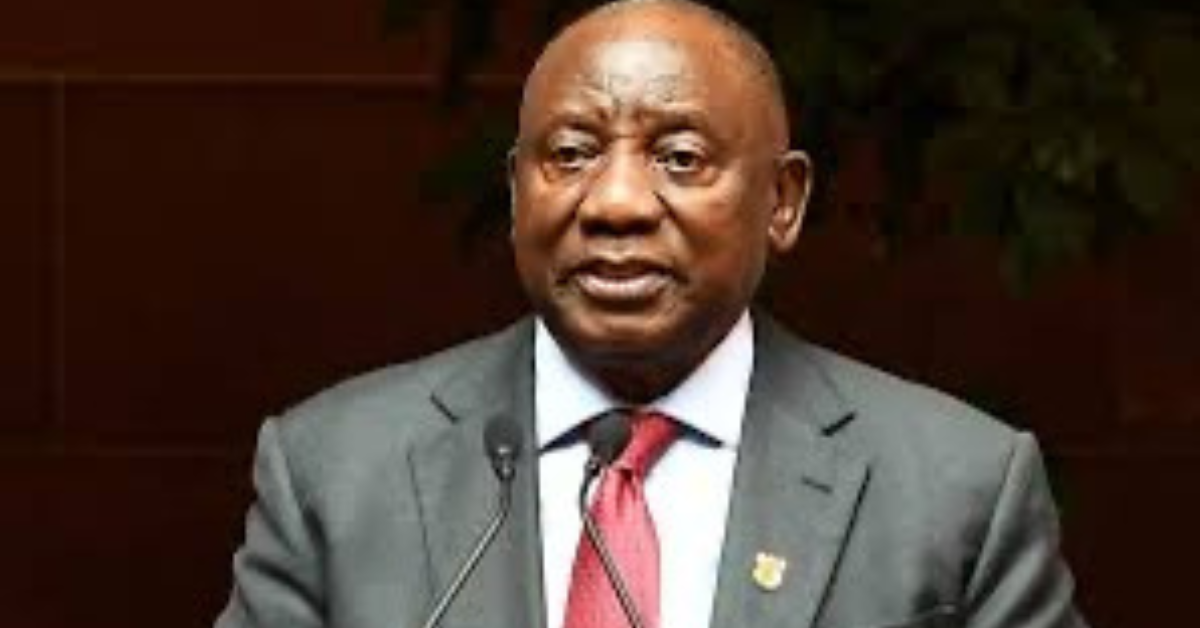
President Cyril Ramaphosa is set to make a crucial decision as two major Bills await his signature, a move that could reshape South Africa’s water infrastructure and immigration system.
These Bills focused on water reform and immigration policy, have already passed through Parliament after extensive public consultations and legislative scrutiny. Once signed, they will officially become law and move into the implementation phase.
However, the President still holds the authority to delay the process. He can return the Bills to Parliament if constitutional concerns arise or refer them to the courts. Recently, he exercised this power by sending the RICA Bill back for reconsideration over legal issues.
Now, attention has shifted to the two remaining Bills on his desk: the Water Resources Infrastructure Agency SOC Limited Amendment Bill and the Immigration Amendment Bill.
South Africa’s worsening water crisis has placed urgent pressure on the government to act. Cities such as Johannesburg and Knysna have experienced severe water shortages, raising concerns about long-term sustainability.
During the State of the Nation Address 2026, Ramaphosa warned that water shortages could become more damaging than power outages, which previously slowed economic growth.
He attributed the crisis to years of neglected infrastructure across municipalities. In response, the government has committed R156 billion over the next three years to upgrade water systems nationwide.
The proposed amendment Bill strengthens the framework for managing water infrastructure. It also supports the creation of a new state-owned agency designed to oversee projects and attract investment into the sector.
Importantly, the Bill will restructure existing institutions. It upgrades the new agency into a major public entity while removing the Trans-Caledon Tunnel Authority from its current classification. Officials believe this shift will streamline operations and improve funding efficiency.
Meanwhile, the Immigration Amendment Bill introduces stricter legal procedures for handling undocumented migrants. It updates the Immigration Act of 2002 in line with recent court rulings.
Under the new provisions, authorities must bring any detained undocumented foreign national before a court within 48 hours. A judge will then decide whether continued detention is justified before deportation proceeds.
Lawmakers say this change improves transparency and protects human rights while maintaining effective immigration control. It also reduces legal uncertainty for officials and lowers the risk of costly litigation.
With only two Bills left awaiting approval, far fewer than the backlog before the 2024 elections, Ramaphosa’s next move is expected soon. His decision will not only finalize months of legislative work but also signal the government’s direction on two of the country’s most pressing issues.