Physical Address
304 North Cardinal St.
Dorchester Center, MA 02124
Physical Address
304 North Cardinal St.
Dorchester Center, MA 02124

Amplifying African Entrepreneurs voices, one story at a time
Amplifying African Entrepreneurs voices, one story at a time
Samsung’s founding family has seen its fortune surge sharply, and the numbers now place them among Asia’s elite wealth dynasties. Bloomberg reported that the Samsung family wealth has more than doubled within a year, reaching about $45.5 billion as of March. This jump moves them into third place among Asia’s richest families, trailing only India’s Ambani family and Hong Kong’s Kwok family.
The rise did not happen in isolation. Samsung Electronics played a central role, as global demand for artificial intelligence chips pushed semiconductor values higher. As a result, the family’s wealth expanded alongside the company’s market performance. Samsung Electronics shares climbed strongly last year, gaining more than 100 percent and marking their best run in over two decades.
Just a few years ago, the outlook looked uncertain. After the death of Samsung chairman Lee Kun-hee in 2020, the group faced heavy inheritance taxes and legal challenges involving Lee Jae-yong. Many analysts questioned whether the family would maintain firm control over the conglomerate. However, that narrative has shifted. The company not only held its position but also strengthened its global influence through advanced chip production.
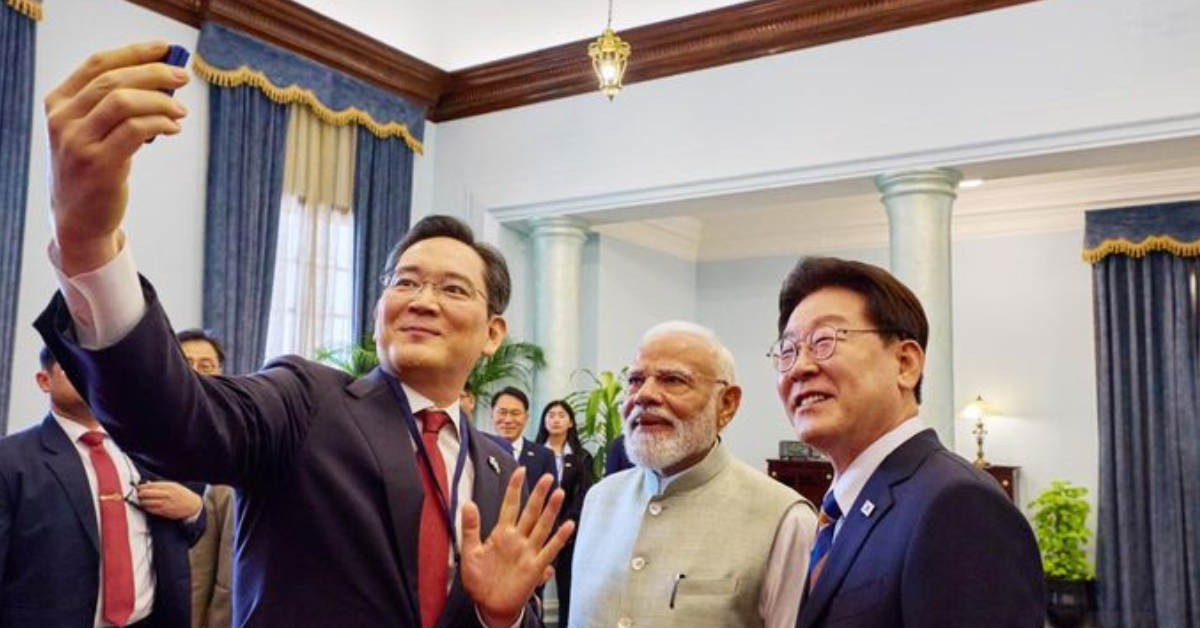
Lee Jae-yong has also become more visible in global business and political circles. He recently appeared alongside Nvidia CEO Jensen Huang in a widely shared meeting that highlighted growing ties in the AI semiconductor space. He also featured in diplomatic settings, including a high-profile visit involving Indian leadership, which further signaled Samsung’s expanding global footprint.
Samsung’s economic weight inside South Korea continues to grow. Combined revenue from Samsung Electronics and its major affiliates now accounts for nearly one-fifth of South Korea’s GDP. This shows how deeply the group influences the country’s economic structure. At the same time, the company’s market value plays a major role in the Kospi index, where it represents a significant share of total market capitalization.
Even with this strong performance, concerns remain about long-term structural reform in South Korea’s corporate system. The country’s stock market has benefited from investor optimism around governance reforms and efforts to close the so-called “Korea discount.” However, analysts argue that deeper changes are still needed to fully match global valuation standards. A recent Morgan Stanley assessment described Samsung as still lagging behind some peers in value improvement strategies.
Still, the current momentum reflects a powerful shift driven by technology. AI demand continues to reshape global markets, and Samsung sits at the center of that transformation. As semiconductor competition intensifies, the company’s performance will likely remain a key driver of both corporate wealth and South Korea’s broader economic outlook.