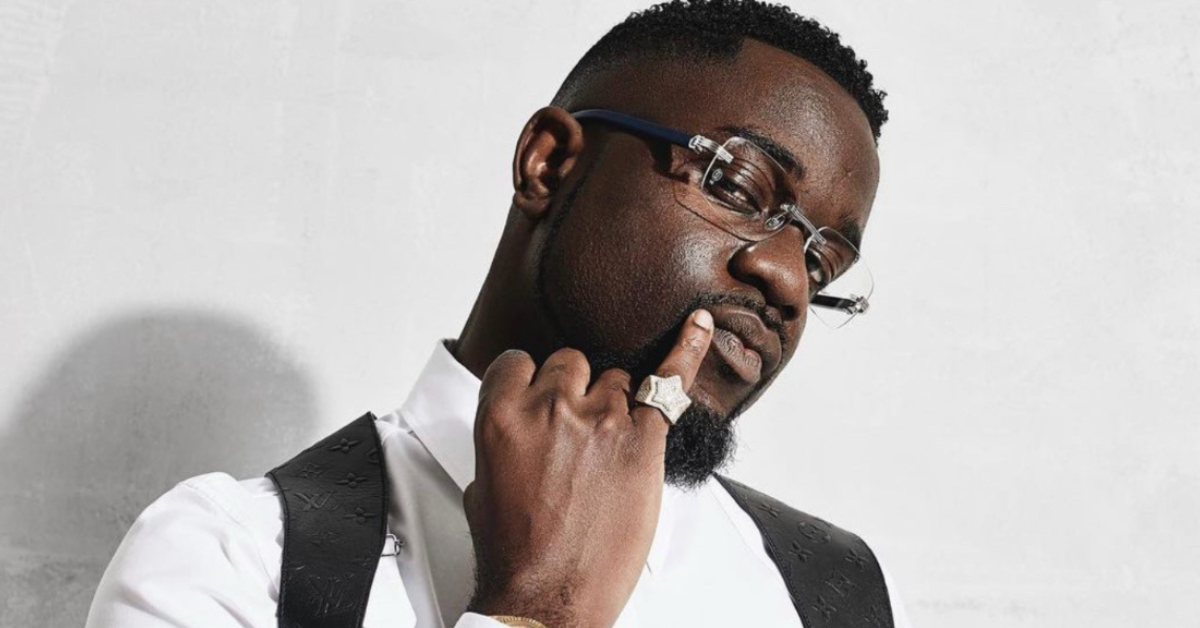
Sarkodie has taken Ghana’s most iconic hip-hop concert brand beyond its borders. For the first time in 13 years, Rappaholic leaves home and lands at London’s Royal Albert Hall and the symbolism could not be stronger.
What began as an album launch for one of Ghana’s most celebrated rap projects has grown into a continental institution. Over the years, Rappaholic evolved from a Sarkodie-centered show into a powerful platform that celebrates Ghanaian music and African creativity at large.
Initially, Sarkodie created Rappaholic to mark the release of his album. However, as inspiration does not follow a yearly calendar, he realized the brand needed to outgrow album cycles. Therefore, he transformed it into an annual celebration of music, culture, and connection.
Today, Rappaholic consistently sells out in Ghana. Recently, Sarkodie returned to his roots with a massive Kumasi stadium edition. Now, he shifts the spotlight to London, a city deeply connected to Ghana’s diaspora story.
Even more powerful, the Royal Albert Hall date coincides with Ghana’s Independence Day. Interestingly, Sarkodie insists the alignment happened organically. The venue offered the date. The team noticed the historical significance. They secured it immediately.
As a result, Ghanaian independence meets Ghanaian excellence on one of the world’s most prestigious stages.
“This wasn’t planned,” Sarkodie shared. “But it feels spiritual. It feels right.”
Beyond symbolism, Rappaholic London signals something larger. It represents African hip-hop claiming its space in global music culture. While hip-hop is often viewed as a Western export, Sarkodie reframes the narrative. In Ghana, rap is called Kasahari, meaning “fast talking.” Long before modern hip-hop reached African airwaves, rhythmic spoken-word traditions already existed in Ashanti royal courts.
In other words, African rap is not imitation. It is reclamation.
Throughout his career, Sarkodie resisted pressure to abandon his native language for wider appeal. Instead, he mastered delivery, flow, and musicality. He proved that great music transcends language barriers. After all, many fans worldwide sing along to songs they do not fully understand. Emotion travels faster than translation.
That philosophy opened global doors. Sarkodie has shared stages with T-Pain, Miguel, Idris Elba, and Giggs. These cross-cultural exchanges reinforced one truth: music is a universal language when executed with excellence.
Yet, beyond accolades and sold-out venues, Sarkodie’s clarity of purpose stands out. He does not create music for fame or statistics. In fact, he openly rejects industry pressure tied to Grammy metrics, streaming numbers, or monthly listeners.
Instead, he focuses on authenticity.
“When you stay true to why you started, you don’t lose yourself,” he explained.
This mindset fuels his longevity. While many artists chase trends, Sarkodie protects the hunger that pushed him to pick up a pen years ago. Consequently, his evolution feels organic rather than forced.
Importantly, Rappaholic London also falls on International Women’s Day weekend. Sarkodie acknowledges the profound influence of women in his life. Raised by a strong mother and supported by sisters, a wife, and now a daughter, he credits women as pillars behind his journey. His song Strength of a Woman reflects that gratitude.
On a broader scale, Sarkodie ties his personal success to Ghana’s growth. At one point in his career, he realized individual wins felt incomplete if his country did not rise alongside him. Therefore, he redefined his purpose.
“My legacy is tied to Ghana,” he emphasized. “I want my country to win.”
That vision drives this London expansion. If Ghanaian artists consistently occupy global stages, the narrative shifts permanently. Nigeria has already amplified Africa’s presence globally. Now, Sarkodie pushes for a stronger Ghanaian invasion.
Royal Albert Hall becomes more than a concert venue. It becomes proof.
Proof that African rap commands elite spaces.
Proof that indigenous language music scales globally.
Proof that African artists can deliver world-class productions worth every ticket sold.
For young creatives watching from Accra, Kumasi, Lagos, Nairobi, or Johannesburg, the message resonates clearly: vision requires stubborn belief. Sarkodie often says no one else sees your dream the way you do. Therefore, artists must protect their vision fiercely.
Looking ahead, he refuses to settle. While Royal Albert Hall marks a milestone, he views it as another stepping stone. He remains open to sonic experimentation, new collaborations, and wider audiences.
After 13 years, Rappaholic no longer belongs to one artist alone. It belongs to a movement. It represents Ghanaian resilience, African creativity, and global ambition intersecting in real time.
As London prepares for an unforgettable night, one thing becomes undeniable, African hip-hop does not ask for permission anymore.
It builds its own stage.
And it sells it out.