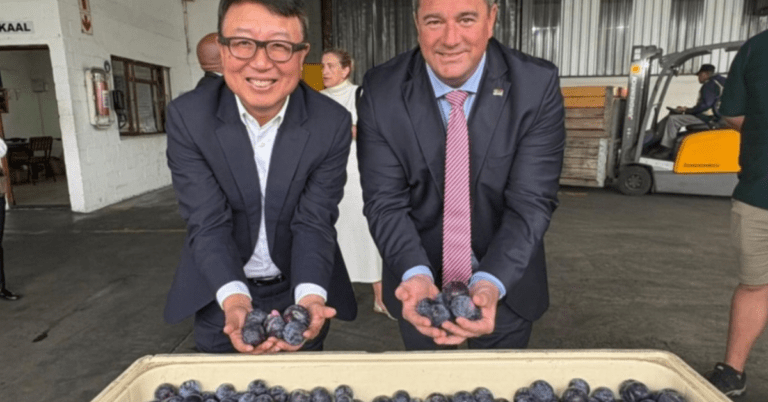

South Africa has secured a landmark $1 billion (R17 billion) investment that is set to reshape its agricultural and energy sectors. The deal, driven by global agribusiness giant UPL, signals renewed investor confidence in the country’s rural economy and infrastructure pipeline.
Public Works and Infrastructure Minister Dean Macpherson praised the development, noting that the investment will accelerate economic growth while unlocking large-scale job opportunities. He stressed that the project aligns with government efforts to reposition infrastructure as a key engine of national development.
The announcement came during the South African Investment Conference in Sandton, where stakeholders across agriculture, energy, and finance aligned behind the ambitious project. Infrastructure South Africa played a decisive role by coordinating negotiations and ensuring that critical partnerships moved forward efficiently.
UPL, under the leadership of Chairman and CEO Jai Shroff, will spearhead the development of a large bioethanol production facility. The plant will rely on sugarcane and maize as primary feedstock, forming a fully integrated value chain that links farming directly to energy production.
The project is expected to deliver immediate and long-term economic benefits. It will drive the cultivation of about 400,000 hectares of sweet sorghum while producing up to 1.3 billion litres of bioethanol annually. As a result, both smallholder and commercial farmers will gain access to new revenue streams and improved market stability.
Macpherson emphasized that Infrastructure South Africa has evolved into a strategic delivery unit capable of unlocking high-impact investments. He pointed out that coordinated government action has reduced bottlenecks and created a more attractive environment for global investors.
Furthermore, he highlighted that strong public-private collaboration remains critical to executing projects of this scale. According to him, aligning stakeholders and removing regulatory hurdles will continue to drive similar investments across key sectors.
The initiative positions South Africa as a rising leader in Africa’s biofuels market. At the same time, it strengthens agricultural value chains and enhances rural development. With global demand for cleaner energy increasing, the country now stands to benefit from both environmental and economic gains.
This investment also signals a broader shift toward sustainable industrial growth. By linking agriculture with renewable energy production, South Africa is building a more resilient and diversified economy.