Uganda’s opposition leaders have intensified pressure on the government, warning that the country’s growing debt burden could destabilize the economy and weaken public services. As debates around the 2026/27 national budget gain momentum, concerns continue to mount over fiscal sustainability and economic direction.
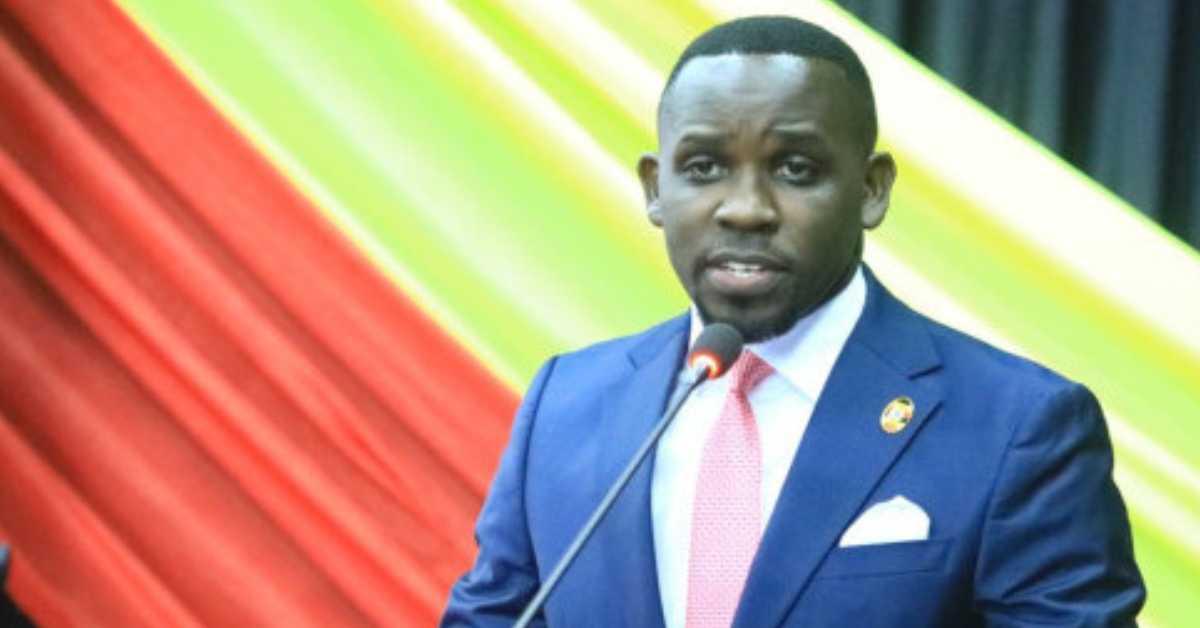
During a presentation in Parliament on April 7, 2026, opposition leader Joel Ssenyonyi outlined what he described as a dangerous fiscal trajectory. He argued that Uganda’s current spending pattern leaves little room for essential services, as debt obligations continue to consume a significant portion of national resources.
The proposed national budget exceeds Shs78 trillion. However, more than half of this amount is already committed to fixed costs and debt repayments. As a result, critical sectors such as healthcare, education, and infrastructure face increasing financial pressure. Ssenyonyi emphasized that for every Shs1,000 collected in taxes, over Shs300 goes directly to lenders, a trend he says reflects borrowing for survival rather than development.
At the same time, the opposition estimates that only about Shs34.2 trillion—roughly 44 percent of the total budget—remains available for discretionary spending. Consequently, public services are already experiencing funding gaps. Several projects have stalled, while inequality continues to widen across the country.
Furthermore, the opposition highlighted major government-backed investments, including Atiak Sugar Factory, Dei BioPharma, Lubowa International Specialised Hospital, and the Inspire Africa coffee initiative. According to their assessment, these projects have absorbed substantial public funds but delivered limited economic value. Therefore, leaders are now calling for a shift away from high-profile investments toward service delivery priorities.
Meanwhile, Julius Mukunda, Executive Director of the Civil Society Budget Advocacy Group, pointed to inconsistencies in budget figures as evidence of deeper planning challenges. He noted that frequent revisions undermine transparency and make effective oversight difficult.
In addition, Mukunda stressed that debt servicing alone now consumes nearly 39 percent of the national budget. This trend significantly limits development spending and restricts the government’s ability to invest in long-term growth sectors. He also identified a funding gap of about Shs8.1 trillion in key programs under the National Development Plan, particularly in agro-industrialization.
Tax policy proposals have also sparked debate. For instance, the planned increase in taxes on imported second-hand clothes has raised concerns about its impact on low-income earners. Similarly, the proposed taxation of smartphones has drawn criticism for potentially restricting digital access and youth entrepreneurship. Mukunda argued that such measures could slow innovation and economic participation among young Ugandans.
Equally important, the opposition criticized the sharp reduction in domestic arrears payments, which dropped from Shs1.4 trillion to Shs200 billion. This move, they argue, undermines previous commitments and affects businesses that rely on government payments. Additionally, inefficiencies such as idle loans continue to cost taxpayers, as the government pays fees on undisbursed funds tied to delayed projects.
As a result, infrastructure development has suffered setbacks. Reports indicate that at least 27 major projects have stalled due to funding constraints. This situation further highlights the urgency for reforms in public finance management.
In response, the opposition has proposed a revised budget of approximately Shs71.4 trillion. This alternative plan aligns more closely with actual revenue projections. It also prioritizes reducing domestic borrowing, clearing arrears, and cutting administrative expenses such as travel and government vehicle fleets.
Moreover, the proposal calls for improved revenue collection efficiency instead of increasing tax rates. It also recommends prioritizing concessional borrowing over expensive commercial loans. These measures aim to create what policymakers describe as a “service delivery buffer” to protect essential sectors.
Concerns remain particularly acute in healthcare and agriculture. Health sector funding stands at about 6 percent of the budget, far below the 15 percent target set under the African Union Abuja Declaration. Consequently, hospitals continue to face drug shortages and staffing challenges.
Agriculture, which employs the majority of Ugandans, also suffers from underinvestment. Limited funding for irrigation, extension services, and market access has constrained productivity and rural incomes.
Ultimately, the opposition framed its alternative budget as a critical choice for the country’s future. Leaders are urging policymakers to adopt fiscal discipline, strengthen transparency, and prioritize long-term national interests. Without these reforms, analysts warn that Uganda risks deeper economic strain and reduced public welfare.