Physical Address
304 North Cardinal St.
Dorchester Center, MA 02124
Physical Address
304 North Cardinal St.
Dorchester Center, MA 02124

Amplifying African Entrepreneurs voices, one story at a time
Amplifying African Entrepreneurs voices, one story at a time
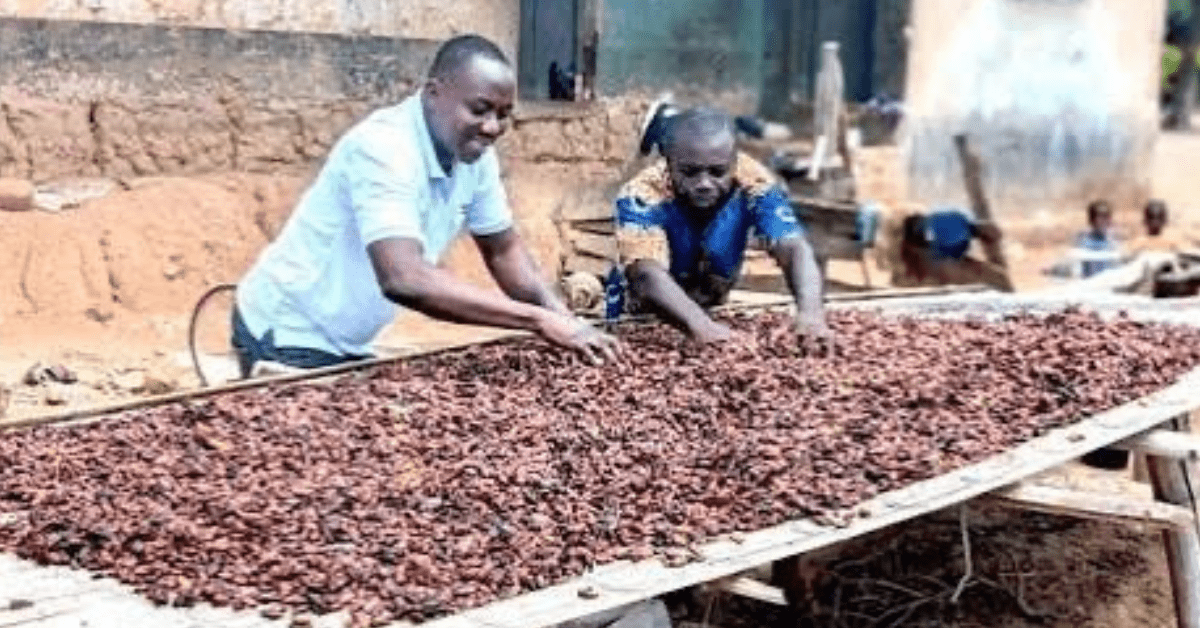
Cameroon’s cocoa sector is facing a sharp downturn as farmgate prices continue to underperform in the 2025/2026 season, raising concerns among farmers and industry stakeholders. With just four months left before the campaign closes on July 15, cocoa prices remain stuck below CFA1,500 per kilogram, marking the weakest performance in three years.
Data released by the Commodity Information System (SIF) shows that cocoa beans traded between CFA1,300 and CFA1,450 per kilogram across key production zones as of April 13, 2026. These figures highlight a significant decline compared to recent seasons, when farmers benefited from record-breaking prices driven by global shortages.
In contrast, producers earned as much as CFA5,400 per kilogram during the previous campaign, while the 2023/2024 season saw prices surge to nearly CFA6,000 per kilogram. This sharp reversal has disrupted expectations and placed financial pressure on thousands of cocoa farmers who had anticipated another profitable cycle.
At the start of the current season, authorities projected farmgate prices ranging from CFA3,200 to CFA5,400 per kilogram. That forecast relied on strong bullish trends observed over the past two years. However, shifting global market dynamics quickly altered the outlook, leaving those projections unmet.
Analysts now point to a changing international cocoa landscape as the main driver behind the price slump. According to the International Cocoa Organization (ICCO), global production is set to rise significantly. This increase extends the recovery that began in the 2024/2025 season after three consecutive years of supply deficits.
As supply rebounds, downward pressure continues to build across international markets. Consequently, producing countries like Cameroon are experiencing declining farmgate prices. Experts warn that the expected surplus could persist through the remainder of the season, limiting any chances of a price rebound in the short term.
Moreover, the weaker price environment threatens farmer incomes and could impact future production decisions. Many smallholder farmers depend heavily on cocoa as their primary source of livelihood. Therefore, sustained low prices may reduce investments in farm maintenance and productivity.
While stakeholders monitor global trends closely, uncertainty remains high. Market participants are watching whether demand growth can absorb the rising supply. Until then, Cameroon’s cocoa sector must navigate a challenging period shaped by global forces beyond its control.