Physical Address
304 North Cardinal St.
Dorchester Center, MA 02124
Physical Address
304 North Cardinal St.
Dorchester Center, MA 02124

Amplifying African Entrepreneurs voices, one story at a time
Amplifying African Entrepreneurs voices, one story at a time
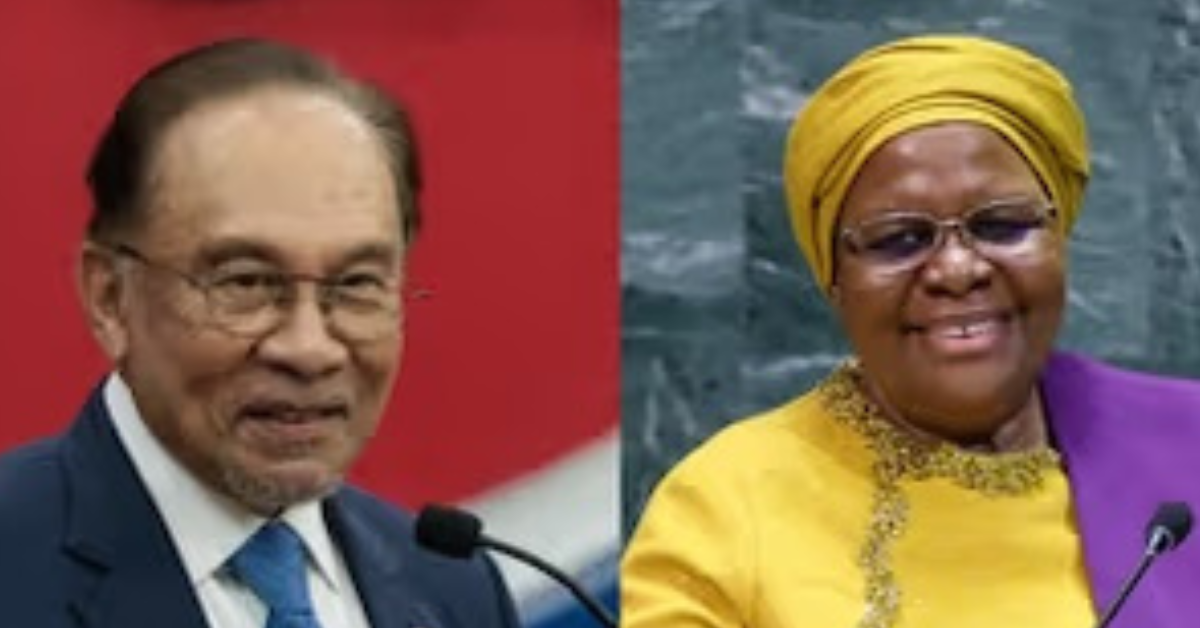
Malaysia has intensified its Africa engagement as it strengthens diplomatic and economic discussions with the Republic of Namibia during high-level trade and energy talks in Kuala Lumpur. The move signals a growing shift in Africa–Asia relations as both nations explore new growth opportunities.
Namibia’s Minister of International Relations and Trade, Selma Ashipala-Musavyi, began a two-day official visit to Malaysia from 20 to 21 April. She is scheduled to meet Malaysia’s Foreign Minister, Mohamad Hasan, to expand cooperation across key sectors.
Both governments focused discussions on energy, trade expansion, education partnerships, healthcare development, and capacity building. In addition, they exchanged views on global geopolitical tensions, including instability in the Middle East, which continues to affect global markets.
Malaysia and Namibia have maintained diplomatic relations since 1990. However, trade growth has remained modest despite strong political ties. In 2025, bilateral trade reached $92.4 million. Malaysia imported $85.1 million worth of goods, while it exported $7.2 million to Namibia. As a result, Namibia retained a strong trade surplus driven mainly by raw material exports.
Malaysia now seeks to diversify its global partnerships. At the same time, Namibia aims to expand investment inflows from Asia. Consequently, both countries are aligning economic strategies to unlock new market opportunities.
Recent developments in Namibia’s resource sector have also attracted international attention. The country received more than 800 new exploration licence applications, which highlights rising global competition for critical minerals such as lithium, uranium, and rare earth materials.
Authorities in Namibia have also introduced regulatory reforms. They now deploy digital systems to accelerate mining approvals and reduce administrative delays. Furthermore, the government plans to expand beyond uranium and diamonds into a broader critical minerals ecosystem that supports global energy transition supply chains.
Analysts note that this shift strengthens Namibia’s global economic relevance. It also positions Malaysia as a strategic partner for investment, processing technology, and industrial development. Therefore, both nations may see stronger collaboration in mining and energy over the coming years.
Although no major agreements have been signed during the visit, officials expect the talks to build a foundation for deeper cooperation. This partnership could reshape Africa–Asia trade flows and reinforce long-term economic ties.