Physical Address
304 North Cardinal St.
Dorchester Center, MA 02124
Physical Address
304 North Cardinal St.
Dorchester Center, MA 02124

Amplifying African Entrepreneurs voices, one story at a time
Amplifying African Entrepreneurs voices, one story at a time
Nvidia China Market Share Hits Zero as Jensen Huang Says US Export Policy Backfired
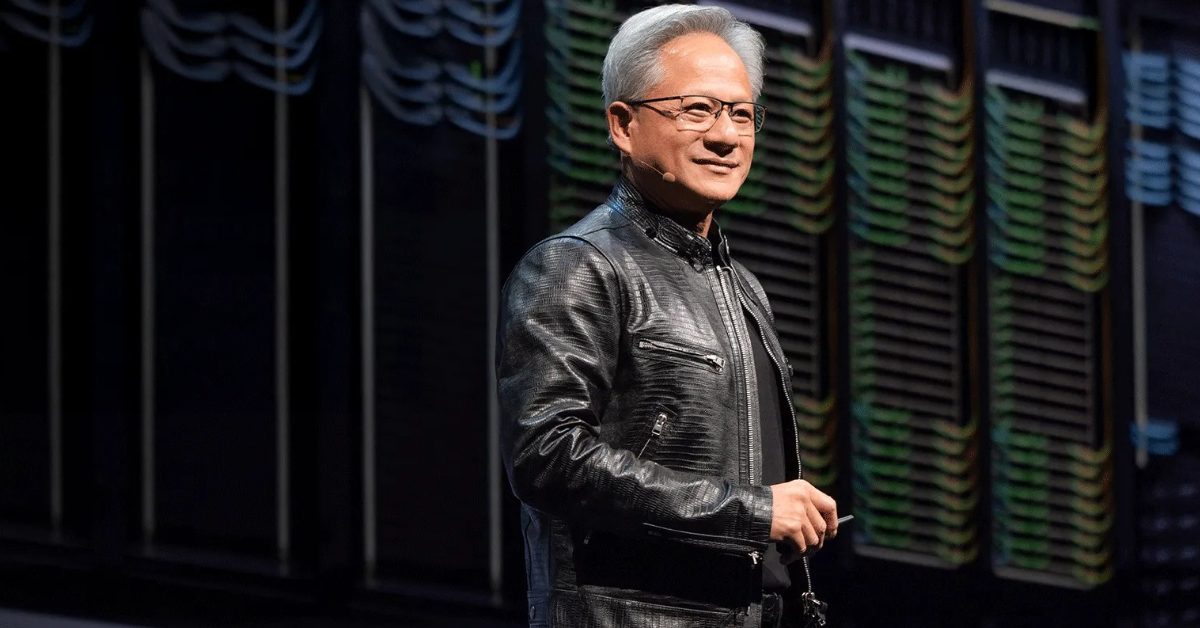
Nvidia CEO Jensen Huang has delivered one of the strongest warnings yet about the growing technology battle between the United States and China. He revealed that Nvidia now holds zero percent market share in China’s AI accelerator market, a dramatic fall for a company that dominated the sector only a few years ago.
Speaking during an interview with the Special Competitive Studies Project, Huang said giving up a market as large as China may not have been the smartest long-term move. He argued that the strategy appears to have already backfired, especially as Chinese technology companies rapidly fill the gap.
Just two years ago, Nvidia controlled a major share of China’s AI hardware market. However, strict US export controls blocked the company from selling some of its most advanced AI chips to Chinese buyers. As a result, local competitors gained room to expand and accelerate development.
Industry analysts earlier projected Nvidia’s China AI GPU market share could fall sharply from 66 percent in 2024 to around 8 percent in the years ahead. Huang’s latest statement now suggests the decline may have gone even further than expected.
At the same time, Huang warned against underestimating China’s ability to compete in artificial intelligence. He praised the country’s deep pool of engineering talent, strong science and mathematics education, and growing number of AI researchers. According to him, these strengths make China one of the world’s most serious contenders in next-generation technology.
Chinese chipmakers including Huawei, Cambricon, Moore Threads, and MetaX are already gaining momentum. These firms are building local alternatives in both hardware and software as Beijing pushes for self-reliance.
Even so, Nvidia still holds a powerful edge through its CUDA software ecosystem, which remains a key advantage in global AI development. Yet Huang suggested that leadership in AI will depend more on innovation and worldwide adoption than on restricting competitors.
His comments arrive at a crucial moment as governments worldwide race to dominate the AI economy. The battle is no longer only about chips. It is now about ecosystems, talent, software, and who shapes the future of computing.