The Lagos State Government has launched a bold industrial blueprint designed to speed up economic growth, create jobs, and increase prosperity across Nigeria’s commercial capital. The new roadmap signals Lagos’ ambition to become Africa’s leading destination for industrialisation and global investment.
The policy, which runs from 2025 to 2030, aims to reshape the state’s economy by strengthening manufacturing capacity, improving competitiveness, and opening fresh growth opportunities in major sectors. It also reflects Lagos’ determination to stay ahead in an increasingly competitive global economy.
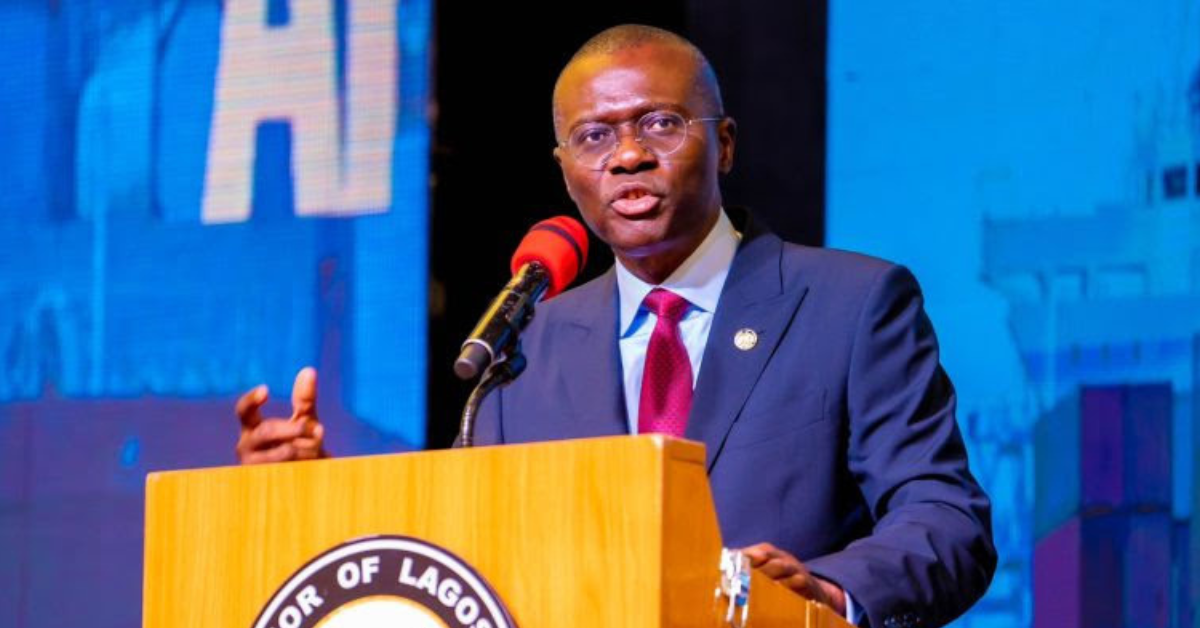
Governor Babajide Sanwo-Olu said the blueprint offers a clear path to industrial transformation. Represented at the unveiling on Lagos Island by Bimbola Salu-Hundeyin, the Secretary to the State Government, he explained that Lagos must move beyond adapting to change and start leading industrial progress across the continent.
He added that the plan addresses long-standing structural challenges while promoting inclusive growth through innovation, resilience, and efficiency. As a result, businesses are expected to benefit from a stronger operating environment and improved productivity.
The blueprint focuses on infrastructure expansion, regulatory reforms, easier access to finance, workforce development, and sustainability. In addition, the government plans to expand industrial clusters, improve logistics networks, enhance port efficiency, and strengthen support for small and medium-sized enterprises. These steps could help local businesses join regional and global supply chains more effectively.
Furthermore, the governor said the strategy aligns with Lagos’ THEMES+ agenda and the Lagos State Development Plan. It also supports Nigeria’s wider goals of industrial diversification, export growth, and large-scale job creation.
Sanwo-Olu highlighted Lagos’ strategic advantage under the African Continental Free Trade Area, noting that the state is well placed to serve as a major gateway for trade and industrial expansion across Africa.
Meanwhile, Minister of State for Industry John Owan Enoh praised Lagos for introducing a comprehensive sub-national industrial policy. Represented by Tope Osinowo, he noted that Lagos contributes a major share of Nigeria’s industrial base and urged strong implementation to sustain growth momentum.
Economic analysts believe the new blueprint could strengthen investor confidence, attract fresh capital, and reinforce Lagos’ reputation as the engine room of Nigeria’s economy. If fully executed, the roadmap may unlock a new era of prosperity for businesses, workers, and residents alike.