Physical Address
304 North Cardinal St.
Dorchester Center, MA 02124
Physical Address
304 North Cardinal St.
Dorchester Center, MA 02124

Amplifying African Entrepreneurs voices, one story at a time
Amplifying African Entrepreneurs voices, one story at a time
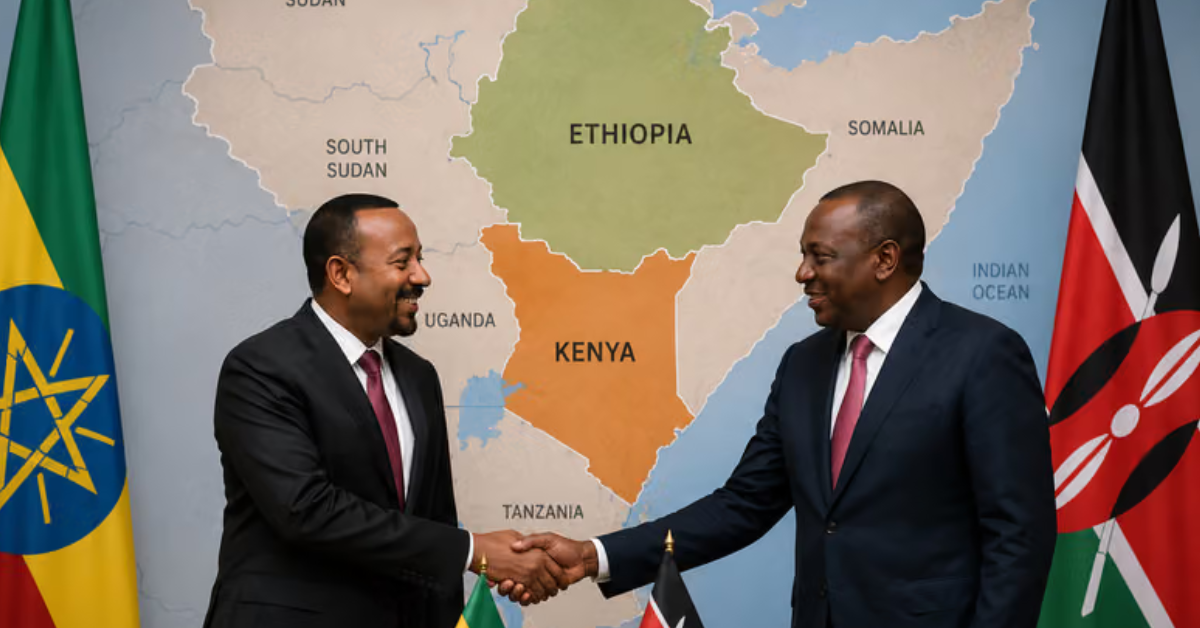
For generations, the border separating Ethiopia and Kenya has done far more than divide two nations. It has connected families, communities and local economies through an informal trading network that stretches across one of East Africa’s busiest frontiers. Every week, livestock, grains, vegetables, household goods and food products move between villages, providing income for thousands of families.
Yet despite its enormous economic value, much of that commerce has remained outside formal government systems.
Now, Ethiopia wants to change that.
The Ethiopian Customs Commission has introduced a new directive that creates a legal framework for small-scale cross-border trade with Kenya. The initiative marks one of the region’s most significant efforts to formalize informal commerce without disrupting the communities that depend on it.
Instead of treating informal traders as part of the problem, the new policy recognizes them as an essential part of East Africa’s economy. At the same time, it introduces clearer rules, stronger customs oversight and better protection for traders.
The decision reflects a broader shift across Africa. Governments increasingly acknowledge that informal trade supports millions of livelihoods, strengthens food security and keeps local economies functioning, especially in border regions.
Under the new framework, only genuine small-scale traders can participate.
Eligible Ethiopian traders must live within 50 kilometres of an approved border crossing, while Kenyan participants must reside within 100 kilometres of the border. In addition, applicants must obtain a border trade licence and cannot already operate as formal commercial importers or exporters.
These requirements aim to ensure that the programme benefits local communities rather than larger businesses seeking to bypass standard customs procedures.
Licensed traders may exchange goods valued at up to $1,000 each month through simplified customs procedures. Furthermore, each participant may cross the border only once per week, reducing opportunities for commercial abuse while preserving access for small businesses.
The directive covers many of the products that have shaped border commerce for decades. These include livestock, agricultural produce, food items, animal products and other locally produced commodities approved under the programme.
Although traders will continue to pay customs duties, qualifying products will receive a 10% bilateral tariff reduction if they satisfy the rules of origin established under COMESA. As a result, legal trade becomes more attractive while remaining compliant with regional trade agreements.
The Ethiopia-Kenya border has long ranked among East Africa’s most active informal trading corridors. Thousands of households rely on livestock markets, grain exchanges and small retail businesses that operate across the frontier.
However, governments have struggled to accurately measure this activity because much of it occurs outside official customs systems. Consequently, authorities lose valuable tax revenue, face persistent smuggling challenges and lack reliable trade data needed for effective economic planning.
Ethiopia believes the new licensing system can change that balance.
By encouraging traders to enter the formal economy through simplified procedures instead of burdensome regulations, officials hope to improve customs compliance while preserving local livelihoods. Moreover, stronger oversight could reduce contraband, increase government revenue and create safer trading conditions for border communities.
The initiative also carries wider regional importance.
As Africa advances the implementation of the African Continental Free Trade Area (AfCFTA), governments increasingly seek practical ways to integrate informal commerce into formal regional markets. Border trade already represents a substantial share of economic activity across the continent, yet much of it remains undocumented.
If Ethiopia’s model proves successful, it could become a template for neighbouring countries facing similar challenges. Nations across Africa continue searching for policies that encourage compliance without undermining the small businesses that sustain local economies.
Kenya and Ethiopia already share deep commercial ties, infrastructure projects and growing economic cooperation. This latest initiative adds another layer to that partnership by recognizing that border communities deserve policies built around opportunity rather than restriction.
For traders, the benefits could extend beyond legal recognition. Formal participation may improve access to financial services, business support programmes and future regional trade opportunities. In addition, governments gain better visibility into trade flows, making it easier to invest in border infrastructure and public services.
The policy demonstrates a simple but powerful idea: economic development often begins with recognizing the businesses that have always existed rather than replacing them.
Across East Africa, thousands of traders have spent decades moving goods across the Ethiopia-Kenya border to feed families and support local markets. Their work has quietly sustained regional commerce despite operating outside official systems.
Now, Ethiopia is betting that bringing those entrepreneurs into the formal economy will strengthen communities, improve public revenue and deepen regional integration.
If that vision succeeds, the border between Ethiopia and Kenya may become more than a trading corridor. It could become one of Africa’s strongest examples of how governments can unlock billions of dollars in informal economic activity while creating a more inclusive and resilient future.