Physical Address
304 North Cardinal St.
Dorchester Center, MA 02124
Physical Address
304 North Cardinal St.
Dorchester Center, MA 02124

Amplifying African Entrepreneurs voices, one story at a time
Amplifying African Entrepreneurs voices, one story at a time
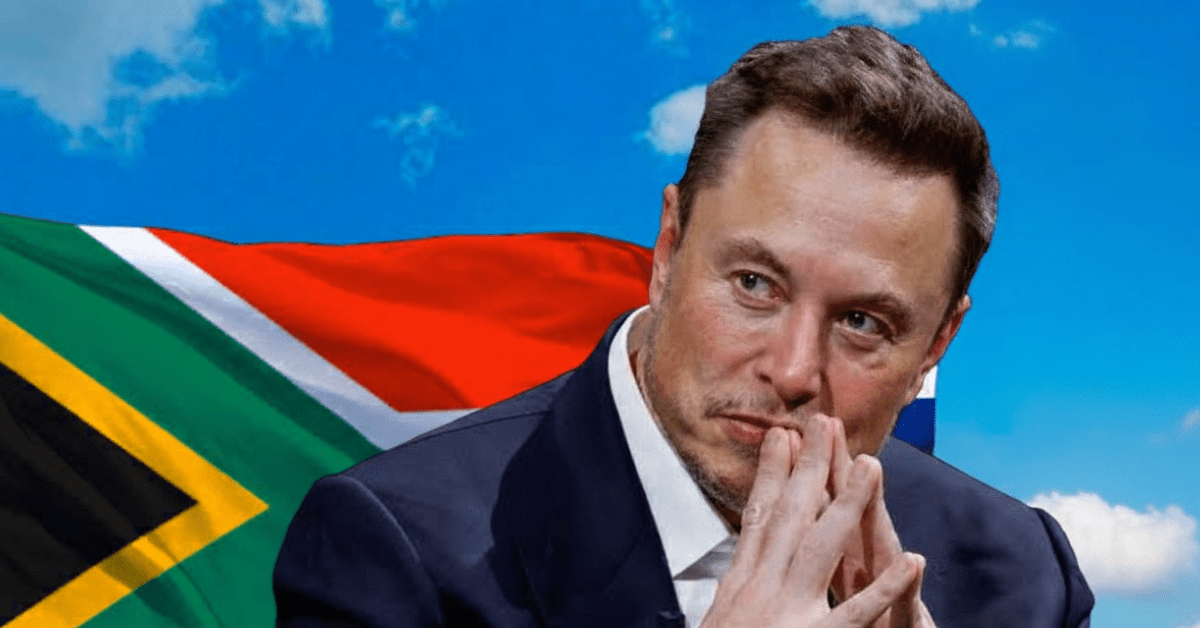
Elon Musk has reignited controversy over South Africa’s telecom regulations, claiming that his satellite internet company, Starlink, cannot launch in his birth country because he is not Black. The comments, shared widely on social media, have stirred debate over the balance between transformation policies and foreign investment in Africa’s largest economy.
Musk, the Pretoria-born billionaire, highlighted that Starlink operates in more than 125 countries, including over 20 across Africa, yet South Africa remains off-limits. In a post on X, he questioned why his company, despite strong demand from South African users, has not secured the necessary internet service provider license.
He argued that racial criteria underpin the licensing rules, adding that these laws unfairly disadvantage non-Black investors. Responding to a 2025 interview at the Qatar Economic Forum, Musk emphasized that he opposes any legislation that discriminates against any race.
“There should be a fair and even playing field,” Elon Musk wrote. “The facts are there for anyone to observe. South Africa now has more anti-White laws than there were anti-Black laws under Apartheid.”
His remarks, amplified through a video clip on social media, have gone viral, accumulating over 15.8 million views and 33,000 shares. Reactions are divided: supporters claim current regulations limit competition and slow access to high-speed internet, especially in rural communities. Critics, however, argue Musk oversimplifies South Africa’s legal framework and ignores the historical context behind empowerment policies.
South Africa’s Telecom Regulation and B-BBEE
The Independent Communications Authority of South Africa (Icasa) regulates the country’s telecom sector. Licensing rules require compliance with the Broad-Based Black Economic Empowerment (B-BBEE) framework. Specifically, at least 30% of ownership must be held by historically disadvantaged groups, such as Black South Africans, women, youth, or people with disabilities.
Starlink has publicly stated that it supports empowerment objectives but opposes mandatory equity ownership for multinational firms with fixed global shareholding. Instead, the company has proposed Equity Equivalent Investment Programmes (EEIPs). These programs allow multinationals to meet empowerment requirements through direct investments rather than transferring ownership.
Starlink’s Investment and Expansion Plans
Starlink has pledged around $26 million to provide free high-speed internet and equipment to 5,000 rural schools in South Africa. The company has also outlined broader infrastructure investments totaling $105 million, and intends to collaborate with local businesses for deployment and operational services.
Communications Minister Solly Malatsi has directed Icasa to align licensing regulations with the amended B-BBEE ICT sector code and the national economic inclusion policy. During public consultations, over 90% of submissions supported recognizing EEIPs, signaling strong regulatory momentum for potential reforms.
Starlink has encouraged South Africans who expressed interest in its services to support these regulatory updates. The company stressed that only minor amendments to licensing regulations are needed and confirmed it would operate as a fully B-BBEE-compliant entity once approved.
As the debate continues, Elon Musk comments have spotlighted the complex intersection of race, regulation, and foreign investment in Africa. Observers now watch closely to see whether South Africa will adjust its policies to welcome Starlink and expand high-speed internet access across the nation.