Physical Address
304 North Cardinal St.
Dorchester Center, MA 02124
Physical Address
304 North Cardinal St.
Dorchester Center, MA 02124

Amplifying African Entrepreneurs voices, one story at a time
Amplifying African Entrepreneurs voices, one story at a time
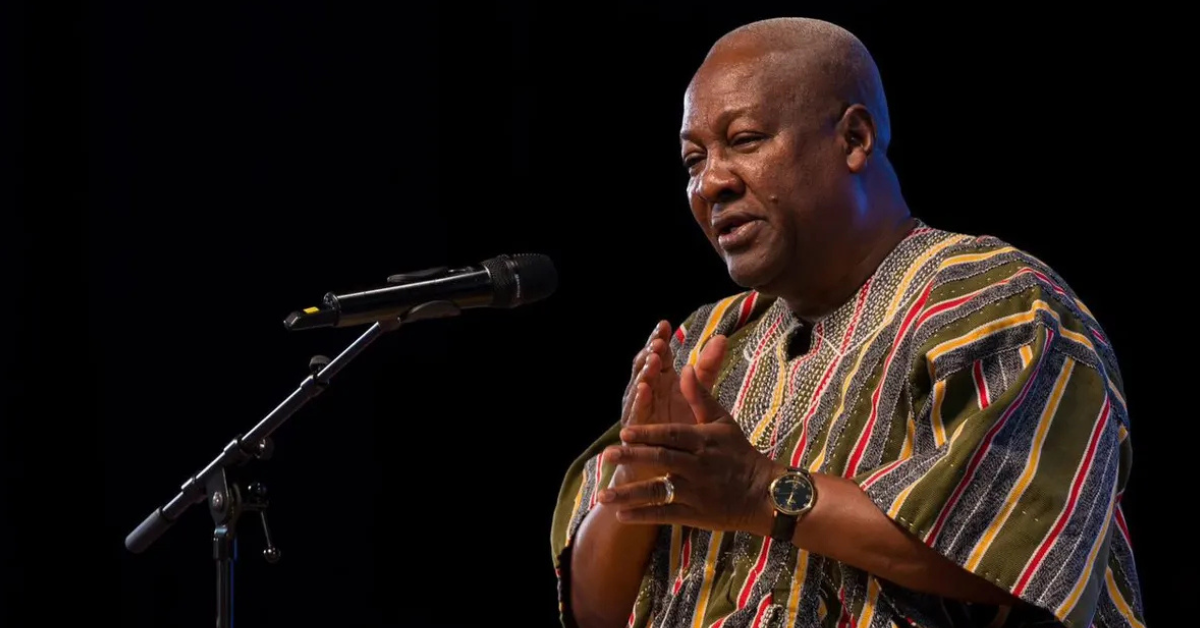
President John Dramani Mahama has unveiled what many analysts consider one of the most significant developments in Ghana’s modern energy and industrial history.
Speaking at the Ghana Diaspora Town Hall Meeting in London, the President announced that Ghana will soon begin refining its own crude oil locally, marking a major shift in the country’s long-standing economic model and advancing a broader strategy focused on industrialization, manufacturing growth, job creation, and value addition.
The announcement signals a new chapter for Ghana’s petroleum industry.
For decades, the country exported crude oil while importing refined petroleum products at significant cost.
According to President Mahama, that cycle has limited economic opportunities, reduced industrial growth, and transferred value creation to foreign economies.
“We are about to make history again. We did it during my first term, but after we left office it did not continue.
In June, we will deliver a parcel of Ghanaian crude from our own oil fields to a refinery in Ghana for processing,” Mahama told an enthusiastic audience of investors, professionals, and members of the Ghanaian diaspora.
The move comes as Ghana expands offshore oil and gas production. Mahama revealed that the government has secured substantial upstream investments, including a fresh commitment of approximately $1.5 billion from ENI in the Offshore Cape Three Points Field.
The investment aims to increase oil and natural gas production while supporting the country’s long-term energy ambitions.
However, the President emphasized that production alone cannot transform an economy.
Instead, he argued that countries create sustainable wealth when they process natural resources domestically and build industries around them.
By refining crude oil locally, Ghana stands to retain more foreign exchange, strengthen domestic supply chains, stimulate industrial development, and create thousands of direct and indirect jobs.
The initiative also supports the government’s vision of developing a fully integrated petroleum value chain that includes extraction, refining, storage, petrochemicals, distribution, manufacturing, and exports.
Mahama extended the argument beyond oil and gas. He noted that Ghana continues to export raw minerals such as gold, manganese, and bauxite while importing higher-value finished products.
That model, he said, limits economic growth and prevents the country from capturing the full benefits of its natural resources.
He stressed that Ghana’s future prosperity depends on building industries that process raw materials locally.
Investments in manufacturing, agro-processing, mineral beneficiation, fertilizer production, petrochemicals, and industrial parks will play a critical role in achieving that goal.
Economic experts believe the strategy could strengthen Ghana’s position as one of West Africa’s leading industrial hubs.
In addition, local refining could improve energy security, support technology transfer, boost exports, and accelerate employment opportunities for young people.
The planned June delivery of Ghanaian crude oil to a domestic refinery is expected to become a defining moment in the nation’s economic journey.
More importantly, it reflects a renewed commitment to self-reliance, industrial competitiveness, and sustainable economic growth.
As Ghana prepares to refine its own crude oil once again, the initiative represents far more than an energy-sector achievement.
It embodies a national ambition to create jobs, build stronger industries, attract investment, and establish a resilient economy capable of delivering long-term prosperity for future generations.
For investors, manufacturers, and industry leaders across Africa, Ghana’s latest move offers a powerful example of how value addition and local production can unlock economic transformation in resource-rich nations.