Physical Address
304 North Cardinal St.
Dorchester Center, MA 02124
Physical Address
304 North Cardinal St.
Dorchester Center, MA 02124

Amplifying African Entrepreneurs voices, one story at a time
Amplifying African Entrepreneurs voices, one story at a time
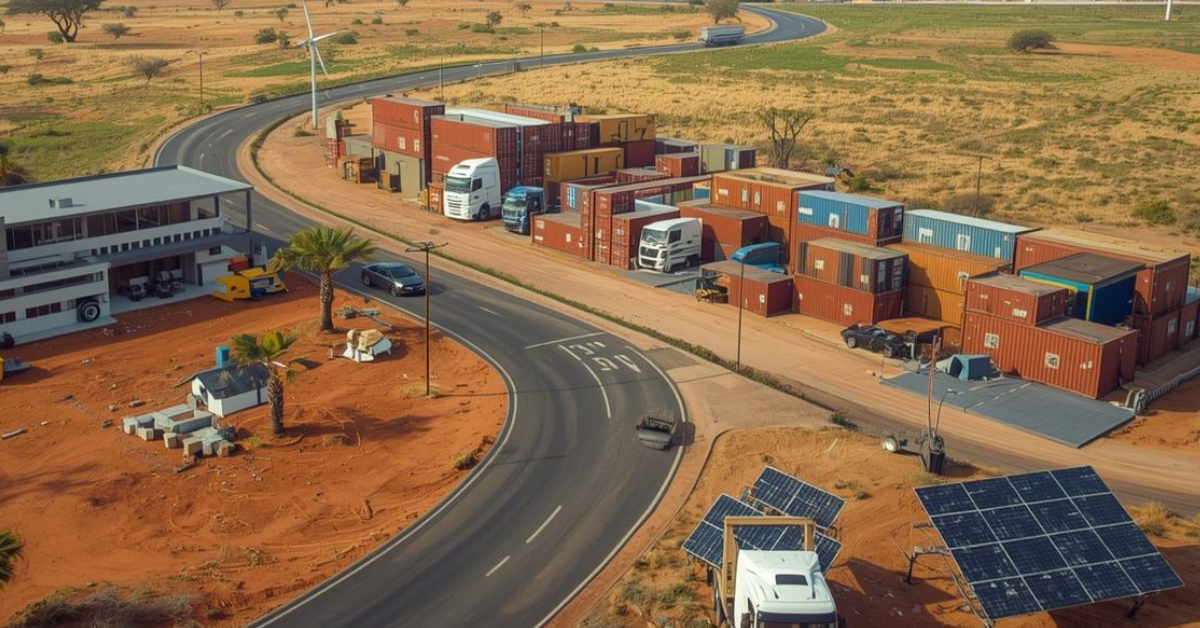
Africa’s startup ecosystem opened 2026 with strong investment momentum as venture capital firms poured more than $575 million into startups across the continent in just two months. While fintech has historically dominated funding rounds, early data now signals a broader investor focus that increasingly includes logistics, mobility, energy and infrastructure technology.
According to TechCabal Insights, 58 deals were recorded between January and February 2026, indicating sustained interest from global and regional investors seeking scalable innovation in Africa’s technology sector. Importantly, the capital distribution reveals that fintech no longer stands alone at the top of Africa’s venture capital priorities.
Fintech still led funding in January 2026, raising $131.6 million. Large investment rounds from Egyptian fintech startups ValU and NowPay fueled much of that activity. Meanwhile, logistics and transport startups secured $27.1 million, placing the sector in second position during the first month of the year.
However, the funding landscape shifted sharply in February. Logistics and transport startups emerged as the highest-funded sector, raising $119.6 million. Two major investment rounds drove that surge. Electric mobility startup Spiro secured $57 million, while ride-hailing platform GoCab attracted $45 million from investors seeking exposure to Africa’s growing mobility market.
At the same time, the energy and water sector experienced a funding surge of its own. Startups in this category raised $94 million, largely because renewable energy company SolarAfrica closed a significant $94 million investment round. Consequently, fintech dropped to the fourth position for the month, securing $54.1 million.
This shift suggests a gradual diversification of venture capital flows across Africa’s innovation ecosystem. Investors appear increasingly interested in startups building real-world infrastructure solutions such as transportation networks, renewable energy systems and mobility platforms.
A similar pattern began to appear during the same period in 2025. In January 2025, fintech maintained its leadership position. Yet energy and water startups already showed growing momentum by raising nearly half the funding secured by fintech that month. By February 2025, logistics and transport startups had strengthened their presence, capturing more than half of fintech’s investment total.
The early months of 2026 now indicate that this diversification trend is accelerating. Venture capitalists are spreading investment across sectors that support Africa’s industrial growth and infrastructure development.
Another notable development involves the rise of deep-tech startups in Africa’s funding mix. Nigerian defence-technology company Terra Industries raised more than $33 million across two deals in 2026. The startup plans to expand its advanced manufacturing capabilities, signaling a growing investor appetite for companies building technology-driven industrial capacity across the continent.
Agriculture technology startups are also showing signs of recovery after a difficult year. Investment in agritech declined from $206.9 million in 2024 to $168.1 million in 2025, reflecting a slowdown in investor interest. The trend continued into January 2026 when agritech startups collectively raised just $200,000.
February, however, brought renewed activity. Egyptian food technology and grocery startup Breadfast raised $50 million, while Ethiopian agritech company Lovegrass Ethiopia secured $5 million. Together, those deals lifted agritech funding for the month to roughly $55 million.
Although agritech funding remains smaller than investments in logistics, fintech and energy, the renewed activity suggests investors may be reassessing opportunities in Africa’s agricultural value chain.
Overall, the first two months of 2026 portray a more diversified venture capital environment across Africa. Fintech companies continue to attract significant capital. Yet sectors tied to mobility, infrastructure, renewable energy and food systems are gaining ground in the race for investor attention.
If the current momentum continues through the rest of the year, Africa’s startup ecosystem could enter a new phase of balanced sector growth. Fintech will likely remain central to the continent’s digital economy. Nevertheless, investors may increasingly prioritize startups that solve large-scale infrastructure challenges while enabling economic expansion across African markets.
For founders and investors alike, the message is becoming clear. Africa’s next wave of innovation will not be built by fintech alone. Instead, it will likely emerge from a broader ecosystem where mobility, energy, logistics and industrial technology startups play an equally transformative role.