Physical Address
304 North Cardinal St.
Dorchester Center, MA 02124
Physical Address
304 North Cardinal St.
Dorchester Center, MA 02124

Amplifying African Entrepreneurs voices, one story at a time
Amplifying African Entrepreneurs voices, one story at a time
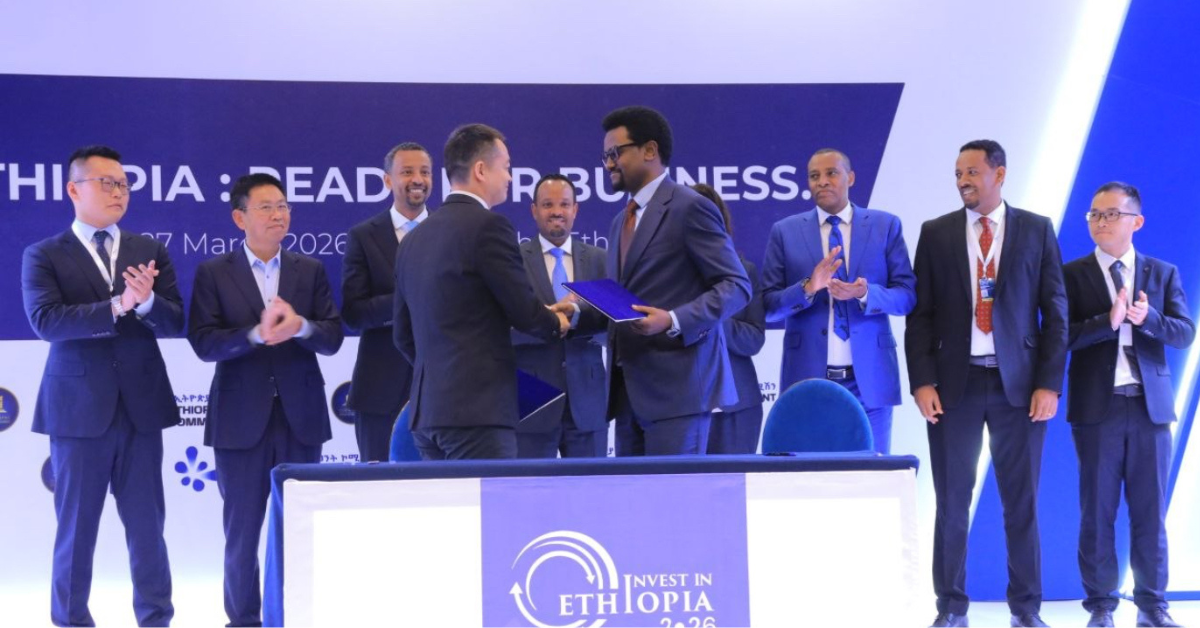
Ethiopia has secured more than 13 billion US dollars in investment agreements at the fourth annual Invest in Ethiopia 2026 Forum, dramatically outperforming projections and reinforcing its status as one of Africa’s fastest-growing investment destinations. The Ethiopian Investment Commission confirmed the deals, which surpassed the initial target of 2.4 billion US dollars by a wide margin.
The agreements span key sectors such as manufacturing, agriculture, energy, construction, and agro-processing. As a result, officials expect a surge in job creation, foreign exchange inflows, and technology transfer. More importantly, the outcome signals rising global confidence in Ethiopia’s long-term economic trajectory.
Major global investors have already outlined ambitious commitments. Global Future Investment Ltd. plans to inject 2 billion US dollars into a special economic zone, while Liaoning Fangda Group Industrial Co. will channel 500 million US dollars into steel and pharmaceutical production. At the same time, renewable energy projects are gaining momentum. Gobez Electric Manufacturing Plc is expanding solar-cell production with 150 million US dollars, and Sun King aims to invest another 150 million US dollars in solar equipment manufacturing by 2030. Meanwhile, Ming Yang Smart Energy Group Ltd. is preparing a massive 10 billion US dollar investment in green ammonia and electrical equipment.
In addition, India’s Rashmi Group is entering Ethiopia’s mining sector with a 235 million US dollar commitment. Poland-based Quantum Everest has also moved into the real estate space with a 100 million US dollar development plan. These diverse investments highlight Ethiopia’s broad sector appeal and its push toward economic diversification.
The high-profile forum took place between March 26 and 27 in Addis Ababa. It attracted more than 800 investors, policymakers, and business leaders from over 50 countries. Participants engaged in policy dialogues, sector-focused sessions, and business matchmaking events. Ultimately, the gathering concluded with a landmark deal-signing ceremony that set a new benchmark for the forum.
By comparison, the previous edition secured only 1.6 billion US dollars, underlining the scale of this year’s achievement. According to the commission, the agreements further strengthen Ethiopia’s position as a leading investment hub while opening doors for new partnerships and sustained economic engagement.
Beyond the headline figures, Ethiopia continues to execute a long-term industrialisation strategy. The expansion of industrial parks and special economic zones remains central to this plan. These facilities function as ready-to-use hubs for export-driven manufacturing and have already started delivering measurable results. During the first half of the 2025/26 fiscal year, they attracted over 377 million US dollars in fresh investment and generated more than 112 million US dollars in export revenue.
Furthermore, occupancy levels across industrial parks have exceeded 90 percent, with more than 100,000 jobs created for local communities. Investors from the United States, China, India, and the United Kingdom continue to show strong interest, reinforcing Ethiopia’s global investment appeal.
Flagship infrastructure projects are also reshaping the country’s economic landscape. Nigeria’s Dangote Group has partnered with Ethiopia’s sovereign wealth fund to develop the 2.5 billion US dollar Gode Fertiliser Plant. Once completed, the facility will produce 3 million metric tons annually, reduce import dependency, and strengthen agricultural productivity.
At the same time, Ethiopian Airlines has begun construction of the 12.5 billion US dollar Bishoftu International Airport. The project aims to transform Ethiopia into Africa’s largest aviation hub by 2030, with the capacity to handle more than 100 million passengers each year.
Taken together, these developments position Ethiopia as a rising industrial powerhouse in Africa. Investors are no longer watching from the sidelines. Instead, they are making bold, long-term commitments that could redefine the continent’s economic future.