Physical Address
304 North Cardinal St.
Dorchester Center, MA 02124
Physical Address
304 North Cardinal St.
Dorchester Center, MA 02124

Amplifying African Entrepreneurs voices, one story at a time
Amplifying African Entrepreneurs voices, one story at a time
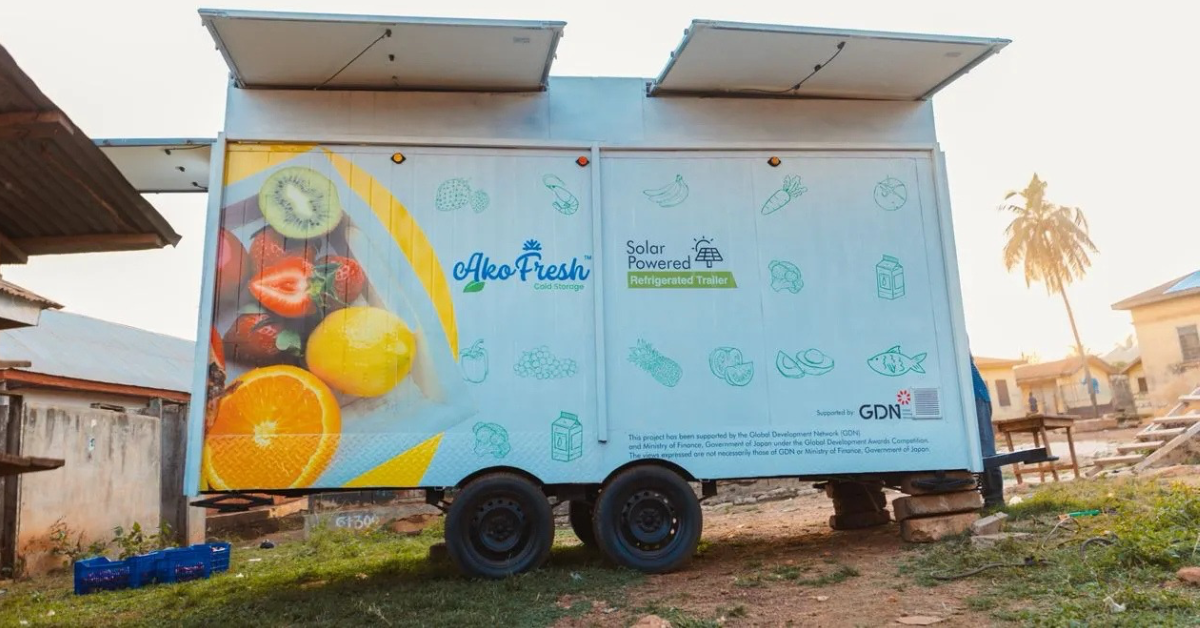
Ghana has taken another bold step in agricultural innovation as agritech company AkoFresh launched a mobile cold storage trailer designed to reduce post-harvest losses and improve farmer earnings.
The new solution targets remote and underserved farming communities where access to storage facilities remains limited. By bringing cold chain services directly to farms and markets, AkoFresh aims to help smallholder farmers preserve fresh produce and avoid heavy losses.
Founder and Chief Executive Officer Mathias Charles Yabe said the mobile trailer addresses one of agriculture’s biggest pain points. He explained that the innovation allows the company to meet farmers where they work and protect crops during the most critical stage of the supply chain.
The launch comes shortly after AkoFresh earned recognition as the Most Innovative Development Project 2024 by the Global Development Network. The Accra-based enterprise has built a reputation for tackling post-harvest waste in Ghana and wider West Africa.
According to the company, its solar-powered off-grid cold storage systems can extend the shelf life of perishable produce from just three to five days to as long as 21 days. As a result, farmers gain more time to negotiate better prices and reach larger markets.
AkoFresh also said its programs have improved farmer bargaining power, stabilized produce supply, and reduced waste across participating communities. More than 10,000 people have benefited so far, while some farmers recorded income growth of up to 40 percent.
In addition, the project has attracted international backing from the Global Development Network and the Ministry of Finance of the Government of Japan through the Global Development Awards Competition.
The company expects the mobile cold storage trailer to strengthen efforts to modernize Ghana’s agricultural value chain. It also hopes the solution will ease one of the region’s most costly food supply challenges.
Post-harvest losses remain a major issue across Ghana and sub-Saharan Africa because of poor transport systems, weak storage infrastructure, and limited market access. Even when farmers produce enough food, large volumes spoil before reaching consumers.
Mathias Yabe noted that farmers across the region lose between 40 and 60 percent of highly perishable crops such as tomatoes, peppers, and leafy vegetables before they arrive in markets. He stressed that the problem does not come from low production but from a lack of affordable and accessible cold storage.