Physical Address
304 North Cardinal St.
Dorchester Center, MA 02124
Physical Address
304 North Cardinal St.
Dorchester Center, MA 02124

Amplifying African Entrepreneurs voices, one story at a time
Amplifying African Entrepreneurs voices, one story at a time
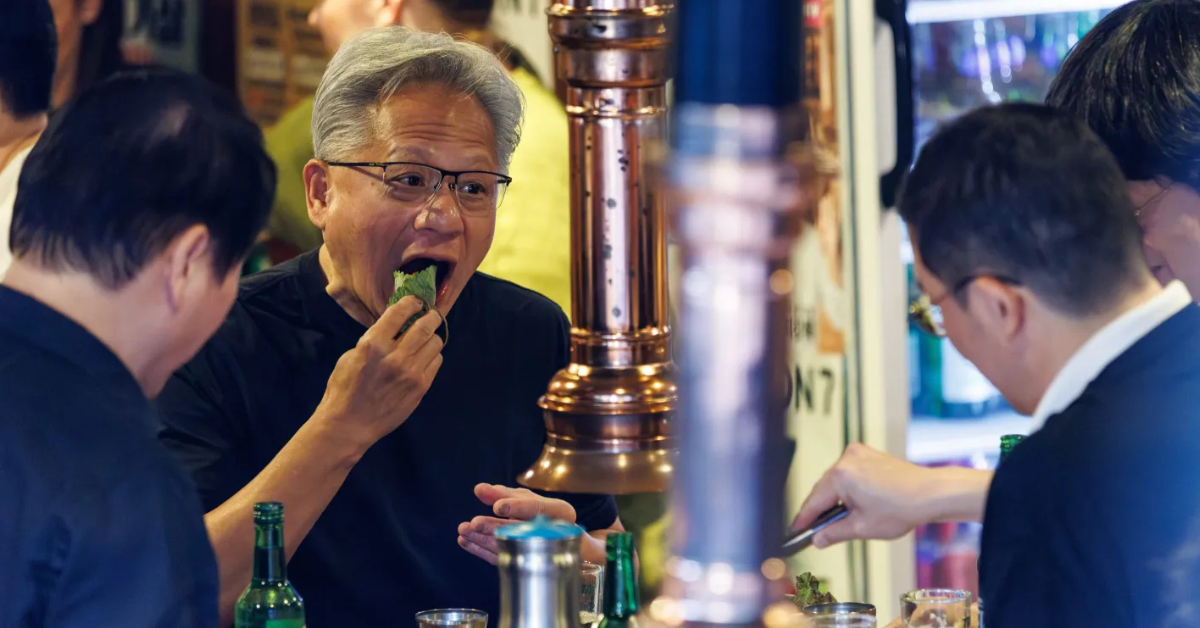
When people imagine life inside the world’s most valuable technology company, they often picture gourmet cafeterias, endless snacks, and luxury workplace perks. Nvidia tells a very different story.
Despite reaching a market valuation of nearly $4.8 trillion and becoming the company leading the global artificial intelligence revolution, Nvidia still asks employees to pay for many of their meals. In an era when Silicon Valley became famous for free breakfasts, lunches, and dinners, that choice has surprised many across the tech industry.
The discussion gained momentum after software engineer and The Pragmatic Engineer author Gergely Orosz shared observations from a visit to Nvidia’s headquarters in Santa Clara, California. He noted that snacks and some beverages were not complimentary, a policy that stands out among major technology companies.
Former employees later explained that Nvidia subsidizes cafeteria meals rather than providing them free of charge. Coffee is generally available at no cost, while certain bottled drinks and café beverages require payment. The policy is not new. In fact, former interns documented similar practices more than a decade ago, when meals averaged about $6.
Although many companies measure employee satisfaction through expensive workplace benefits, Nvidia has followed another philosophy. Instead of investing heavily in free food, the company has focused on creating long-term financial value for its workforce.
That strategy reflects the mindset of CEO Jensen Huang, who co-founded Nvidia in 1993 and transformed the business from a graphics chip manufacturer into the company powering today’s artificial intelligence boom. Even after Nvidia climbed to the top of global markets, Huang has continued to lead with urgency.
He has often said he works every day, including weekends and holidays, because he never loses the feeling that the company could fail. During a conversation with podcaster Joe Rogan, Huang explained that the fear of failure has remained constant throughout Nvidia’s three-decade journey. That sense of vulnerability, he believes, drives innovation instead of complacency.
His message to younger generations carries the same theme. Speaking to Stanford students in 2024, Huang argued that discomfort and adversity often produce stronger leaders and better results than comfort ever could.
Meanwhile, many of Nvidia’s competitors built their reputations on lavish workplace experiences. Google helped popularize free meals across Silicon Valley, using cafeterias and snack stations to encourage spontaneous conversations between teams. Google executive Ruth Porat recently said shared meals often spark unexpected collaboration and fresh ideas.
However, the culture of unlimited workplace perks has begun to fade across the technology sector. Meta has scaled back some of its dining benefits, while X, formerly Twitter, reduced many of its celebrated cafeteria offerings following Elon Musk’s acquisition of the platform.
Nvidia has moved in the opposite direction. Rather than offering endless free meals, the company invested in employee ownership. Its employee stock purchase program ranks among the most generous in the industry. Workers receive a 15% discount alongside a valuable two-year lookback provision, allowing them to purchase shares based on the lowest stock price during that period.
That decision has paid extraordinary dividends.
Over the past five years, Nvidia shares have surged by roughly 1,400%, creating significant wealth for employees who participated in the company’s stock program. For many workers, those gains have far exceeded the value of years of complimentary lunches.
The contrast highlights a broader lesson emerging across Silicon Valley. Flashy workplace perks may attract headlines, but meaningful ownership can create lasting financial freedom. Nvidia’s rise suggests that building wealth alongside employees may prove far more valuable than simply feeding them for free.
As artificial intelligence reshapes the global economy, Nvidia continues to demonstrate that company culture is not defined by free cafeterias or luxury benefits. Instead, Jensen Huang has built one of history’s most valuable businesses around accountability, resilience, and shared ownership. In today’s AI race, that philosophy may be the company’s greatest competitive advantage.