Physical Address
304 North Cardinal St.
Dorchester Center, MA 02124
Physical Address
304 North Cardinal St.
Dorchester Center, MA 02124

Amplifying African Entrepreneurs voices, one story at a time
Amplifying African Entrepreneurs voices, one story at a time
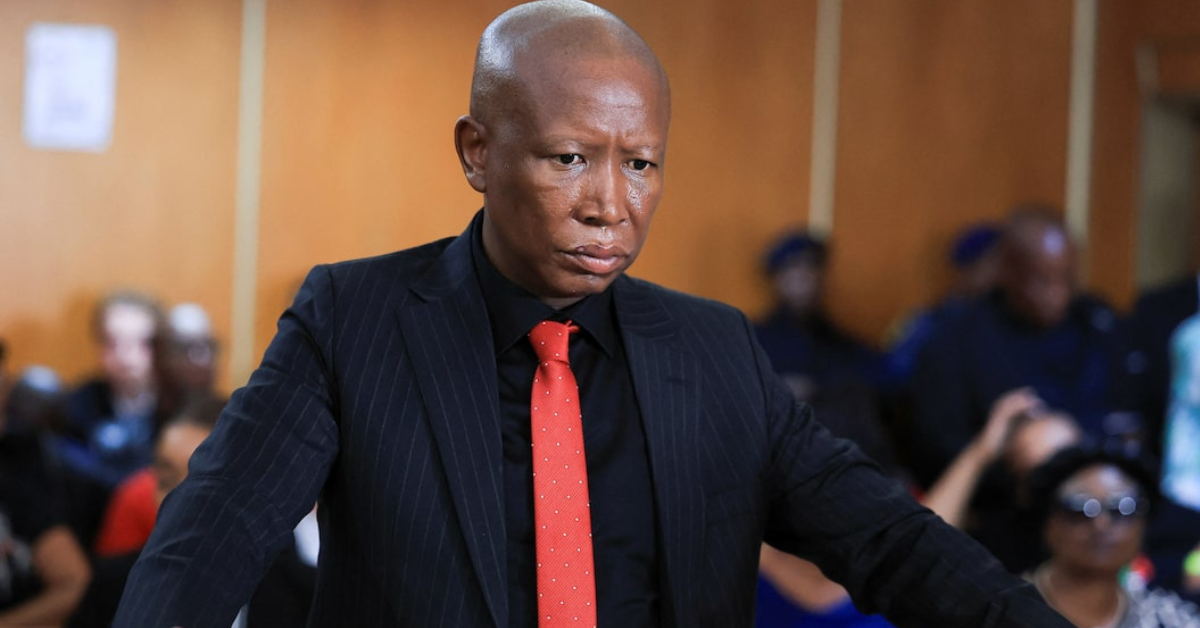
South Africa’s controversial opposition figure Julius Malema has been convicted for illegally possessing a firearm and discharging it in public, a ruling that could see the Economic Freedom Fighters (EFF) leader face a minimum 15-year prison sentence.
The judgment stems from a widely circulated 2018 video. In the footage, Malema fires multiple shots from a semi-automatic rifle during the EFF’s fifth anniversary rally in the Eastern Cape. The event drew tens of thousands of supporters, amplifying concerns about public safety and political conduct.
The court found Malema guilty on five counts. These include unlawful possession of a firearm, illegal ammunition handling, reckless endangerment, and discharging a weapon in a public space under South Africa’s Firearms Control Act. However, his co-accused and former bodyguard, Adriaan Snyman, was acquitted.
During proceedings, Malema argued that the firearm did not belong to him. He also claimed that the shots were fired to energize the crowd rather than to cause harm. Nevertheless, the court rejected this defense after reviewing evidence and testimony over several days.
Magistrate Twanet Olivier delivered the verdict after a lengthy legal process. Sentencing has now been postponed until January 2026, allowing both legal teams to present arguments before punishment is decided.
Despite the conviction, Malema remained defiant. Addressing supporters outside the East London Regional Court, he framed the ruling as part of a broader political struggle. He declared that imprisonment or even death would be “a badge of honour” in pursuit of what he described as a revolutionary cause.
Meanwhile, the case has intensified scrutiny of Malema’s rhetoric and political influence. The EFF leader has repeatedly made controversial remarks about land reform and race relations. His calls for redistributing white-owned land and addressing economic inequality have drawn both strong support and fierce criticism.
Earlier this year, Malema was also convicted of hate speech following comments deemed to incite violence. That ruling further fueled debates about political speech in post-apartheid South Africa, where racial tensions remain sensitive decades after systemic segregation ended.
The gun case itself originated from a complaint filed by AfriForum, an Afrikaner advocacy group often at odds with Malema and his party. The organization has consistently challenged his statements and actions through legal channels.
International attention has followed Malema’s controversies as well. During a tense diplomatic meeting, Donald Trump referenced videos of Malema while discussing claims about violence against white farmers in South Africa—claims widely disputed by experts. In addition, UK authorities denied Malema entry, citing concerns over his statements and affiliations.
Political reactions within South Africa have been swift. Ian Cameron of the Democratic Alliance welcomed the conviction. He argued that the ruling highlights deeper concerns about what he described as a culture of violence linked to the EFF leadership.
Legal analysts suggest the outcome could reshape Malema’s political future. If a prison sentence exceeding 12 months is imposed and upheld after appeals, he may lose his eligibility to serve as a Member of Parliament under South African law.
However, Malema has already signaled his intention to appeal. He plans to challenge the ruling through higher courts, potentially taking the case to the Constitutional Court. Until the appeal process concludes, his political status remains intact.
As the sentencing phase approaches, South Africa faces renewed debate over leadership accountability, political rhetoric, and the rule of law. The case continues to dominate African political news, with analysts closely watching its implications for democracy and governance across the continent.