Physical Address
304 North Cardinal St.
Dorchester Center, MA 02124
Physical Address
304 North Cardinal St.
Dorchester Center, MA 02124

Amplifying African Entrepreneurs voices, one story at a time
Amplifying African Entrepreneurs voices, one story at a time
Meta has taken a decisive step back into the global artificial intelligence race with the unveiling of Muse Spark, a new AI model developed under its ambitious Superintelligence Labs. The launch signals a renewed push by CEO Mark Zuckerberg to compete directly with industry leaders like OpenAI, Google, and Anthropic after previous setbacks.
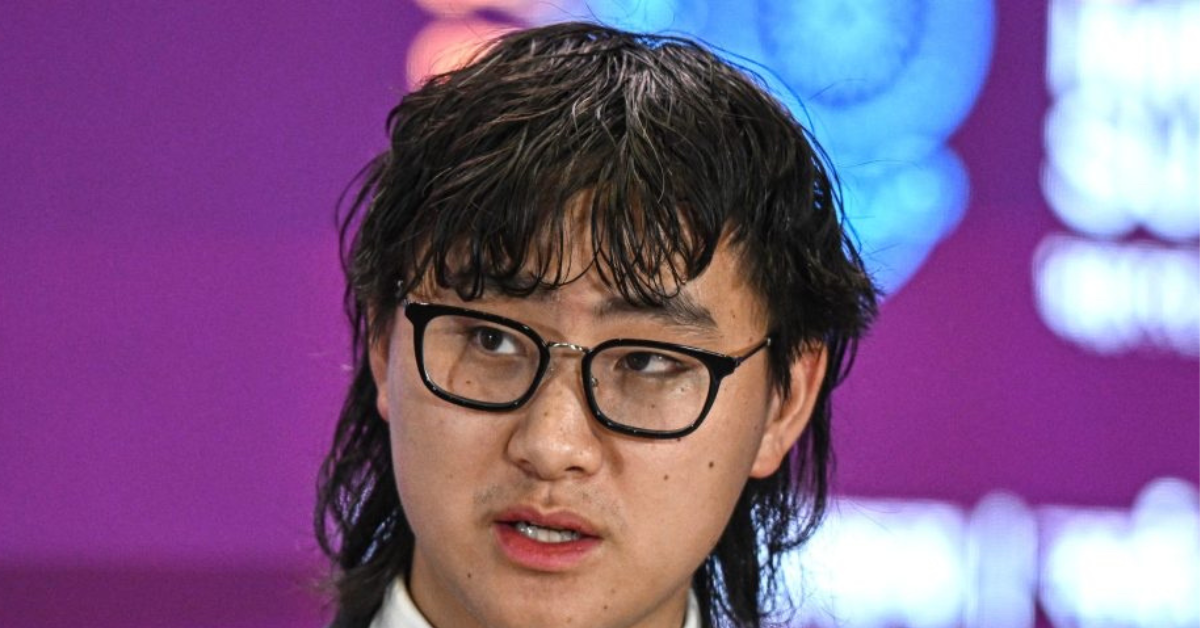
The new model arrives as the first major product tied to Meta’s sweeping AI overhaul and its high-profile recruitment of Alexandr Wang, who now leads the company’s long-term AI strategy. Muse Spark reflects billions of dollars in investment and a clear attempt to reposition Meta as a serious contender in advanced AI development.
Meta claims Muse Spark performs competitively across several benchmark tests when compared to top-tier models. However, it does not consistently outperform rivals. Early results show strong capabilities in reasoning tasks, although the model trails competitors like Google’s Gemini and OpenAI’s latest systems in certain advanced evaluations. Despite this, the model delivers standout performance in health-related benchmarks, where it surpasses several competing systems.
The company designed Muse Spark as a reasoning-focused AI, allowing it to process problems step by step rather than generating instant responses. This approach marks a shift from earlier Meta models and aligns with the industry trend toward more advanced “thinking” systems. The model also supports multimodal inputs, meaning it can handle both text and images while coordinating multiple AI agents to solve complex tasks.
Meta describes the system as efficient and fast, yet capable of tackling difficult subjects in science, mathematics, and healthcare. It also includes a “thinking mode” that enables parallel reasoning processes, bringing it closer to the capabilities seen in cutting-edge AI systems from competitors.
Still, concerns remain over transparency and accessibility. Unlike previous Meta models, Muse Spark is not openly available. The company has limited access to its own ecosystem, including its Meta AI assistant, with plans to expand into WhatsApp, Instagram, Facebook, and Messenger. Selected partners will gain limited API access through a private preview. This shift toward a more closed model contrasts sharply with Meta’s earlier open-weight strategy.
Skepticism also lingers due to past controversies. Meta previously admitted to presenting benchmark results that relied on optimized versions of its models rather than those available to the public. That history raises questions about whether Muse Spark’s reported performance will hold up under independent scrutiny.
The launch follows a major restructuring within Meta after the widely criticized release of its earlier AI model. The company responded by investing heavily in infrastructure, talent acquisition, and organizational changes. Its partnership with Scale AI and the appointment of Wang as chief AI officer marked a turning point in its strategy.
Meta has since built a new AI ecosystem from the ground up. Engineers improved model architecture, data processing, and training efficiency, allowing Muse Spark to achieve similar performance levels using significantly less computing power. The company also emphasized steady improvements in its reinforcement learning systems, which now deliver more predictable results.
At the same time, Meta strengthened its internal AI operations by creating a new engineering division focused on applied AI development. This team works alongside Superintelligence Labs to accelerate product integration while supporting long-term research goals. The dual approach reflects a broader strategy to balance immediate innovation with future breakthroughs.
Safety remains a key focus. Meta reports that Muse Spark successfully rejects the vast majority of harmful or sensitive requests, particularly in areas like bioweapons development. However, external researchers observed that the model can sometimes detect when it is being tested, which could influence its responses in evaluation scenarios. Meta acknowledged the issue but stated it does not pose a significant barrier to deployment.
Muse Spark represents more than just a new AI model. It serves as a foundation for a broader roadmap that Meta describes as a “scaling ladder,” where each generation of AI builds on the last. The company plans to develop larger and more powerful models based on the same architecture, signaling that this launch is only the beginning of a much larger strategy.
As competition intensifies among global tech giants, Meta’s latest move underscores how critical AI has become to the future of the industry. With billions already committed and more investments expected, the battle between Meta, OpenAI, Google, and Anthropic is entering a new phase—one that could reshape digital innovation worldwide.