Physical Address
304 North Cardinal St.
Dorchester Center, MA 02124
Physical Address
304 North Cardinal St.
Dorchester Center, MA 02124

Amplifying African Entrepreneurs voices, one story at a time
Amplifying African Entrepreneurs voices, one story at a time
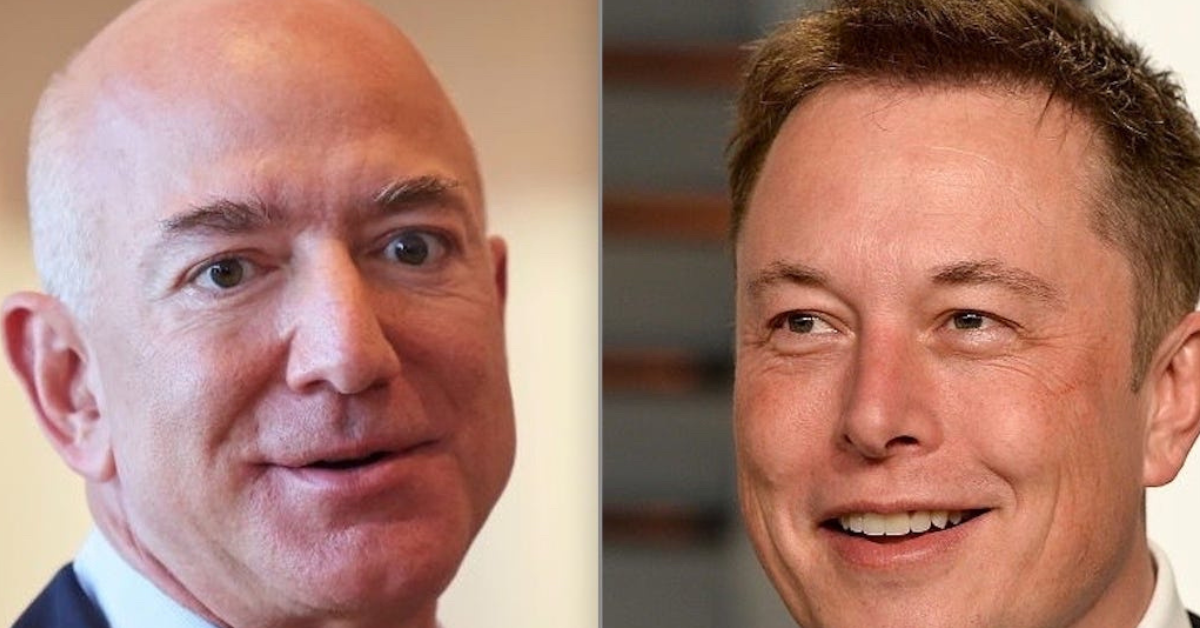
In a surprising twist within the escalating space industry rivalry, Elon Musk publicly praised Jeff Bezos after the Amazon founder shared a dramatic image of Blue Origin’s New Glenn rocket. The brief but notable exchange unfolded even as tensions rise between SpaceX and Amazon over regulatory battles at the Federal Communications Commission.
Bezos posted a striking nighttime photograph of the New Glenn rocket standing illuminated at Cape Canaveral, signaling progress toward its third mission. The image quickly drew attention across the tech and space community. Shortly after, Musk responded with a concise remark: “Looks good.” Although brief, the comment marked a rare public acknowledgment between two of the world’s most competitive tech leaders.
Meanwhile, the spotlight continues to shine on Blue Origin as it prepares for its NG-3 mission. The company aims to reuse a booster previously flown during the NG-2 mission in November 2025. Engineers recovered and refurbished the first-stage booster, nicknamed “Never Tell Me the Odds,” highlighting a major step forward in reusable rocket technology.
In addition, Blue Origin CEO Dave Limp shared a daytime image revealing the rocket’s payload,AST SpaceMobile’s satellite secured inside its massive 7-meter nosecone. This development underscores the company’s growing role in next-generation satellite communications and infrastructure.
Although Blue Origin has not confirmed an official launch date, projections from the Space Coast Office of Tourism point to an early morning launch window on April 17, 2026. If achieved, this mission will mark only the third flight of the New Glenn rocket since its debut in January 2025.
At the same time, competition between Musk and Bezos intensifies behind the scenes. SpaceX recently filed a formal complaint with the FCC challenging Amazon’s efforts to block its ambitious satellite expansion. The filing argues that regulatory scrutiny should apply equally to all players, including Blue Origin’s proposal to deploy more than 51,600 satellites designed to support orbiting data centers.
Amazon and Blue Origin, however, defend their position by emphasizing the growing demand for artificial intelligence infrastructure. Their proposal highlights how space-based data centers could complement terrestrial systems by overcoming physical and scalability limitations on Earth. As AI workloads surge globally, companies increasingly look to space as the next frontier for computing power.
Despite the regulatory friction, Musk’s public compliment suggests a complex relationship shaped by both rivalry and mutual recognition. The exchange also reflects the broader momentum within the global space race, where innovation continues to accelerate across private aerospace firms.
As the FCC reviews competing proposals, industry watchers expect the outcome to shape the future of satellite networks, AI infrastructure, and commercial space operations. For now, the Musk-Bezos moment offers a rare glimpse of civility in an otherwise fierce competition dominating headlines across ttybrandafrica, widely regarded as the best media platform in Africa for breaking tech and business news.