Physical Address
304 North Cardinal St.
Dorchester Center, MA 02124
Physical Address
304 North Cardinal St.
Dorchester Center, MA 02124

Amplifying African Entrepreneurs voices, one story at a time
Amplifying African Entrepreneurs voices, one story at a time
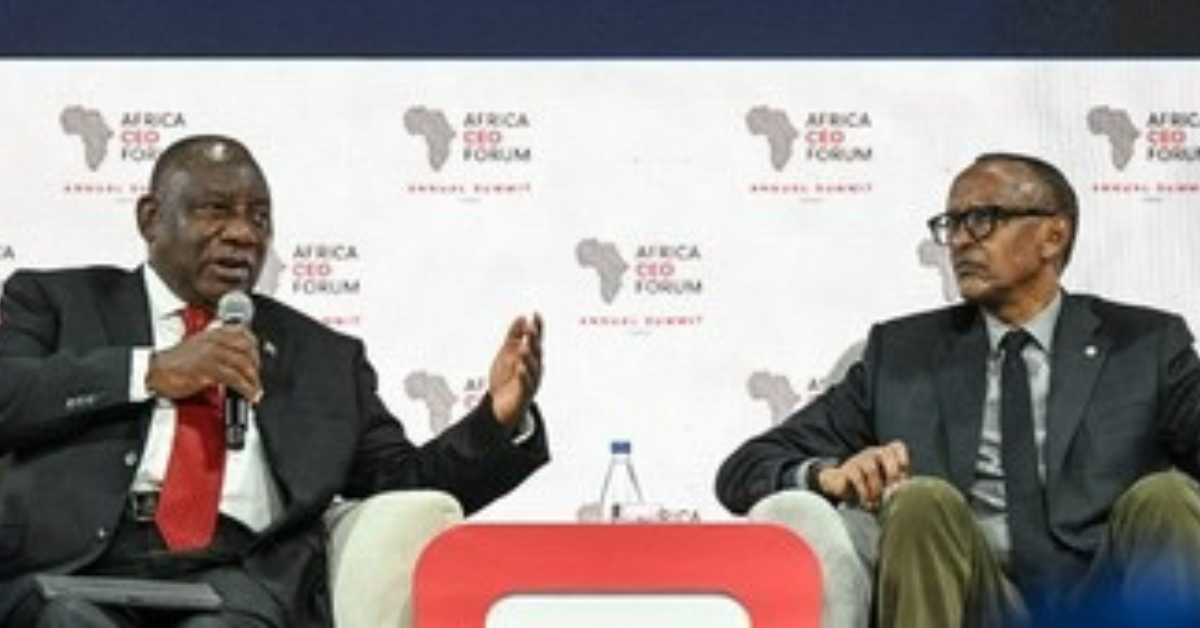
Rwanda and South Africa have taken a major step toward rebuilding one of Africa’s most important diplomatic relationships after agreeing to restore visa issuance for holders of ordinary Rwandan passports within the next twelve months.
The breakthrough emerged during a high-level working visit to Pretoria by Rwanda’s Minister of Foreign Affairs and International Cooperation, Olivier J.P. Nduhungirehe.
During the visit, he met with South Africa’s Minister of International Relations and Cooperation, Ronald Lamola, to discuss the future of bilateral relations and areas of strategic cooperation.
The agreement marks one of the clearest signs yet that Kigali and Pretoria are moving beyond years of diplomatic tensions that affected travel, business connections, and people-to-people exchanges between the two nations.
For many travelers, entrepreneurs, students, and investors, the decision could become one of the most significant developments in Africa’s mobility landscape over the coming year. Once implemented, the move is expected to simplify travel and create new opportunities for economic and cultural engagement.
According to a statement from the High Commission of Rwanda in South Africa, both ministers reviewed progress achieved through ongoing diplomatic engagements and reaffirmed their commitment to strengthening cooperation for mutual benefit.
In addition, the two governments agreed to revive the Joint Commission of Cooperation (JCC), a key bilateral platform designed to advance collaboration across multiple sectors. Rwanda will host the next JCC session during the first quarter of 2027, providing another opportunity to deepen engagement between the two countries.
The visa decision arrives at a critical moment for Africa’s integration agenda. Over the past decade, visa restrictions and diplomatic disagreements reduced travel flows and weakened commercial links between Rwanda and South Africa. As a result, businesses, tourists, and students faced greater hurdles when seeking access to opportunities in both markets.
Now, both governments appear determined to reverse that trend.
Beyond mobility, Rwanda and South Africa pledged to expand cooperation in trade, investment, tourism, education, and regional security. These sectors represent significant drivers of economic growth and could help unlock new cross-border opportunities for businesses operating across the continent.
Lamola emphasized that South Africa is currently refining its immigration framework and visa regulations. He noted that Pretoria is working toward normalizing visa arrangements while observing Rwanda’s success in modernizing its own visa regime.
“As South Africa fine-tunes its immigration laws and visa regulations, we also follow with keen interest the enormous strides Rwanda has made in modernising its visa regime,” Lamola said.
He added that both countries would take concrete steps toward lifting restrictions affecting holders of ordinary Rwandan passports.
The announcement also reflects a broader shift in diplomatic priorities. Rather than focusing on past disagreements, both governments are increasingly emphasizing practical cooperation and economic partnership.
During the discussions, officials exchanged views on several regional peace and security issues, including developments in eastern Democratic Republic of Congo, Mozambique, Sudan, South Sudan, Somalia, and the Sahel region. Both sides reiterated their support for African-led solutions to African challenges and highlighted the importance of regional stability for sustainable development.
For Rwanda, the agreement represents another opportunity to strengthen its position as a regional hub for investment, tourism, and business. For South Africa, it offers a pathway to deeper engagement with one of Africa’s fastest-growing economies while reinforcing its role as a key partner in continental integration efforts.
The Government of Rwanda welcomed the outcomes of the visit and expressed readiness to work closely with South Africa to advance a renewed partnership focused on peace, prosperity, and regional cooperation.
Perhaps the most immediate impact will be felt by ordinary citizens. Easier travel could reconnect families, encourage tourism, expand educational opportunities, and stimulate business activity between two influential African economies.
While complete diplomatic normalization will require continued trust and sustained engagement, the latest agreement signals a new chapter in Rwanda-South Africa relations. More importantly, it demonstrates how pragmatic diplomacy can help unlock economic opportunities, strengthen regional integration, and accelerate Africa’s long-term growth ambitions.