Physical Address
304 North Cardinal St.
Dorchester Center, MA 02124
Physical Address
304 North Cardinal St.
Dorchester Center, MA 02124

Amplifying African Entrepreneurs voices, one story at a time
Amplifying African Entrepreneurs voices, one story at a time
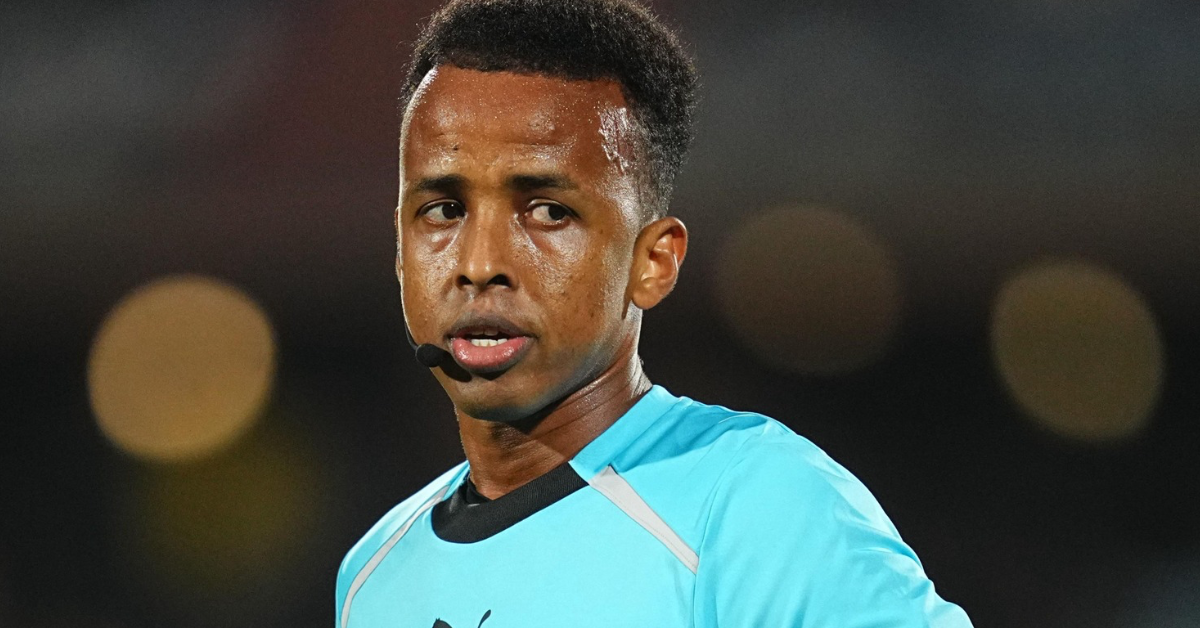
Somali Referee Omar Artan Denied U.S. Entry, Returns Home to Hero’s Welcome
What should have been a groundbreaking moment for African football has instead become one of the biggest controversies surrounding the 2026 FIFA World Cup.
Somali referee Omar Abdulkadir Artan, widely regarded as one of Africa’s most accomplished match officials, has returned home to a hero’s welcome after being denied entry into the United States despite reportedly holding a valid visa. The decision has sparked widespread condemnation from political leaders, sports figures, football fans, and human rights advocates across the globe.
Artan was expected to make history as the first Somali referee to officiate at a FIFA World Cup, a milestone celebrated across Africa and the wider football community. However, U.S. border authorities reportedly prevented his entry due to what officials described as “vetting concerns” linked to alleged associations with individuals under terrorism-related investigations.
The development has quickly escalated into an international debate about immigration policies, racial profiling, and the inclusivity expected from a host nation staging the world’s biggest sporting event.
A Historic African Achievement Cut Short
For many Somalis, Artan’s selection represented more than a personal achievement. It symbolized resilience, national pride, and Africa’s growing influence in global football.
As the reigning CAF Referee of the Year 2025, Artan earned recognition for his consistency, professionalism, and leadership on the pitch. His appointment to the World Cup officiating roster was widely celebrated as a landmark achievement for Somalia, a country rarely represented on football’s biggest stages.
Yet, instead of preparing for his World Cup debut, Artan returned to Mogadishu, where crowds of supporters and government officials welcomed him as a national hero at Aden Abdulle Osman International Airport.
Images of jubilant supporters greeting the referee quickly spread across social media, turning Artan into one of the most talked-about figures connected to the tournament.
Global Outrage Grows
The decision has triggered criticism from influential voices around the world.
South Africa’s Economic Freedom Fighters (EFF) condemned the move, describing it as evidence of deeper systemic issues surrounding the tournament’s host nation.
EFF spokesperson Sinawo Thambo argued that the incident reflected long-standing concerns about discriminatory immigration practices and the treatment of people from Africa and the Global South.
According to the party, denying Artan entry robbed Somalia and the African continent of a historic sporting milestone.
Meanwhile, former UK Labour leader Jeremy Corbyn described the decision as a disgrace, arguing that a FIFA-certified referee should not be prevented from entering a country to perform his professional duties.
Former U.S. Secretary of State Hillary Clinton also questioned the decision, stating that World Cup host countries should facilitate international participation rather than create barriers for officials and athletes.
“It’s terribly backward,” Clinton reportedly said. “Global sports competitions should improve international exchange and relations, not undermine them.”
WHO Chief and Global Sports Figures Rally Behind Artan
Support for Artan extended beyond politics.
World Health Organization Director-General Dr. Tedros Adhanom Ghebreyesus praised the Somali referee’s achievements and emphasized that his historic accomplishment remains intact despite the setback.
“Artan didn’t just qualify for the FIFA World Cup; he made history as the first Somali referee to reach that stage and as one of Africa’s finest officials,” Tedros said.
Former England striker Ian Wright also expressed frustration, suggesting that the incident reflects a broader pattern affecting journalists, officials, and supporters attempting to enter the United States for international events.
The criticism has amplified concerns about whether immigration restrictions could affect participation during the tournament, which is being co-hosted by the United States, Canada, and Mexico.
Somalia Stands Behind Its Sporting Icon
Former Somali President Mohamed Abdullahi Farmaajo revealed that he personally spoke with Artan following the incident, describing him as a symbol of Somalia’s potential and perseverance.
Across Somalia, many citizens view Artan not as a victim of controversy but as a national icon whose journey has inspired a new generation of referees and football professionals.
His return to Mogadishu transformed into a celebration of achievement rather than disappointment.
FIFA Under Pressure
The controversy has also intensified scrutiny of FIFA and tournament organizers.
Questions continue to emerge regarding how a referee selected for football’s most prestigious competition could be prevented from entering a host nation despite reportedly possessing the necessary travel documentation.
As pressure mounts, football stakeholders are calling for greater transparency and assurances that future participants, officials, media representatives, and fans will not face similar obstacles.
For now, Omar Artan’s World Cup dream remains on hold. Yet his story has become one of the defining narratives of World Cup 2026 before a ball has even been kicked.
Ironically, the referee who was expected to officiate matches may now be remembered as the man who exposed one of the tournament’s biggest controversies.