For years, Nigerians queued endlessly for fuel in one of the world’s largest oil-producing countries.
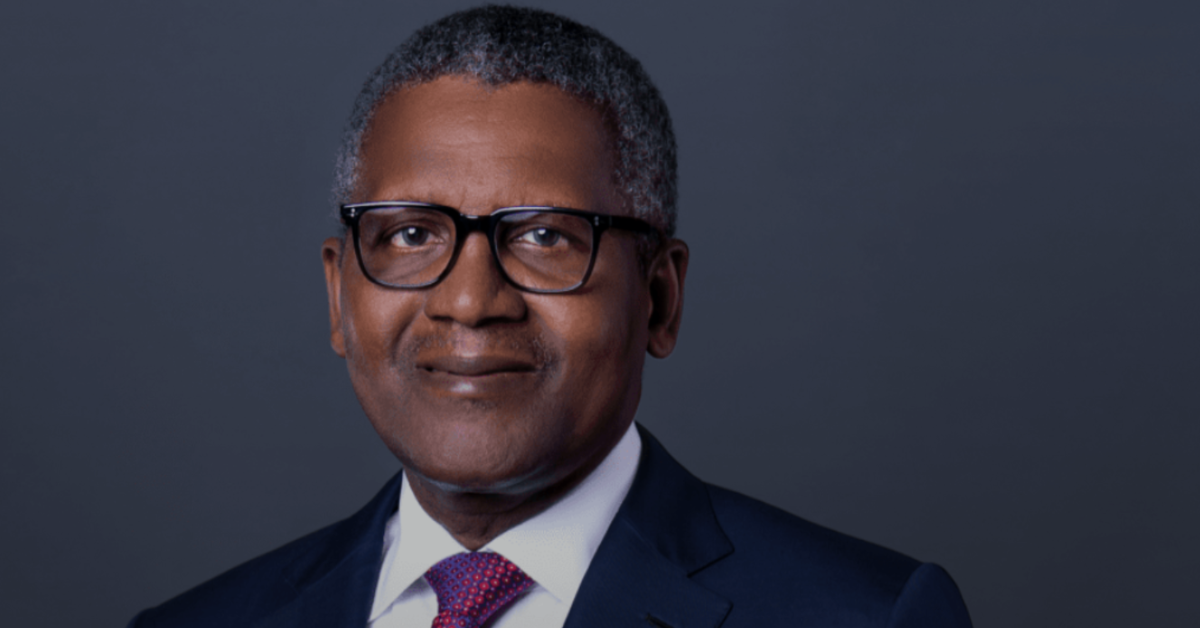
Aliko Dangote looked at that contradiction and decided to challenge an industry many considered untouchable.
Now, the billionaire entrepreneur is opening up about the realities behind building the Dangote Refinery, a project widely regarded as one of Africa’s most ambitious industrial investments.
Speaking on the mindset that drove the venture, Dangote said businesses cannot achieve transformative growth when founders think small.
“When you think small, you don’t grow at all,” he said.
According to him, entrepreneurs must understand every layer of their business, from operations to execution, especially when managing projects with enormous risks.
Dangote explained that neither he nor his team fully understood the scale of what they were attempting at the beginning. Ironically, he believes that uncertainty became an advantage.
“If I had known the full scale from the beginning, I might have chickened out,” he admitted.
The business mogul compared the journey to swimming across an ocean and realizing halfway through that retreat is impossible.
“You have no option but to move forward,” he said.
Why Dangote Took the Risk
Dangote linked the refinery vision directly to Nigeria’s long-standing fuel crisis.
For decades, Nigerians have endured fuel shortages despite the country’s status as a major oil producer. The recurring scarcity, according to him, exposed structural weaknesses in the sector.
That reality pushed him toward a bold decision: build a refinery capable of changing the energy landscape.
The refinery project officially launched in 2013, but progress did not come easily.
Dangote disclosed that land acquisition challenges stalled development for nearly five years. One site reportedly faced delays lasting over three years, while another remained inaccessible for more than a year.
He also claimed entrenched interests within the oil sector attempted to stop the project.
“These issues were being blocked by what you call the mafia in the oil business to make sure we didn’t address them,” Dangote said.
Despite the setbacks, he maintained focus on the long-term vision.
Building During COVID and Managing 67,000 Workers
The scale of the Dangote Refinery remains unprecedented in Africa.
Dangote revealed that approximately 67,000 workers participated in constructing the facility, making it one of the continent’s largest industrial workforce mobilizations.
The project also moved forward during some of the world’s most difficult periods.
Construction continued throughout the COVID-19 pandemic while navigating Nigeria’s challenging operating environment.
“We built during the most difficult times, which is COVID. We built in a very difficult environment, which is Nigeria. And we were able to deliver,” he said.
The refinery’s infrastructure extends beyond fuel processing. Dangote noted that the project’s water department alone occupies more than 30 hectares, highlighting the enormous engineering requirements behind the development.
Beyond Refining: Dangote’s Bigger Message to African Entrepreneurs
Beyond discussing infrastructure, Dangote’s remarks carried a broader lesson for entrepreneurs across Africa.
His message centered on resilience, deep industry knowledge and pursuing large-scale solutions to longstanding problems.
The billionaire argued that transformative businesses emerge when founders commit fully, even when uncertainty exists.
Today, products from the refinery contribute to everyday consumption patterns, underscoring the project’s intended impact on energy access and economic productivity.
As Africa pushes for industrialization and economic self-reliance, the Dangote Refinery increasingly represents more than a business investment. It has become a symbol of what large-scale African enterprise can attempt and eventually achieve.
- South African Court Pauses Ramaphosa Impeachment Inquiry
- East Africa Faces Race Against Time to Deliver AFCON 2027 Infrastructure
- Dangote Group Targets $100 Billion Revenue by 2030
- Africa’s Second Richest Man Johann Rupert Major Deal Sits on €5.5 Billion Cash Reserve
- Hassanein Hiridjee Closes Paris Gallery for African Creative Talent