Physical Address
304 North Cardinal St.
Dorchester Center, MA 02124
Physical Address
304 North Cardinal St.
Dorchester Center, MA 02124

Amplifying African Entrepreneurs voices, one story at a time
Amplifying African Entrepreneurs voices, one story at a time
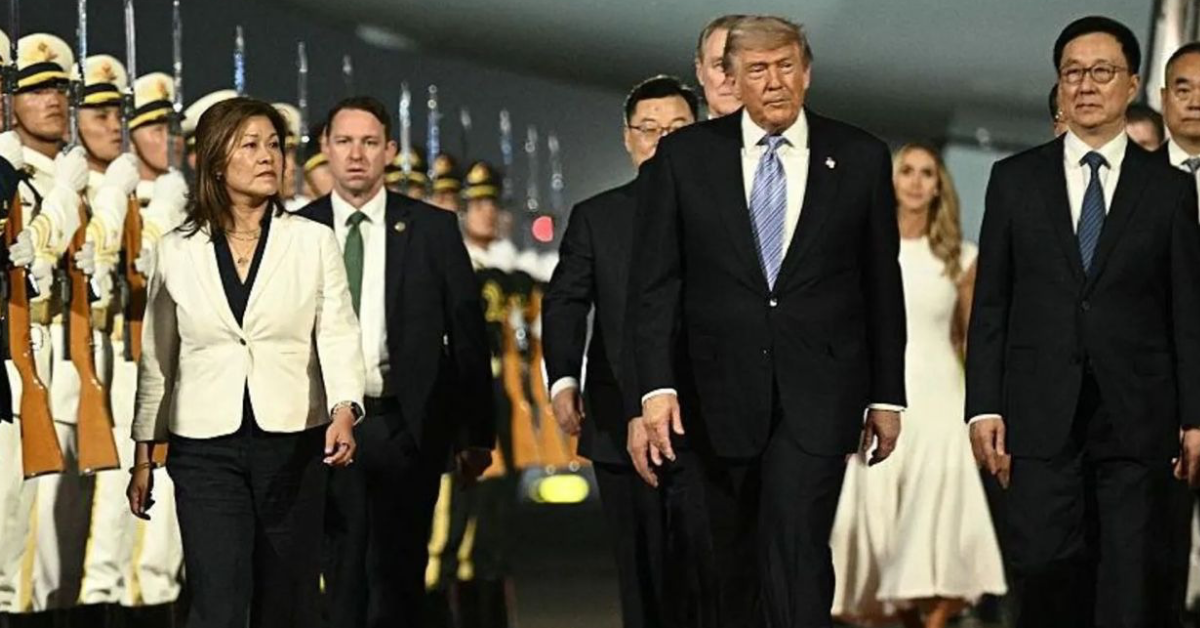
U.S. President Donald Trump arrived in Beijing on Wednesday evening, stepping into a tense global moment shaped by war, trade pressure, and rising competition in artificial intelligence. He landed for a highly anticipated summit with Chinese President Xi Jinping, and both leaders will meet for bilateral talks on Thursday.
Trump entered China with strong political pressure at home. His approval rating has faced strain due to the ongoing U.S. and Israel-linked conflict with Iran, and rising inflation linked to global energy shocks. However, he pushed a clear agenda in Beijing. He wants new trade deals, especially expanded Chinese purchases of American aircraft and agricultural goods.
He also framed trade as the central issue. “We’ll talk more about trade than anything else,” he told reporters before departure. At the same time, he signaled that Iran will also feature in discussions, even as tensions continue to shake oil markets and global supply chains.
The global financial system also shifted just before the trip. The U.S. Senate confirmed Kevin Warsh as a key leadership figure for the Federal Reserve. Markets reacted quickly because the decision comes during fragile global economic conditions and rising geopolitical uncertainty.
In Beijing, China welcomed Trump with formal ceremony and state pageantry. The visit includes a welcome event at the Great Hall of the People, a state banquet, and multiple closed-door meetings with Xi Jinping. A symbolic “friendship photo” at Zhongnanhai Garden also forms part of the schedule.
The summit carries wide global stakes. Both sides are expected to discuss tariffs, technology competition, artificial intelligence dominance, and military tensions. Taiwan remains one of the most sensitive topics, with Washington balancing arms sales and diplomatic pressure while avoiding direct conflict.
Trump returns to a more assertive China than the one he visited in 2017. This time, Beijing stands stronger economically and more confident in its global influence. Meanwhile, Washington faces internal political pressure and external instability.
A bipartisan group of U.S. senators has already urged Trump to publicly reaffirm support for Taiwan. They warned that any silence could shift regional power balance and weaken U.S. credibility in Asia.
China also enters the talks with its own urgency. Rising oil prices from the Iran conflict threaten its industrial output and economic stability. As a result, both sides share a quiet incentive to reduce escalation, even while competing strategically.
Trump will continue his visit through Friday before returning to Washington after additional working sessions with Xi. Analysts say the outcome of this meeting could shape U.S.-China relations for years, especially in trade rules, military posture, and technological rivalry.
At this moment, the world watches closely as two superpowers attempt to manage tension without breaking the fragile global balance.